
The approach
The waste can be cleaned where it lies. Six steps, each with a test agreed in advance.
Measure, clean, process, recover, press bricks, return the land. Nothing is shipped between islands. Mercury is captured, the sand becomes bricks and the land goes back to the village.
The approach
From mine-waste heap to living land in six steps.
Every heap follows the same chain. Every step has a test agreed in advance. What has not been measured, we do not claim.
 1
Measure
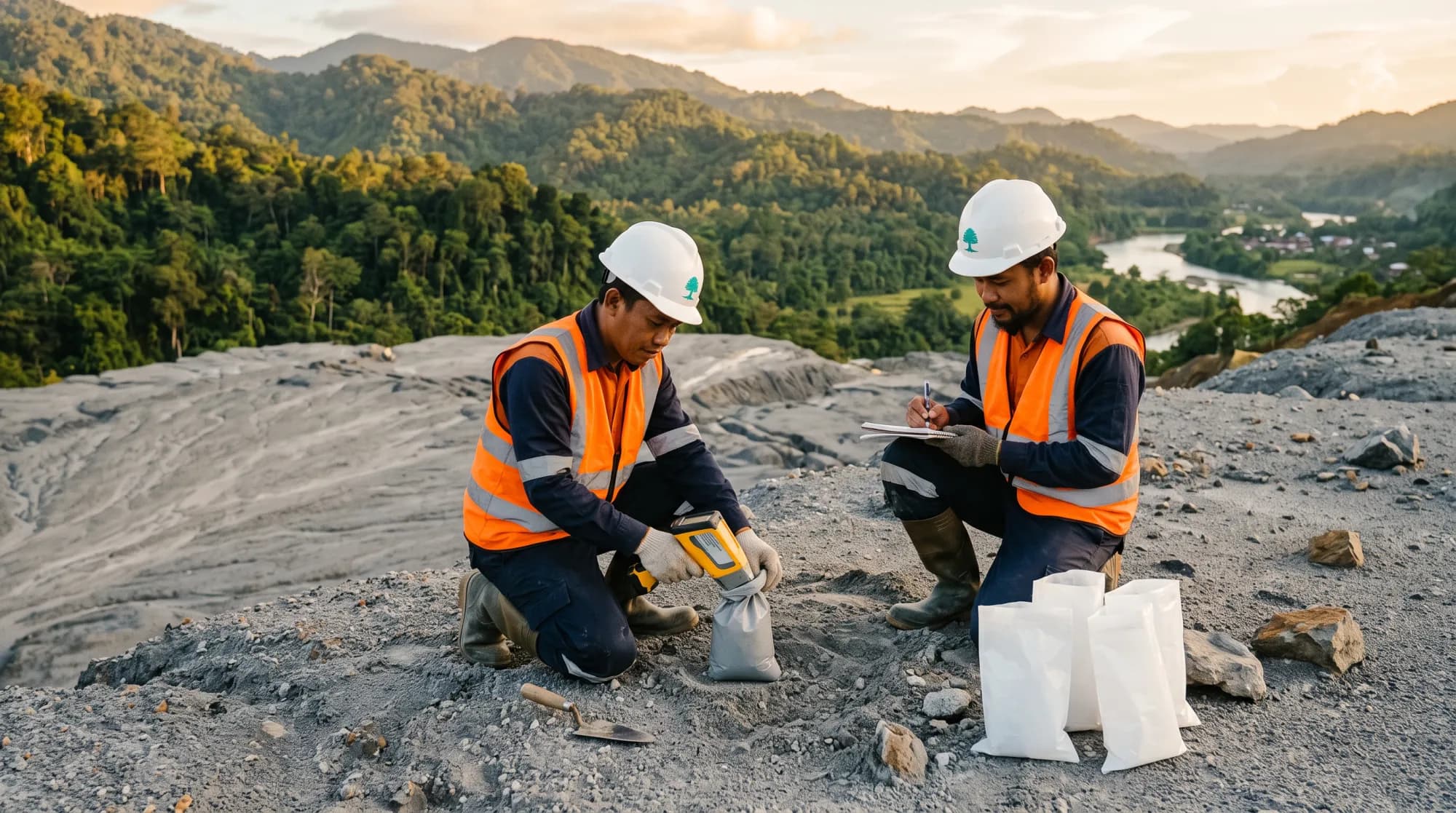
Satellite, field and lab establish what each heap contains. XRF (a handheld X-ray scanner that reads metals in seconds) screens on site; the shaking table and the lab measure. Plus a baseline for people and nature.
ESMI XRF field kit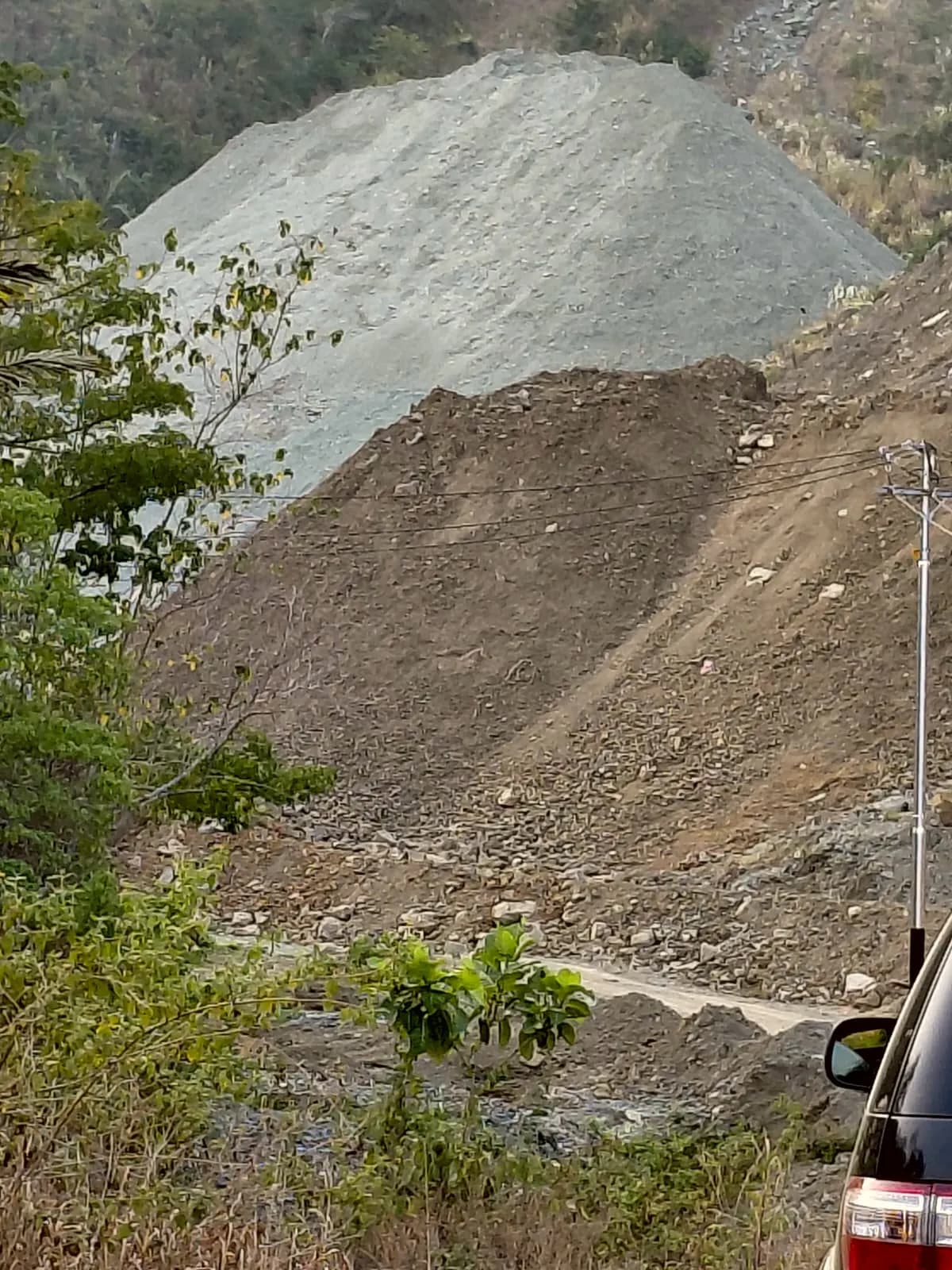 2
Clean
The crew sprays POCO and ESMI microbes on the cell and into the process water. The microbes make mercury a solid, heavy compound so it can be removed, and break down cyanide. POCO helps them multiply.
ESMI microbes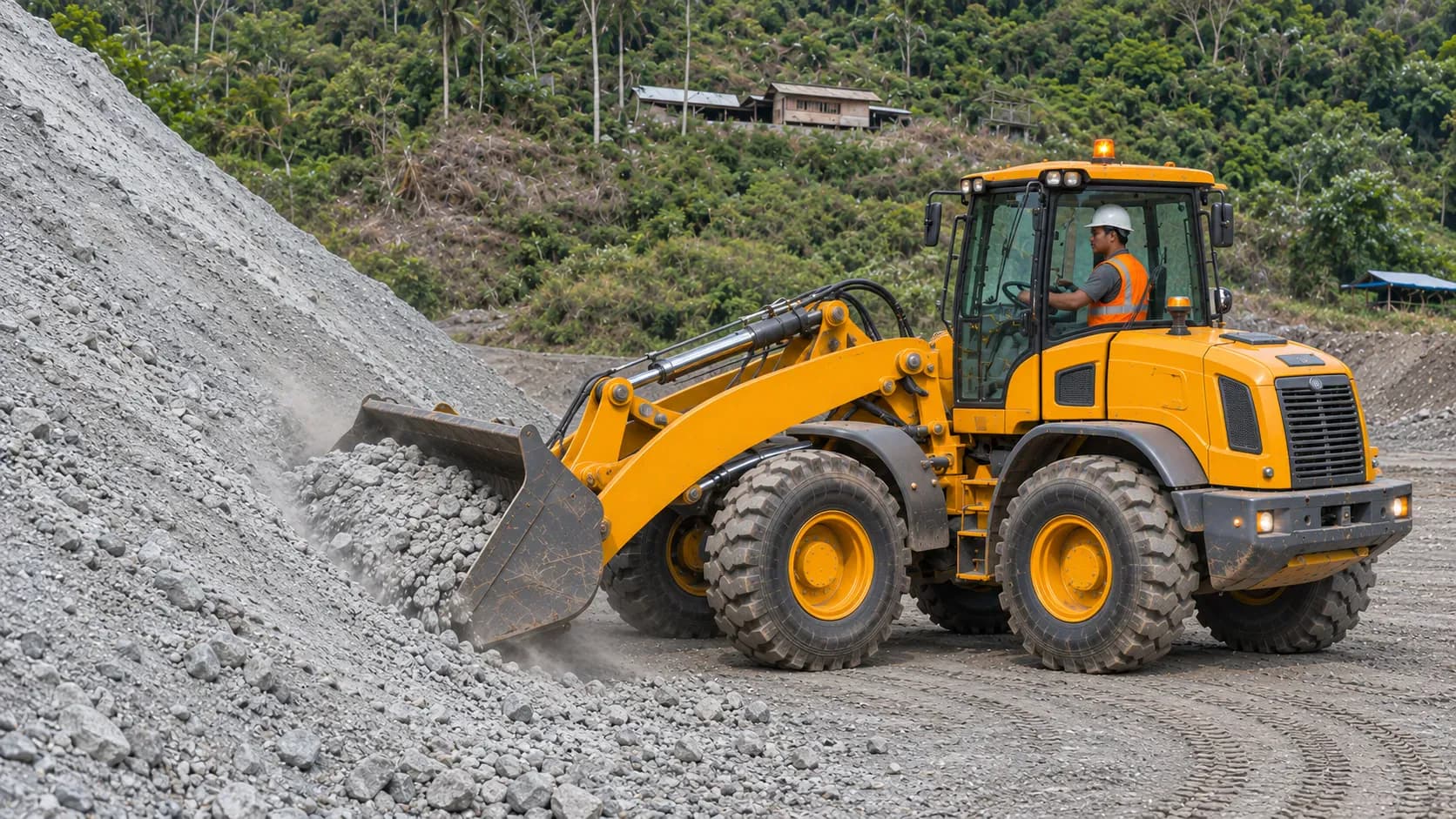 3
Process
The 10-tonner crushes, grinds and separates on site, in a closed water circuit. No transport of hazardous waste between islands.
The 10-tonner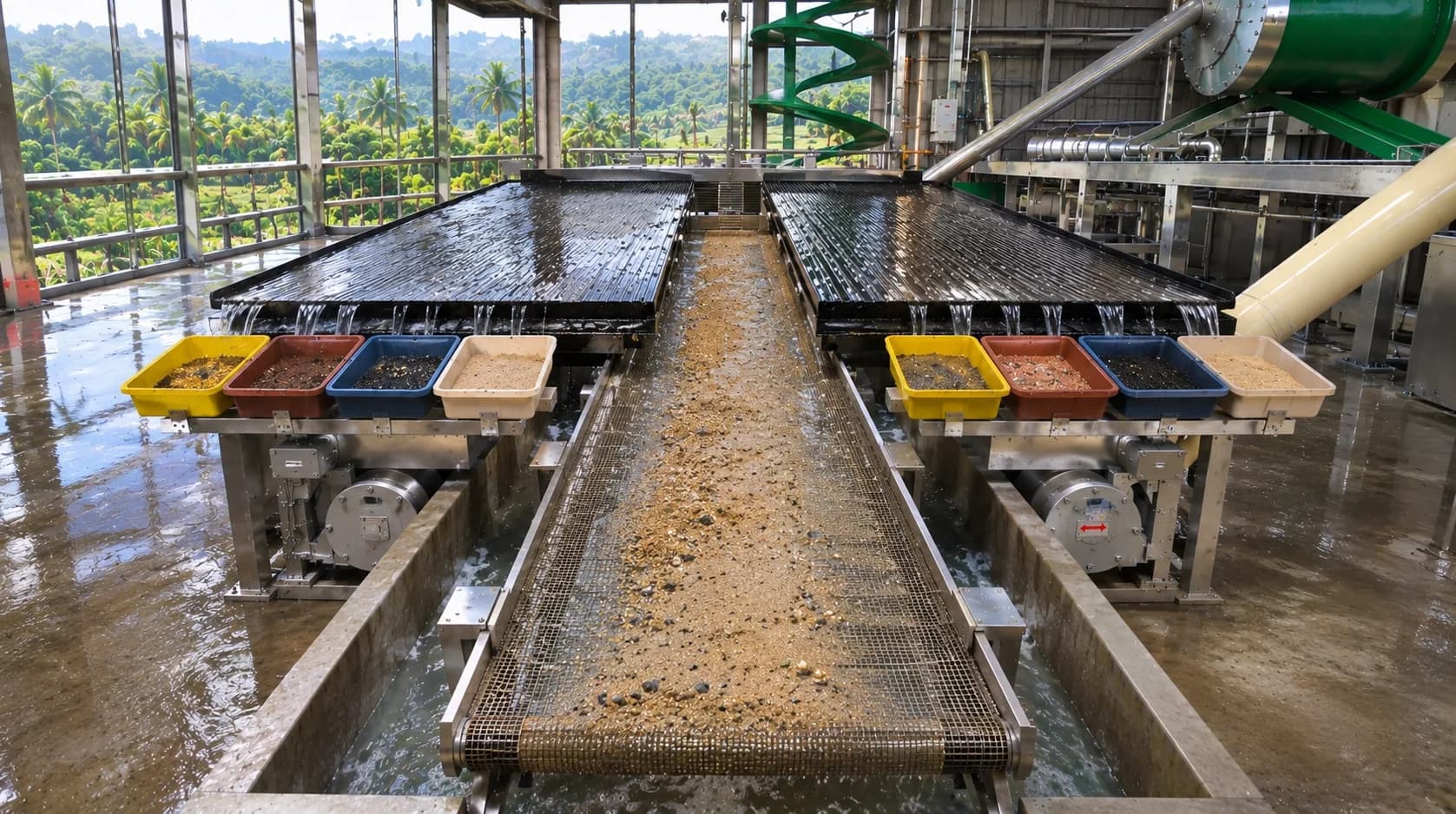 4
Recover
The shaking table separates the solid mercury from the sand. It is packed and stored safely, as the Minamata Convention requires. Metals go to a bullion bank (a bank that buys and stores gold).
 5
Bricks
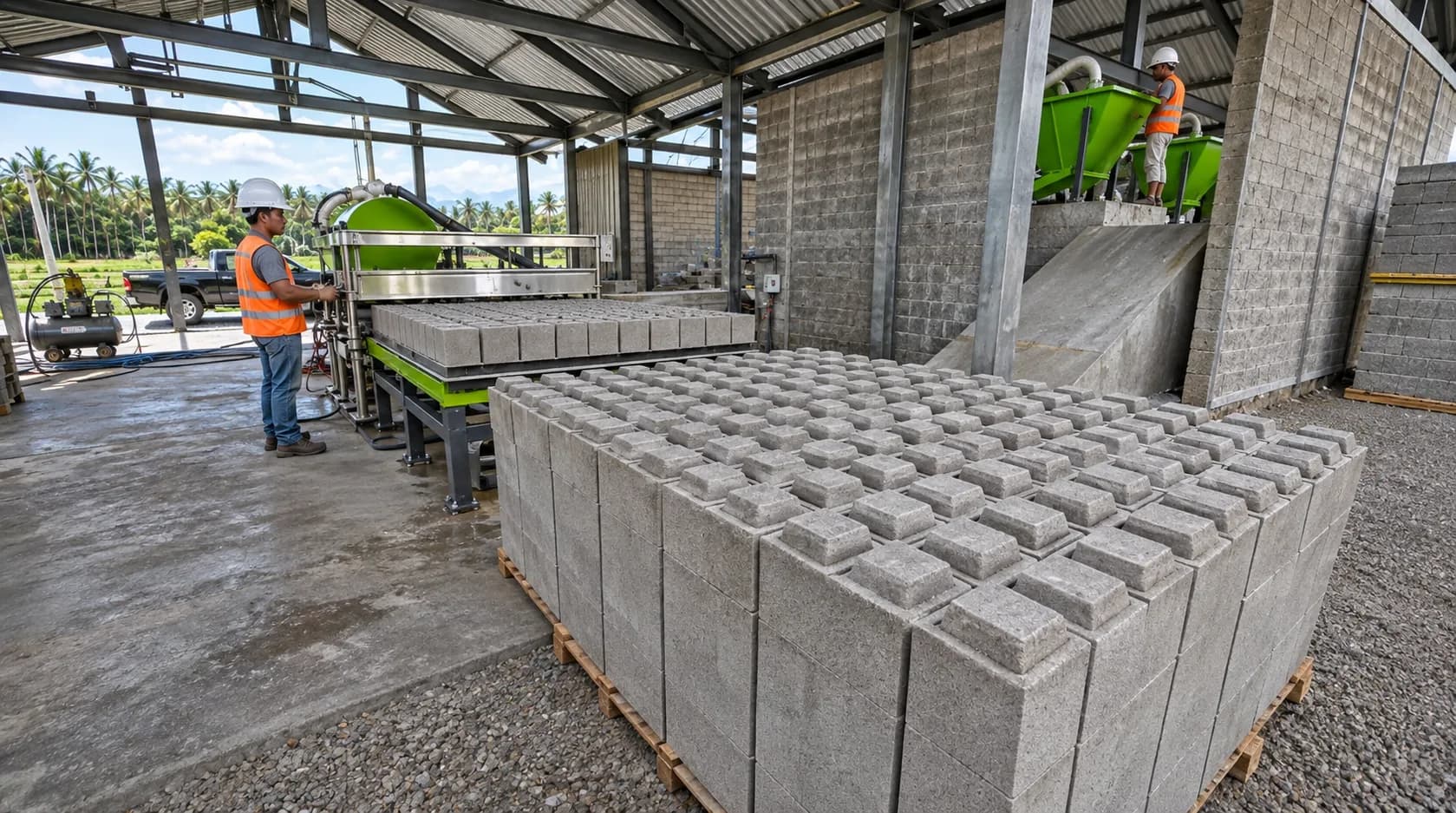
All residual sand, bound with cement, becomes paving and wall bricks, cold-cured. Every batch is tested for leaching (TCLP, the standard leaching test) and strength (≥ 10 MPa).
 6
Restore and reuse the land
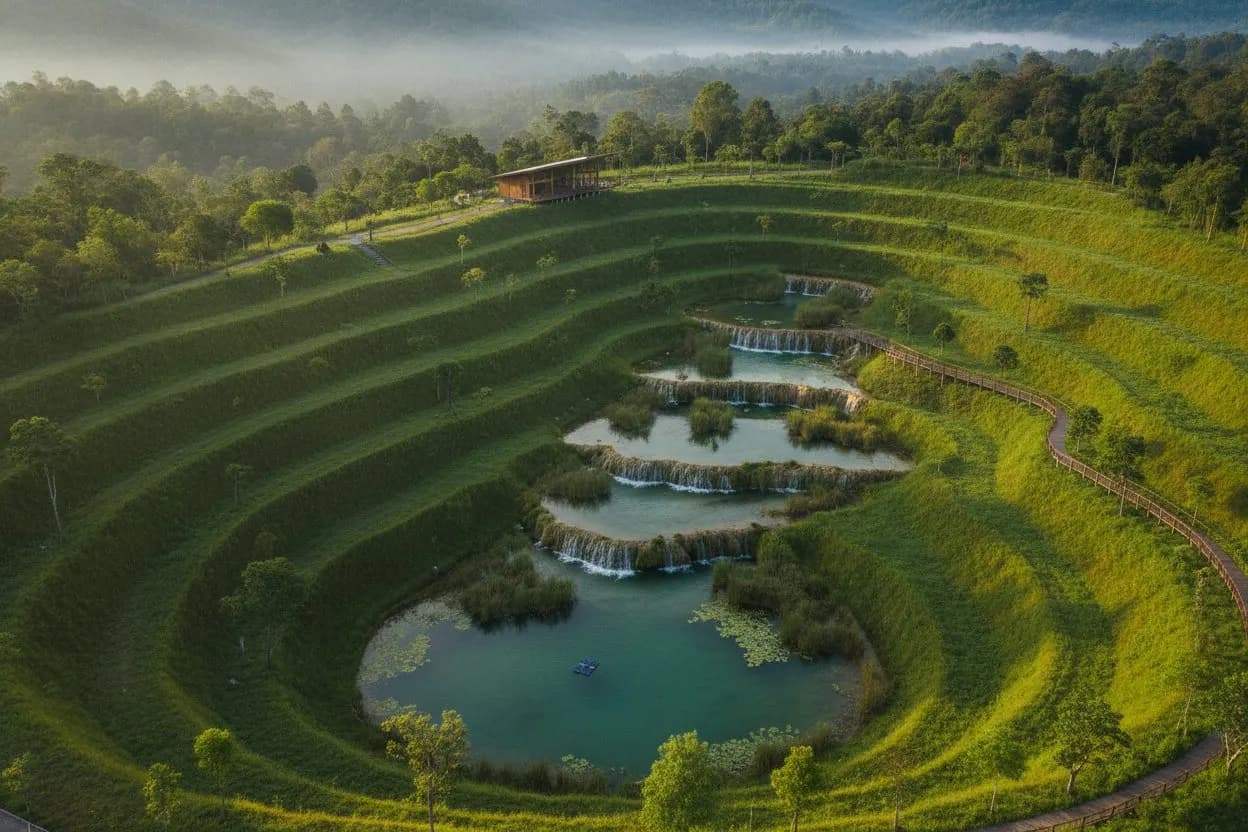
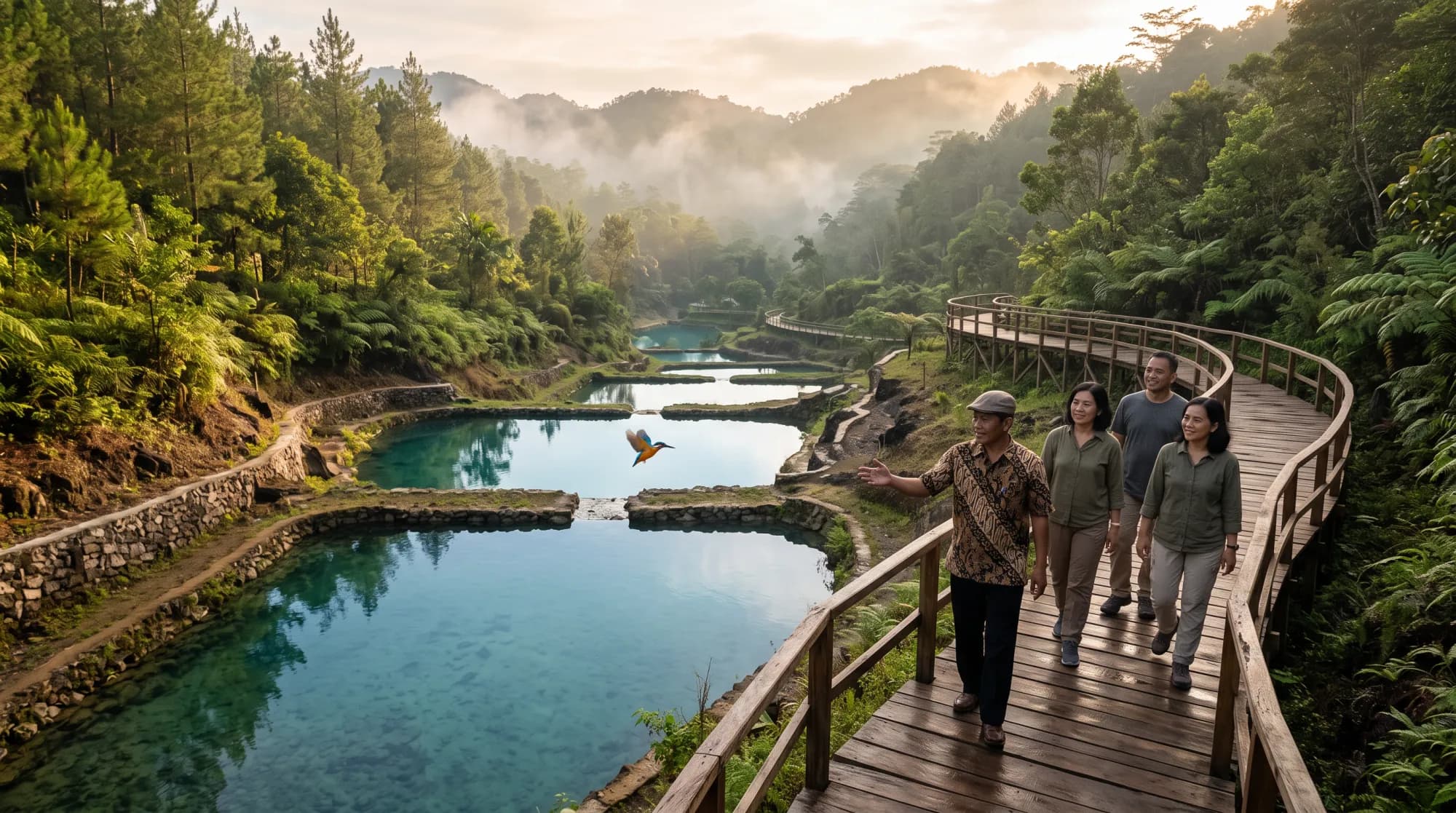
Only when soil and water meet the standard does the land go back to the village or landowner: eco-parks, forest, cassava fields, agroforestry, water and eco-tourism.
New land
One site, from start to finish
A site typically moves from mine-waste heap to a new land use within a few years.
The pilot proves six things before any scale-up
- Mercury made solid and removed
- Mass balance within ±15%; residue below the Indonesian leaching limit (TCLP-B)
- Cyanide broken down
- WAD cyanide (cyanide that can still dissolve) < 0.5 mg/L
- POCO and microbes work
- Double-blind, treated against untreated
- Bricks are safe
- Every batch below the Indonesian leaching limit (TCLP-B) and ≥ 10 MPa
- Throughput and cost
- ≥ 49,640 t/yr per unit (tested on the first 10-tonner, planned 2027); ≤ USD 36.80 per tonne
- People
- Village consent, zero serious accidents
How each part works
Measure: XRF and mobile lab
The ESMI XRF field kit is part of the ESMI mobile lab: screening on site, honest labels on every result, and confirmation by the accredited Unisma lab.
Measure: XRF and mobile labThe 10-tonner
A complete processing plant in one walled yard: crush, grind, separate, make mercury solid with ESMI microbes and remove it, press bricks.
The 10-tonnerESMI microbes
Microbes that make mercury a solid, heavy compound so it can be removed, and break down cyanide.
ESMI microbesPOCO
The microbe stimulator: it feeds ESMI microbes and the useful microbes already in the soil, so they work faster.
POCOBricks and MOCAF
What the clean-up produces: tested bricks from cleaned mine sand, and MOCAF, a gluten-free flour made in a factory from cassava grown on restored land.
Bricks and MOCAF
Gotong royong
The pilot is under way. The next step is scale.
The pilot in Bolmong has started. ESMI is now raising large-scale funding to clean up Indonesia’s mine waste. Investors can start with one 10-tonner (USD 1.7 million).
ESMI also works as a hired partner. Mining companies and cooperatives can bring in ESMI to upgrade an existing plant with its microbes and methods, so it recovers more and can move away from mercury and cyanide.