
ESMI worldwide
Mercury from small-scale gold mining poisons rivers in more than 70 countries. The method built in Indonesia is designed to travel.
Between 10 and 20 million people mine gold by hand, many of them with mercury. They produce about a fifth of the world’s gold and leave behind waste that keeps leaking for decades. ESMI starts in Indonesia, the country with the largest mercury release from small-scale gold mining, and builds the method so that other countries can use it.
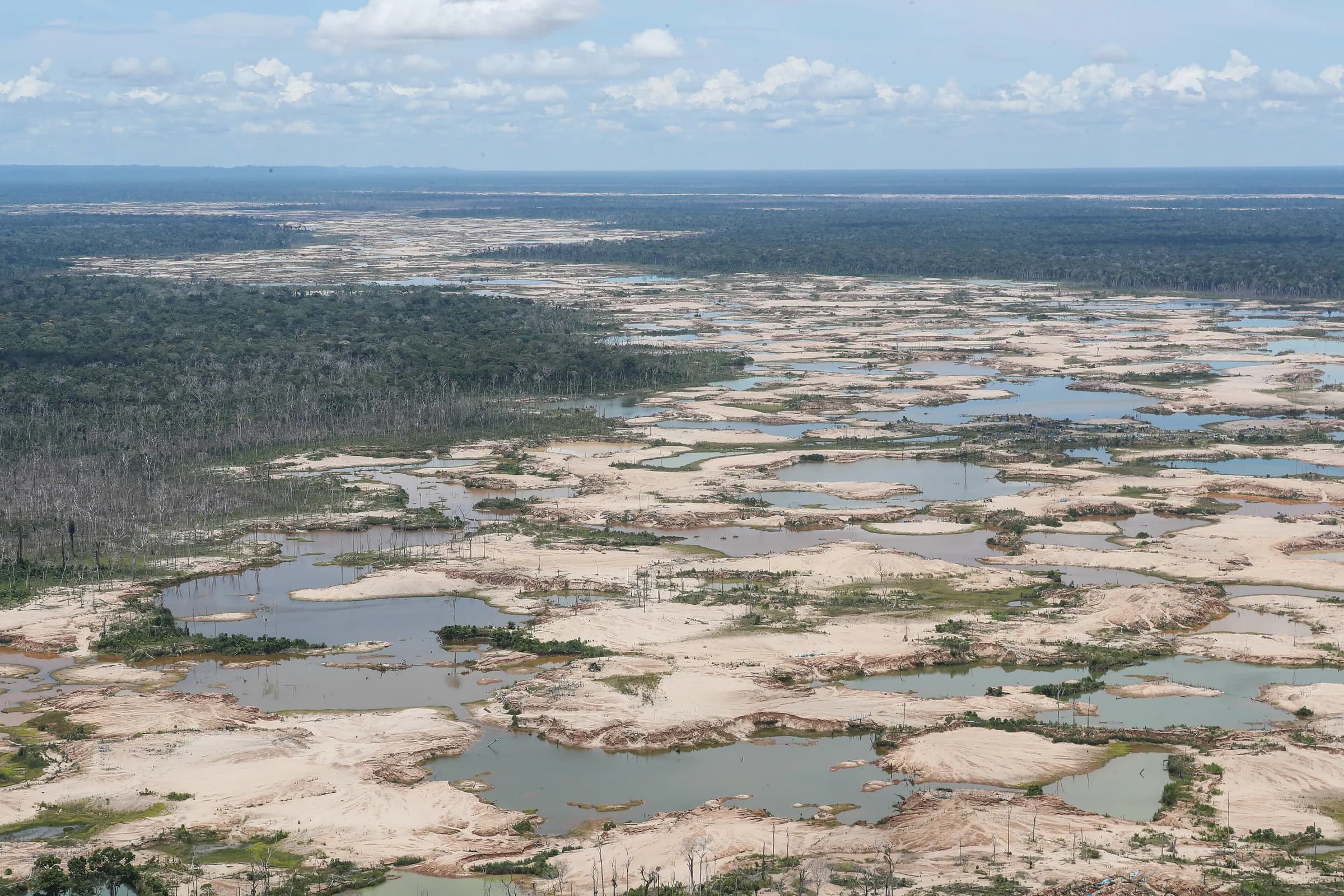
Peru, Madre de Dios (La Pampa): rainforest turned into a desert of gold-mine ponds. Photo: Ministerio de Defensa del Perú, CC BY 2.0, Wikimedia Commons
The world
A global problem with a known source.
2,059t/yr
mercury released by small-scale gold mining to air, land and water
UNEP Global Mercury Assessment 2018
10–20million
small-scale gold miners in more than 70 countries, including up to 5 million women and children
UNEP 2025
20%
of the world’s gold supply comes from small-scale mining
UNEP 2025
1.22million
healthy life-years lost every year to its mercury
Steckling et al. 2017
Elsewhere in the world
The same damage, from the Amazon to West Africa.
Small-scale gold mining with mercury is the largest man-made source of mercury emissions in the world. These photos are not from Indonesia; each one names its country.
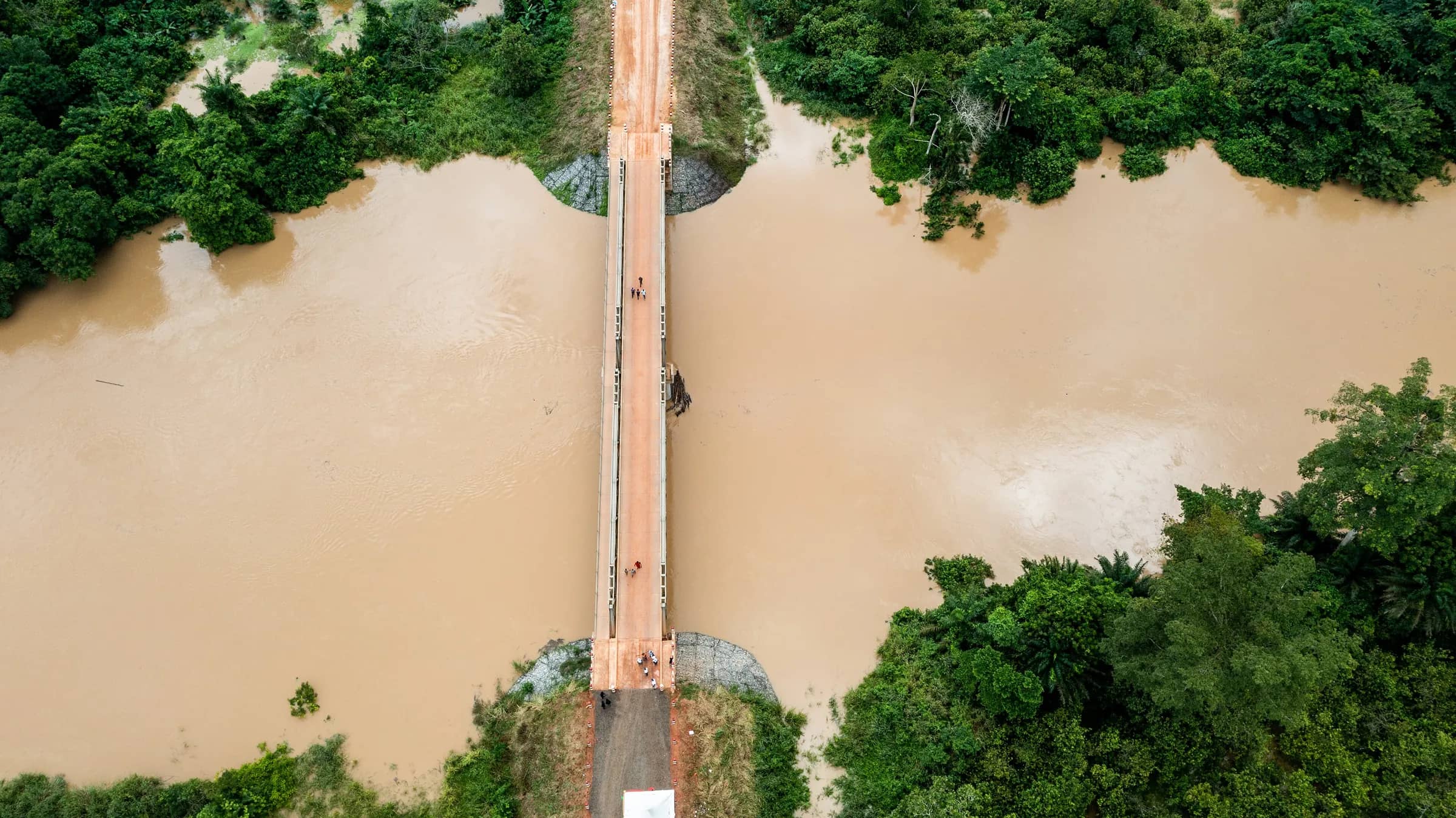
Ghana: a river turned brown by illegal gold mining. 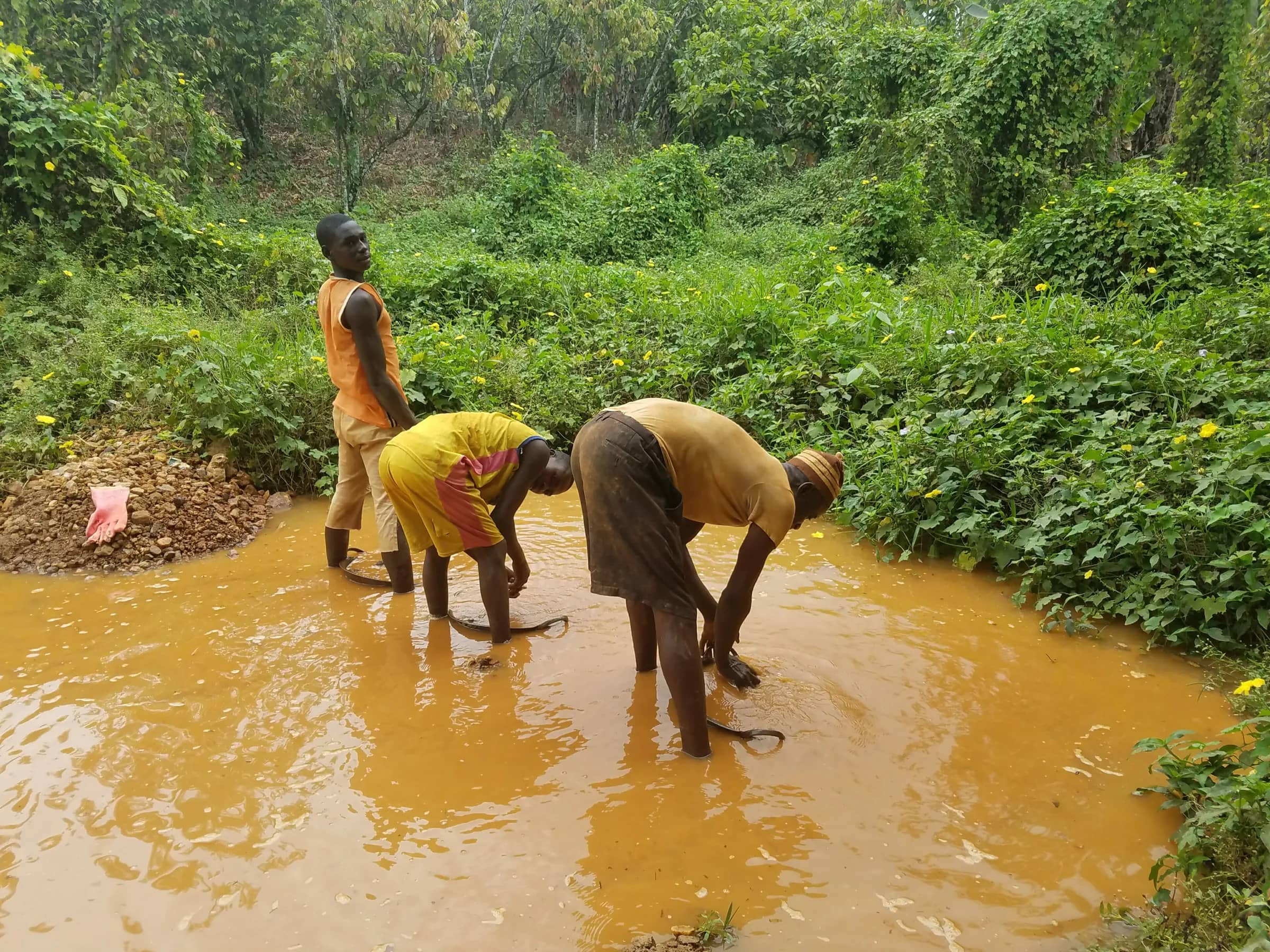
Nigeria: miners knee-deep in orange water. 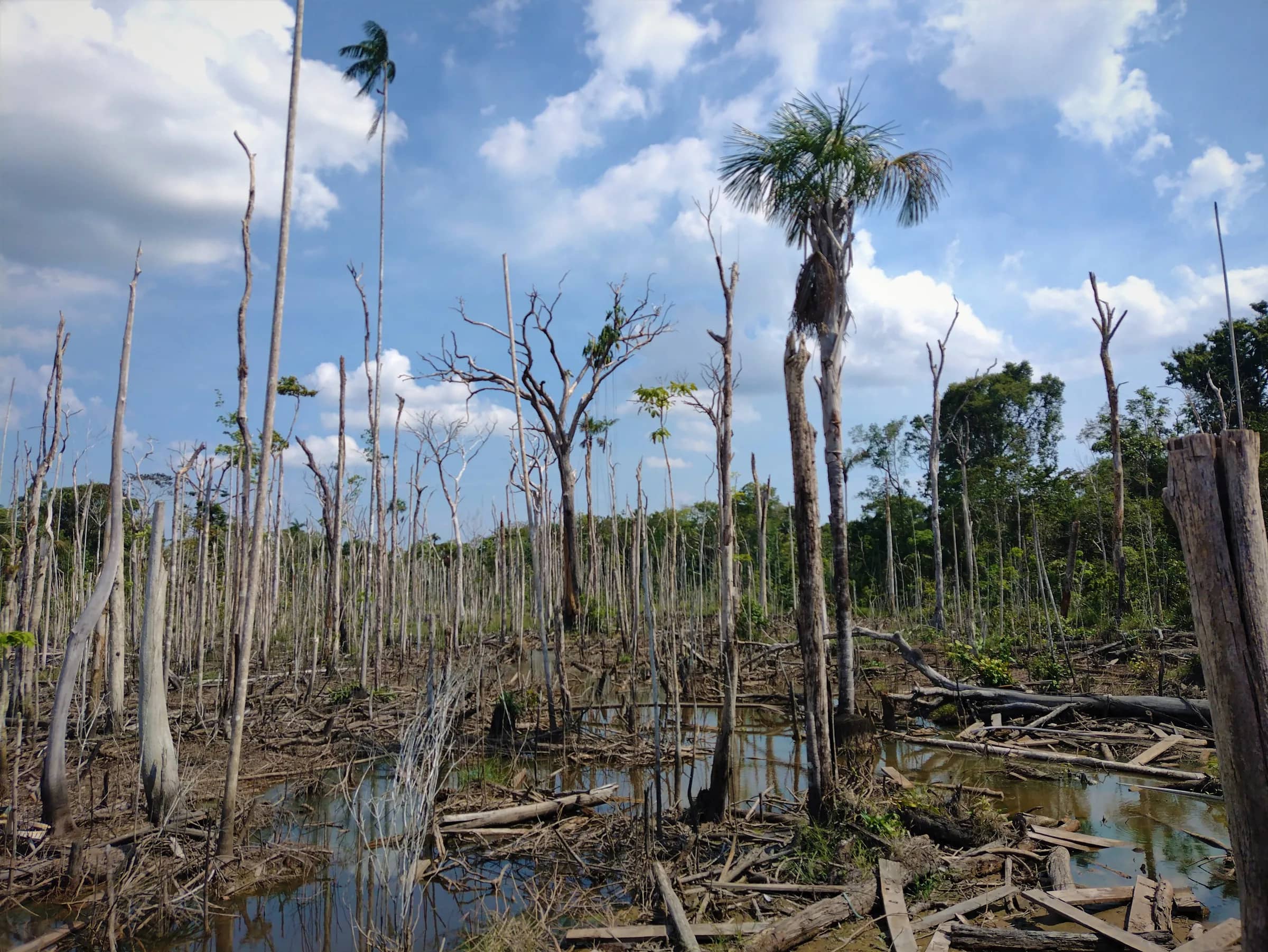
Peru, Tambopata: dead forest left by informal mining. 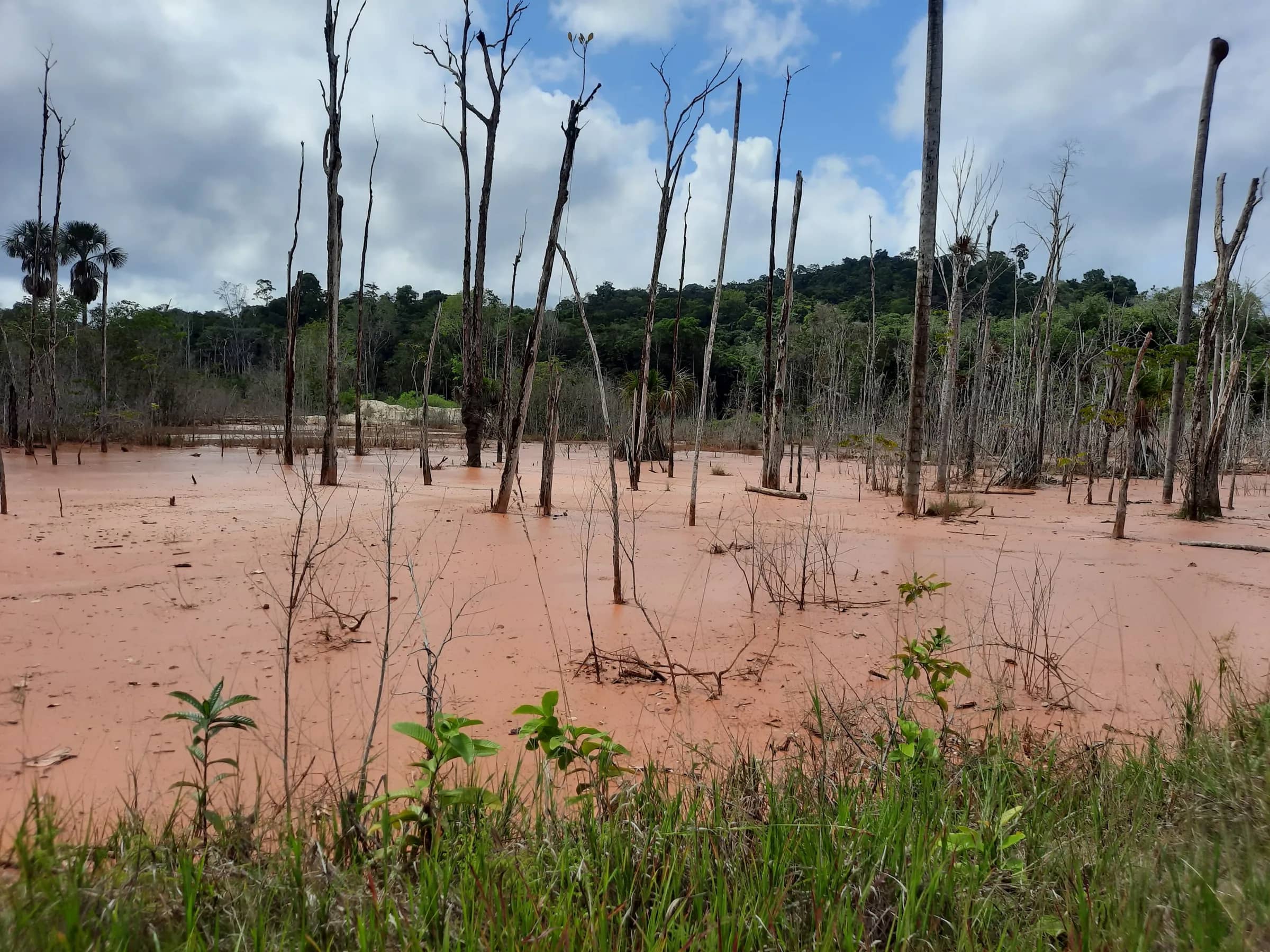
Suriname, Brownsweg: red water and dead trees after gold mining. 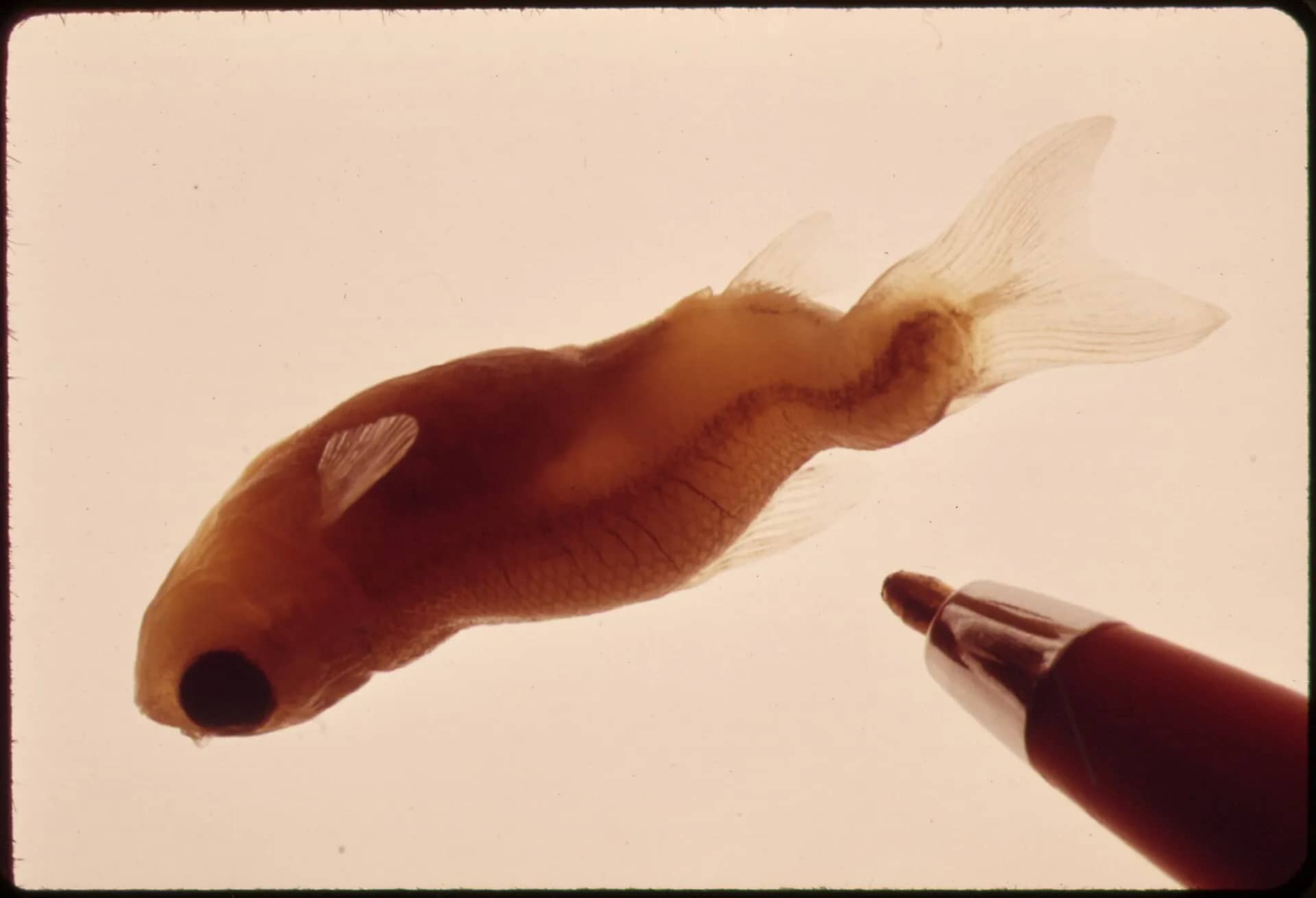
A fish with a spine deformed by methylmercury (US EPA laboratory, 1970s). Mercury harm in general, not from one mine.
Most affected countries
Twelve countries release more than four fifths of the mercury from small-scale gold mining.
Mercury released by small-scale gold mining, by country. The release goes to air, land and water; much of it ends up in waste heaps and riverbeds near villages.
| Country | Mercury released (t/yr) | Share of world total |
|---|---|---|
| Indonesia | 427 | 20.7% |
| Peru | 327 | 15.9% |
| Colombia | 175 | 8.5% |
| Bolivia | 120 | 5.8% |
| Brazil | 105 | 5.1% |
| Venezuela | 102 | 5.0% |
| China | 100 | 4.9% |
| Ecuador | 85 | 4.1% |
| Sudan | 83 | 4.0% |
| Philippines | 70 | 3.4% |
| Suriname | 63 | 3.1% |
| Ghana | 55 | 2.7% |
Sources: UNEP Global Mercury Assessment 2018 inventory. National action plans under the Minamata Convention sometimes give other values; Indonesia’s plan gives about 345 t/yr. Figures describe mercury use and release, not the size of the old waste.
Where to start
Ranked by harm, not by gold.
ESMI ranked 168 mining countries on four measures: the size of mining land, toxicity (mercury, tailings, dam failures, lead in children), the number of people living within 2 km of mines or downstream, and the lack of rules for closure and clean-up. In the tropical belt where the Indonesian satellite method works, these countries rank highest after Indonesia:
Brazil
Mexico
India
South Africa
Peru
Colombia
Myanmar
Ghana
Bolivia
Philippines
DR Congo
Zimbabwe
Sources: ESMI country index, first estimate, November 2026. Countries with little data are more likely to rank too low than too high.
Indonesia first
Proof at home before export.
Indonesia releases more mercury from small-scale gold mining than any other country. ESMI mapped about 46,900 gold-mine waste areas on roughly 93,500 ha, ±92% of them outside any permit. The national programme runs from 2027 to 2036 and grows to at most 800 ESMI 10-tonners, each processing about 49,640 t a year. The first unit is planned for 2027.
How many 10-tonners
From one machine to thousands, one measured step at a time.
1–3
first units, on the heaps with the most mercury near villages, from 2027
ESMI business plan, phase 1
800
units at most in Indonesia by 2036, if each phase meets its targets
ESMI business plan, phase 3
5,000–40,000
units worldwide, as an order of magnitude scaled from Indonesia by the size of each country’s small-scale gold sector
ESMI estimate
The worldwide figure is a rough estimate. It will be replaced, country by country, by an open world atlas of gold-mine waste built with the Indonesian method and checked blind in each country.
The plan
Four phases. No phase starts before the previous one has delivered.
| Phase | When | Goal | What must be shown |
|---|---|---|---|
| 0 · Proof | now – 2027 | Show that it works and what it delivers | Pilot in Bolmong; measured gold recovery; full mercury balance; leaching tests on bricks; health and social baseline by Unisma; open dataset with a DOI |
| 1 · Mercury first | 2027 – 2029 | The largest health gain per dollar | 1–3 units near villages and rice fields; independent cost-effectiveness review; link to a government-led GEF project |
| 2 · National programme | 2029 – 2033 | Scale up along two routes | Recovery route where gold pays; clean-up route paid by government and donors where it does not; anchored in Indonesia’s mercury action plan |
| 3 · International model | from 2032 | Take the method abroad | Open handbook and method through the Minamata Convention and planetGOLD; first project outside Indonesia, in a country with a national action plan |
How it travels
Export the method, not only the machine.
The organisations with the largest health impact rarely run everything themselves. They set the standard, fund results and let local partners deliver. ESMI is built the same way.
An open world atlas
The first global map of small-scale gold-mine waste, with error margins and a DOI, offered to UNEP, the Minamata Secretariat and planetGOLD as a public good.
A licensed standard
The 10-tonner design, the microbes and the measuring protocol, licensed to local cooperatives, companies and governments, with open reporting as a condition.
Local universities
Each country gets a partner like Unisma in Indonesia: a university that checks the atlas blind, measures health and publishes, also when results disappoint.
Pay for verified results
A global clean-up fund, next to prevention programmes, that pays per verified tonne and per measured fall in mercury, fed by GEF, development banks, foundations and gold buyers.
A place in the Convention
Old gold-mine waste on the agenda of the Minamata Convention as its own theme, with guidance under article 12, so that clean-up becomes a task of the parties.
Health decides the order
Sites are ranked by how much mercury reaches how many people through rice, fish and air. The cheapest healthy life-years come first, even where gold does not pay.
Rules that travel with it
The same conditions in every country.
No site without the free, prior and informed consent of the village.
No new unit without a measured result from the previous phase.
No start without full funding per site, with a buffer of at least 20%.
Mercury made solid, removed and stored under the Minamata Convention, with a mass balance.
A fixed, public share for the cooperative, landowners and region, and open books.
Bring ESMI to your country
Governments, development banks, universities and cooperatives outside Indonesia can contact ESMI now, so that their country is mapped and ready when the method is proven.
Sources: UNEP Global Mercury Assessment 2018 (country inventory); UNEP 2025, artisanal and small-scale gold mining; Steckling et al. 2017; Minamata Convention art. 7, 12 and Annex C; ESMI national scan, country index and business plan (November 2026).