
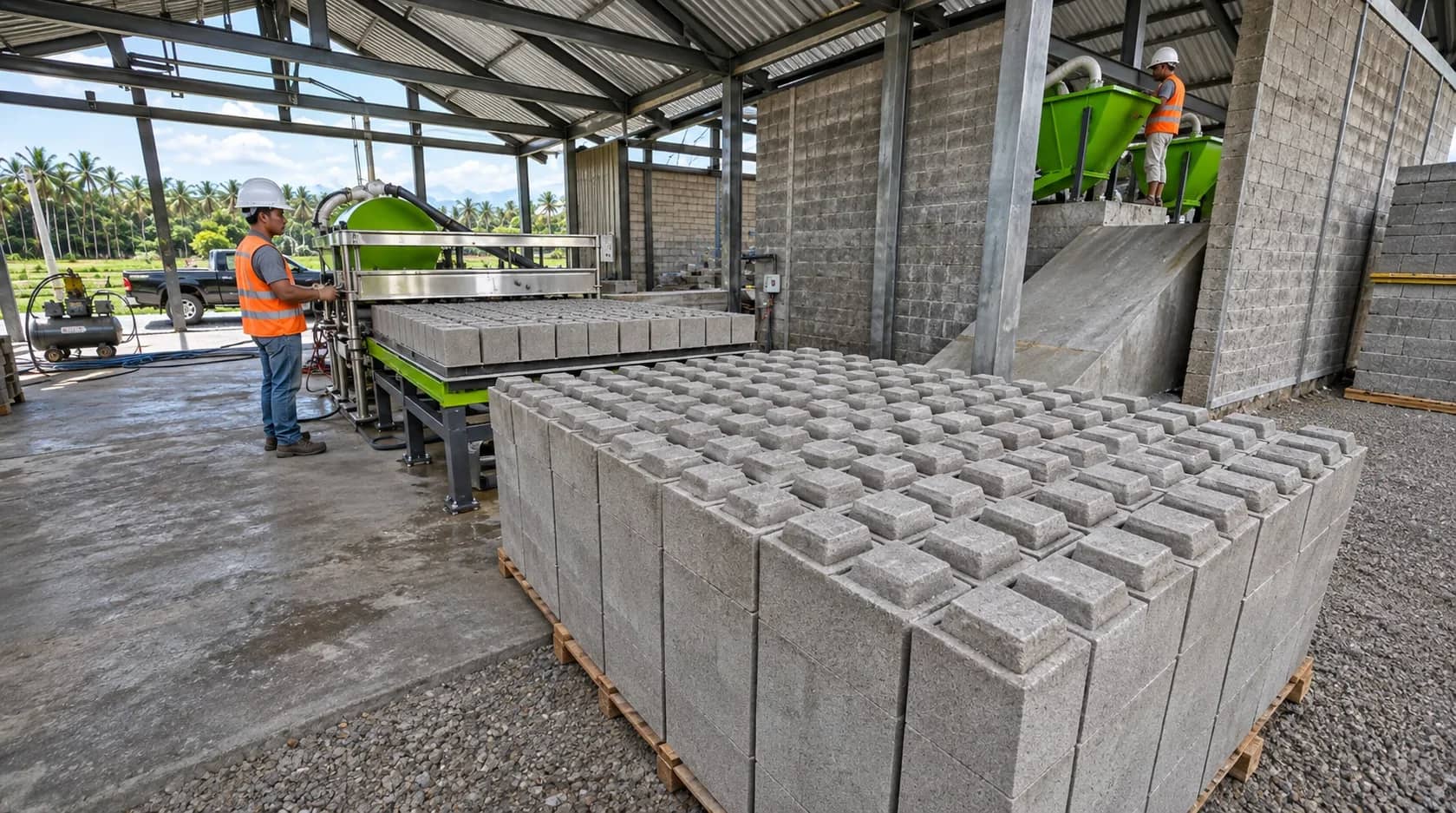
Paving block, 6 cm
- per tonne of sand
- 9.1 m²
- cement
- 22 kg per m²
For roads and squares; the plan assumes 70% paving.
Products
The clean-up leaves two things people can use: clean sand that becomes bricks, and restored land where cassava grows for MOCAF flour. Both are made near the site, by people from the villages.
Bricks
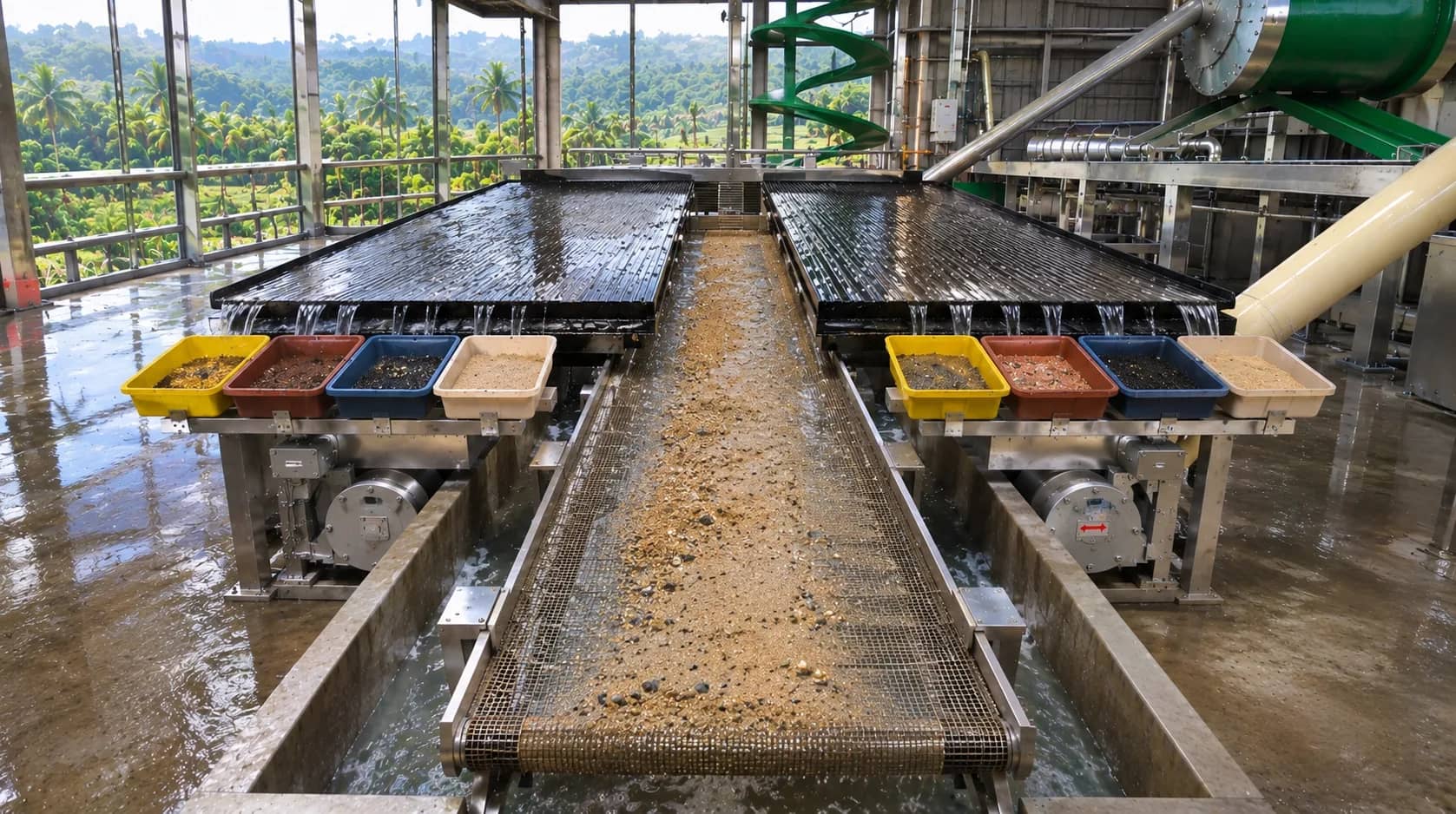
Treatment leaves clean sand. Bound with cement, it becomes paving for roads and squares and wall blocks for houses and schools. Acid-forming sand is first treated by ESMI microbes, then locked in cement. Every batch is tested for leaching and strength before it leaves the plant.
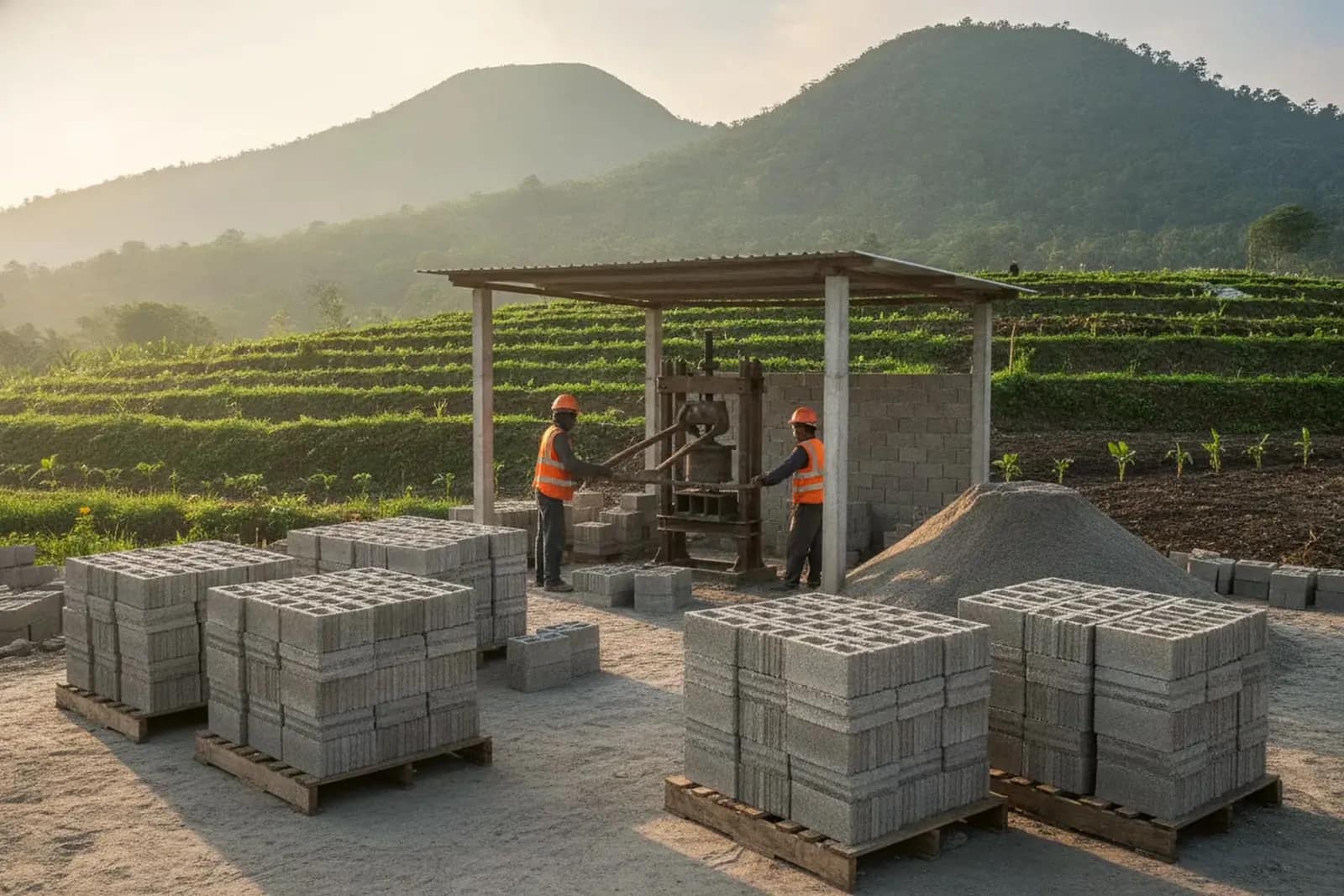
For roads and squares; the plan assumes 70% paving.
For houses, schools and village buildings.
One unit yields sand for 315,891 m² of paving a year or 1.62 million wall blocks a year.
19 % of the blocks can be sold on the market in the 10-year roll-out. The other blocks go into road foundations and fill old mining pits, so nothing goes back on a heap.
How many 10-tonners each region can absorb the bricks of.
| Region | Cement, Mt/yr | Max. sales, t/yr | Units it can absorb |
|---|---|---|---|
| Sumatra | 14.0 | 1,752,300 | 39 |
| Sulawesi | 6.5 | 811,250 | 18 |
| Kalimantan | 4.2 | 527,313 | 12 |
| Bali–Nusa Tenggara | 3.6 | 454,300 | 10 |
| Maluku–Papua | 2.1 | 259,600 | 6 |
Sell first, then build.
Every hub starts only with offtake contracts in hand: roads, schools and social housing.
Regional data and model Source: Business plan, annex B; model sheets Bricks and Brick market (key figures, 18 Nov 2026); ASI 2024; Katadata 2021; PUPR backlog March 2026. Cement use per brick derived; to be confirmed in the pilot.
MOCAF
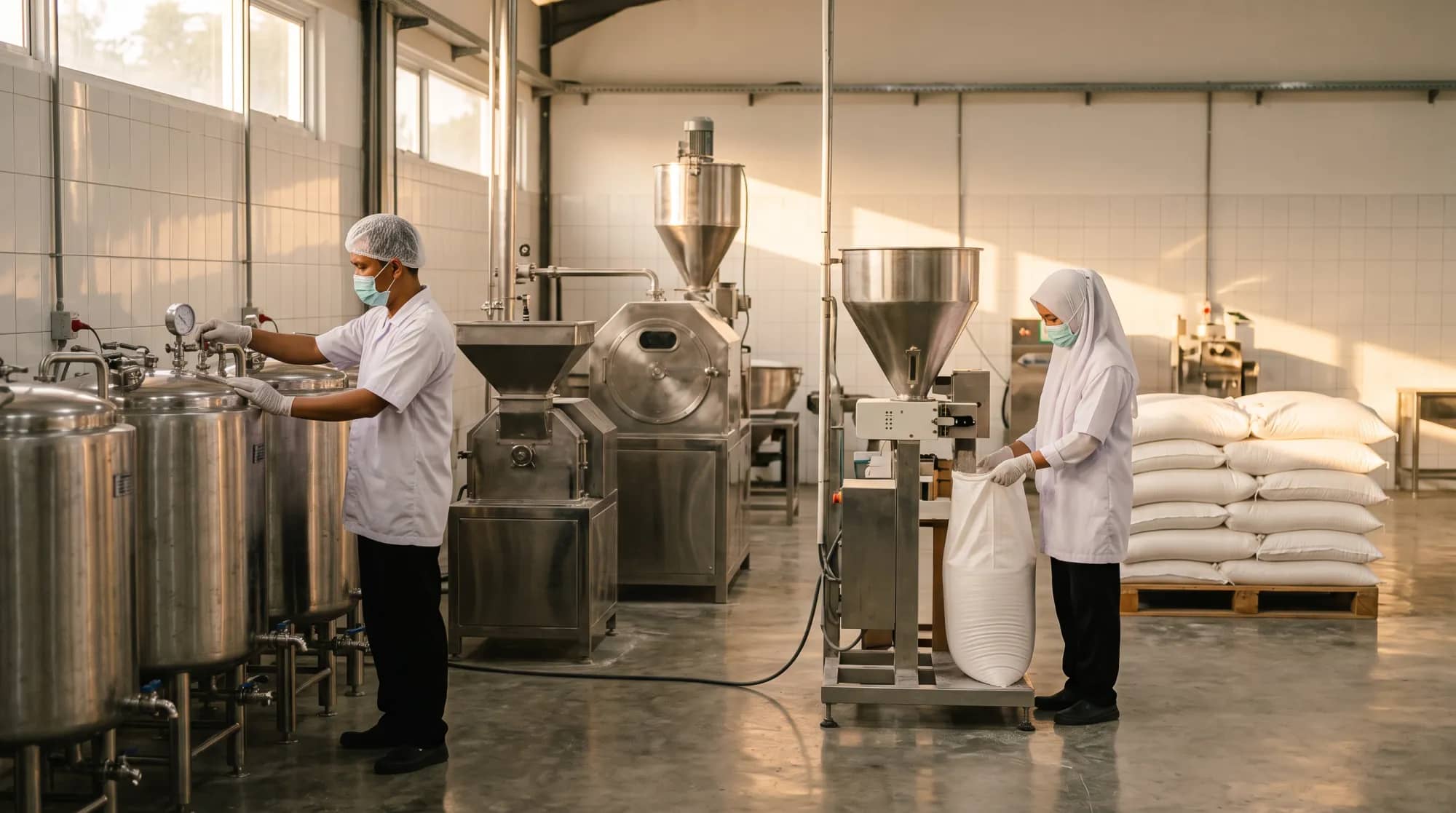
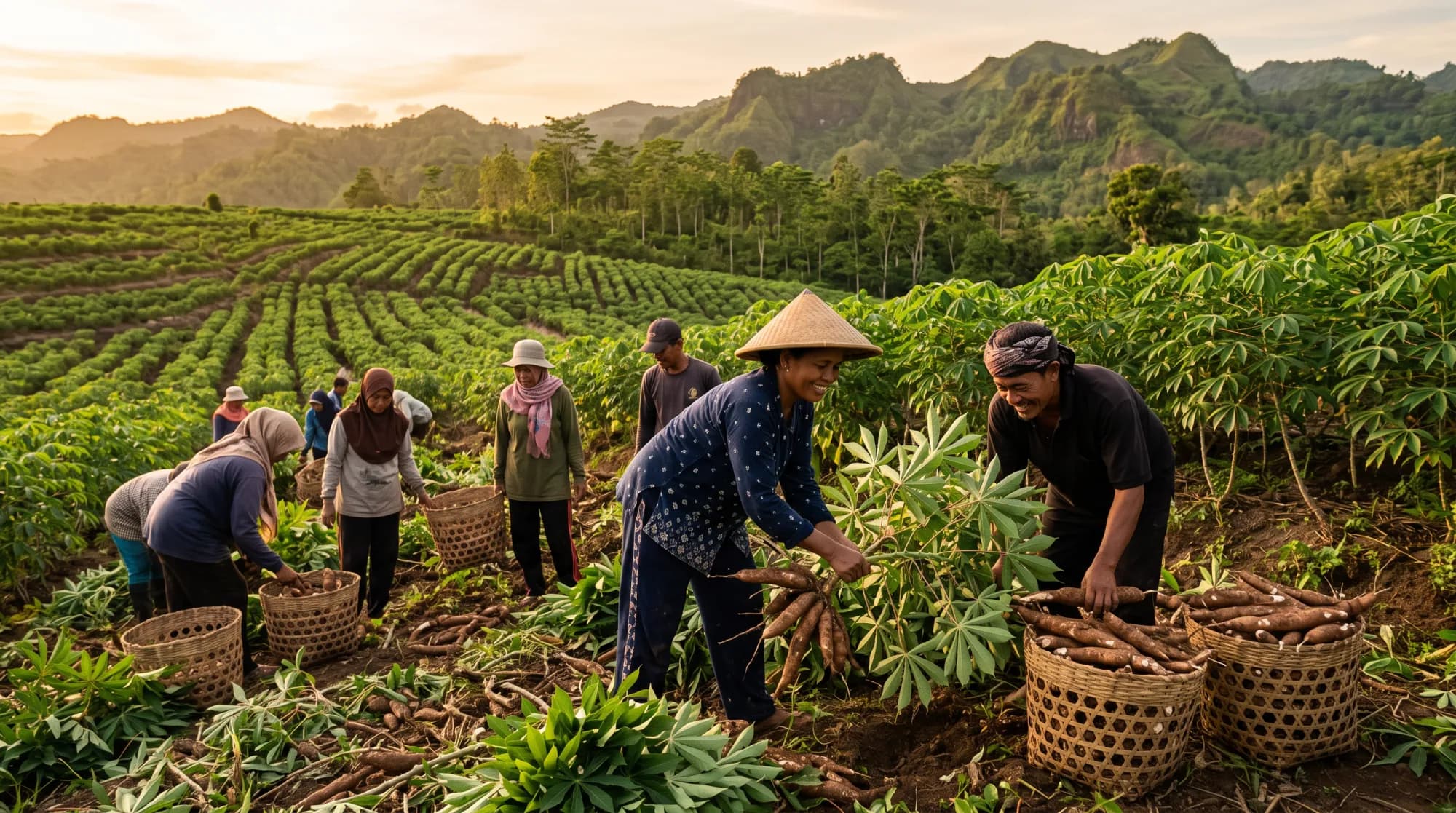
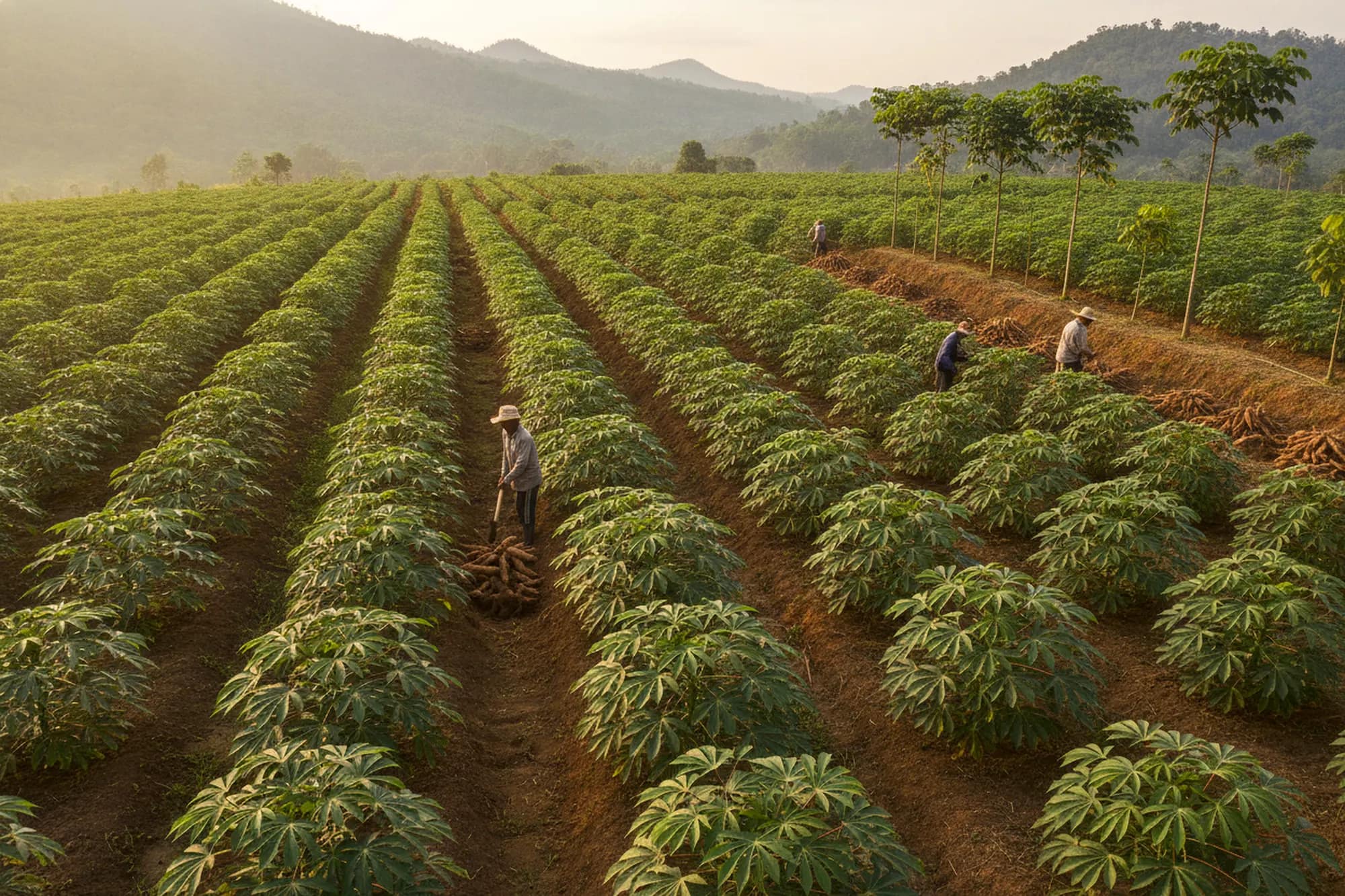
Once a cleaned cell passes its release test, the flat parts can become cassava fields. The roots go to a nearby factory and are turned into MOCAF: modified cassava flour. The flour is made indoors, in a clean and controlled hall, never on open drying racks.
MOCAF is cassava flour improved by controlled fermentation with microbes. Fermentation takes away the bitterness, improves the aroma and makes the flour absorb more water and bind better. It behaves closer to wheat flour, and it stays gluten-free, high in fibre and free of chemical additives.
Where it is used
It tolerates heat, drought and poor soil, needs little water and hardly any fertiliser.
Wheat supplies about a fifth of the calories people eat and comes from a few exporting countries. Local flour reduces that dependence.
Grow, process and use locally: fields for the village, jobs in the factory, flour for local bakeries and noodle makers.
SBDI Foundation, ESMI’s founding partner, works on cassava value chains. Eko Vitaris represents the Indonesian MOCAF brands Ladang Lima and Rumah Mocaf internationally.
1,000 ha
of cassava supply one MOCAF factory
Model estimate, to be measured40 jobs
in each factory, plus 0.5 job per hectare of field
Model estimate, to be measured1,100 USD/ha/yr
net income for the village from cassava and the MOCAF value added
Regional data and model8,060 ha
of restored land suited to cassava in Kalimantan (6,900) and Sumatra (1,160)
Model estimate, to be measuredRegional data and model Source: Land-use analysis “Infrastructure and land-use plan”, 7 Nov 2026 (§ 5.2, restoration model v1.4: USD 1.14 mln per 1,000 ha, 13 t/ha); Bolmong restoration options (design study, 30 Oct 2026); article by Guido Lassally (Medium, 2025). Jobs after clean-up to be tested against the Bolmong pilot and existing MOCAF factories.
Gotong royong
The pilot in Bolmong has started. ESMI is now raising large-scale funding to clean up Indonesia’s mine waste. Investors can start with one 10-tonner (USD 1.7 million).
ESMI also works as a hired partner. Mining companies and cooperatives can bring in ESMI to upgrade an existing plant with its microbes and methods, so it recovers more and can move away from mercury and cyanide.