
For villages and cooperatives
Your land back, clean. Legal work. No mercury.
Gold-mine waste lies beside many villages and pollutes their rivers and rice fields. About 92% of it lies outside any permit. ESMI cleans it on site: microbes make the mercury solid so it can be removed, the sand becomes bricks and the land returns to the village or landowner.
What it means for a village
What villages, landowners and cooperatives get.
Every site is cleaned, restored and handed back. Results are measured and published per site.
Land back
Once soil and water meet the standard, the land goes back to the village or landowner with a management plan. The community chooses: forest, cassava fields, agroforestry, water or eco-tourism.
Legal jobs
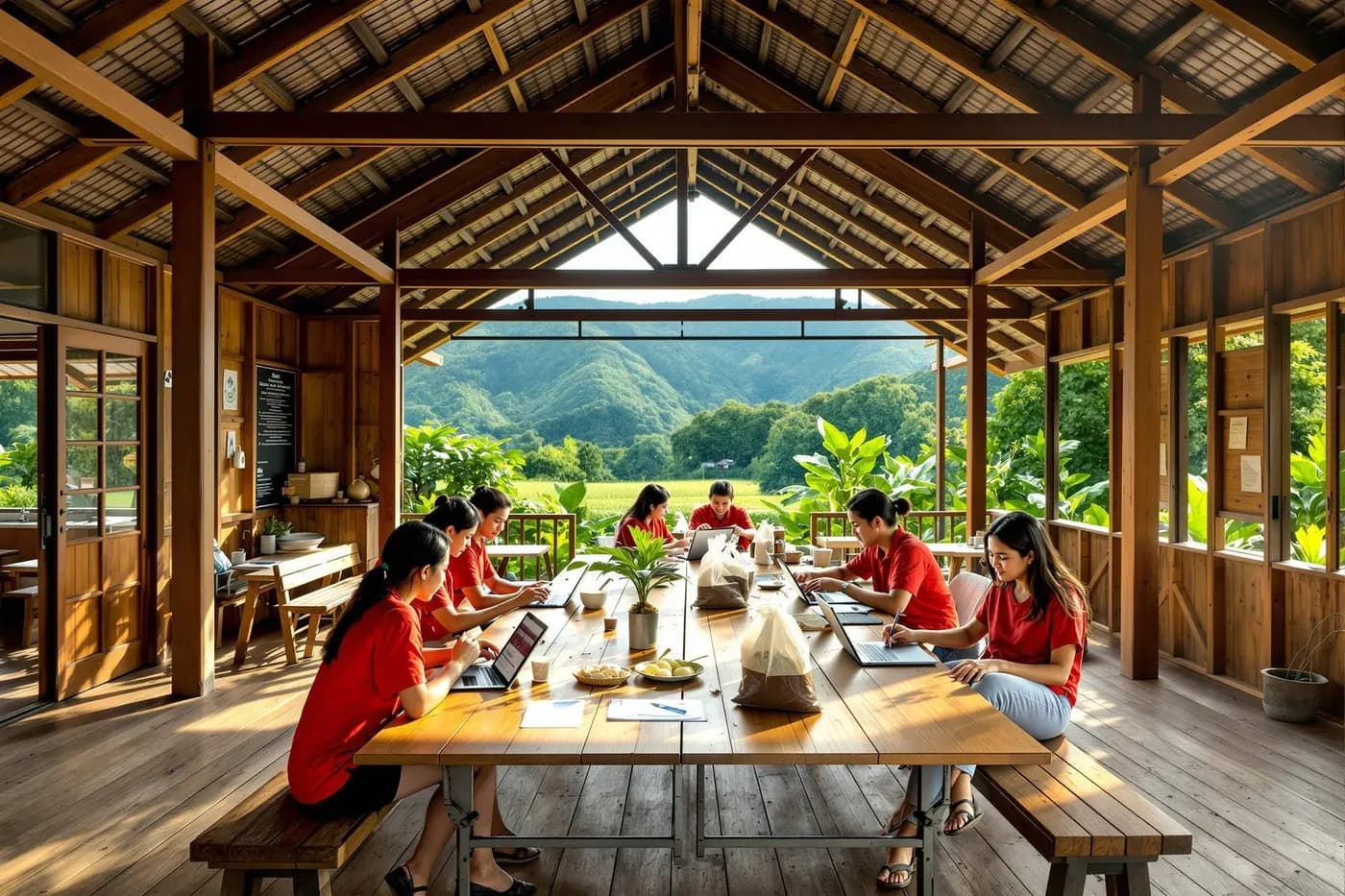
26 permanent jobs per unit, at least 80% from nearby villages, trained at the ESMI academy. Former illegal miners get priority.
Safe work
A 40-hour week, protective equipment and medical checks. No one under 18 on site.
Mercury-free
Microbes make the mercury solid so it can be removed and cyanide is broken down, so heaps stop polluting rivers and rice fields.
Bricks for the village
The cleaned sand becomes bricks and paving for roads, schools and social housing. Local companies and cooperatives provide crews and sell the bricks.
Open revenue sharing
Where metal is recovered, a share goes to the cooperative, landowners and the province, agreed per site and reported publicly every year.
Per unit
What one 10-tonner does near a village.
26
permanent jobs per unit
ESMI business plan
80%
of the workforce at least from nearby villages
ESMI hiring rule
49,640t/yr
mine waste cleaned per unit per year
ESMI business plan
315,891m²/yr
paving from clean sand per unit per year
ESMI business plan
Legal small-scale mining
From mining without a permit to cooperatives with WPR/IPR.
Mining without a permit (PETI) costs lives and often uses mercury. Community mining areas (WPR) and community mining permits (IPR) give miners a legal, mercury-free livelihood. ESMI works through regional governments and cooperatives.
- The cooperative or permit holder holds the permit and land rights for each site.
- The site contract covers jobs, grievances, the sharing of metal proceeds and the hand-back of the land.
- Government designates WPR and issues IPR; ESMI helps cooperatives work without mercury.
Safeguards
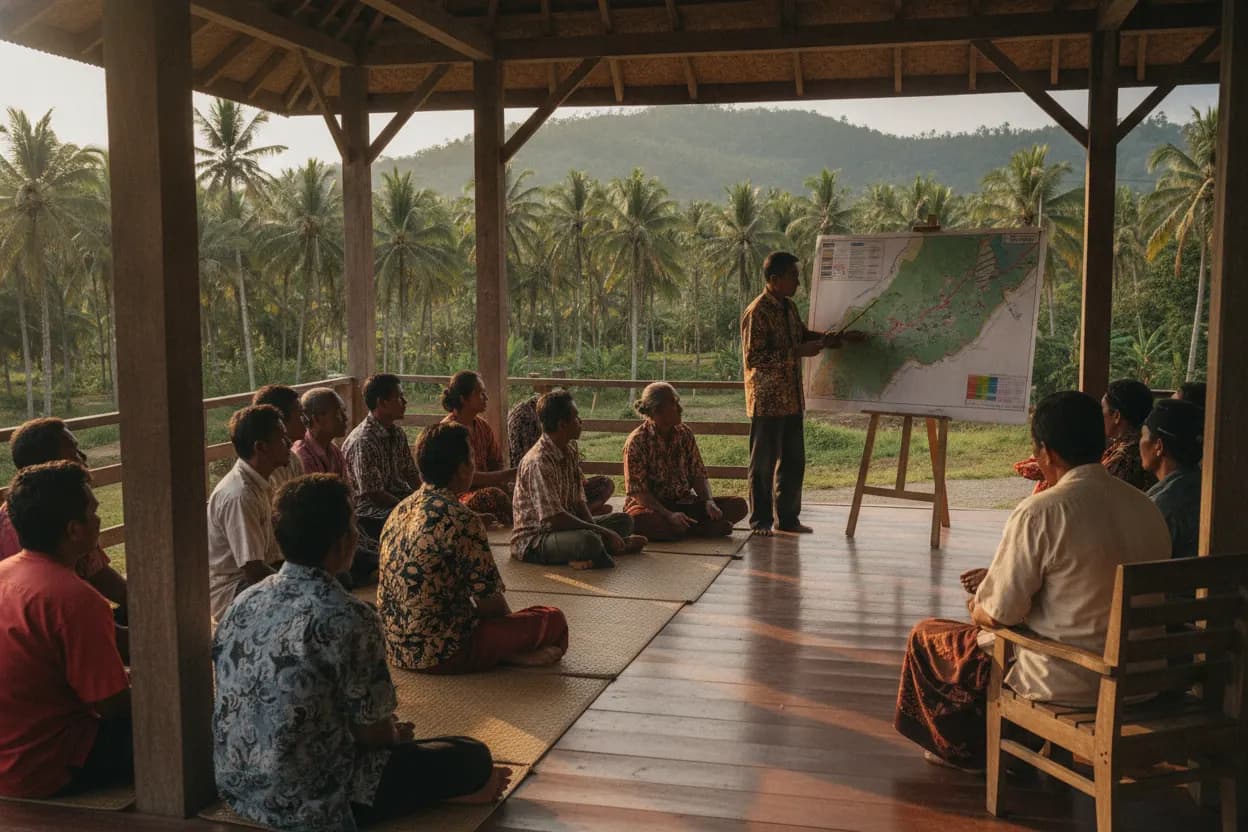
The village decides first.
No one is forced to leave. The programme follows the World Bank Environmental and Social Framework.
Consent first
Free, prior and informed consent: information in the local language, at least 30 days to decide, a decision in the village assembly with adat leaders and women, and a written agreement.
Land and livelihoods
Agreements with land users before work starts; land returned in better condition. Income is measured before and after one and three years.
Engagement and grievances
A grievance mechanism that also works anonymously, with an answer within 30 days. Site results are public, without personal data.
How to join
Land with mine waste? Register it here.
Landowners, cooperatives and permit holders (WPR/IPR) can register for clean-up. ESMI checks the site with the regional government.
Register: name, village/regency, rough area, type of waste.
We contact you and the regional government within two weeks.
Scan and field visit, with the village’s consent (FPIC).
If the site joins the programme: contract, clean-up, land returned.
Registering is free and not binding.
Pilot Bolmong
Already under way in Bolaang Mongondow.
The Province of North Sulawesi has allocated 100 ha for the first ESMI site. The local cooperative (KUD) is being built and will run the work on site with ESMI, with crews from the surrounding villages. Every test result is published.
Source: ESMI business plan (Nov 2026) estimates; ESMI articles 1 and 3 (Nov 2026); World Bank Environmental and Social Framework.
Talk to us about your land or cooperative.
We reply within two working days. Registering is not binding.