
Invest
Finance a 10‑tonner. Put a clean‑up unit to work.
For investors who want to finance at least one ESMI 10-tonner: USD 1.7 million per complete unit, 49,640 tonnes of mine waste cleaned per year and 26 legal jobs on site.
The unit
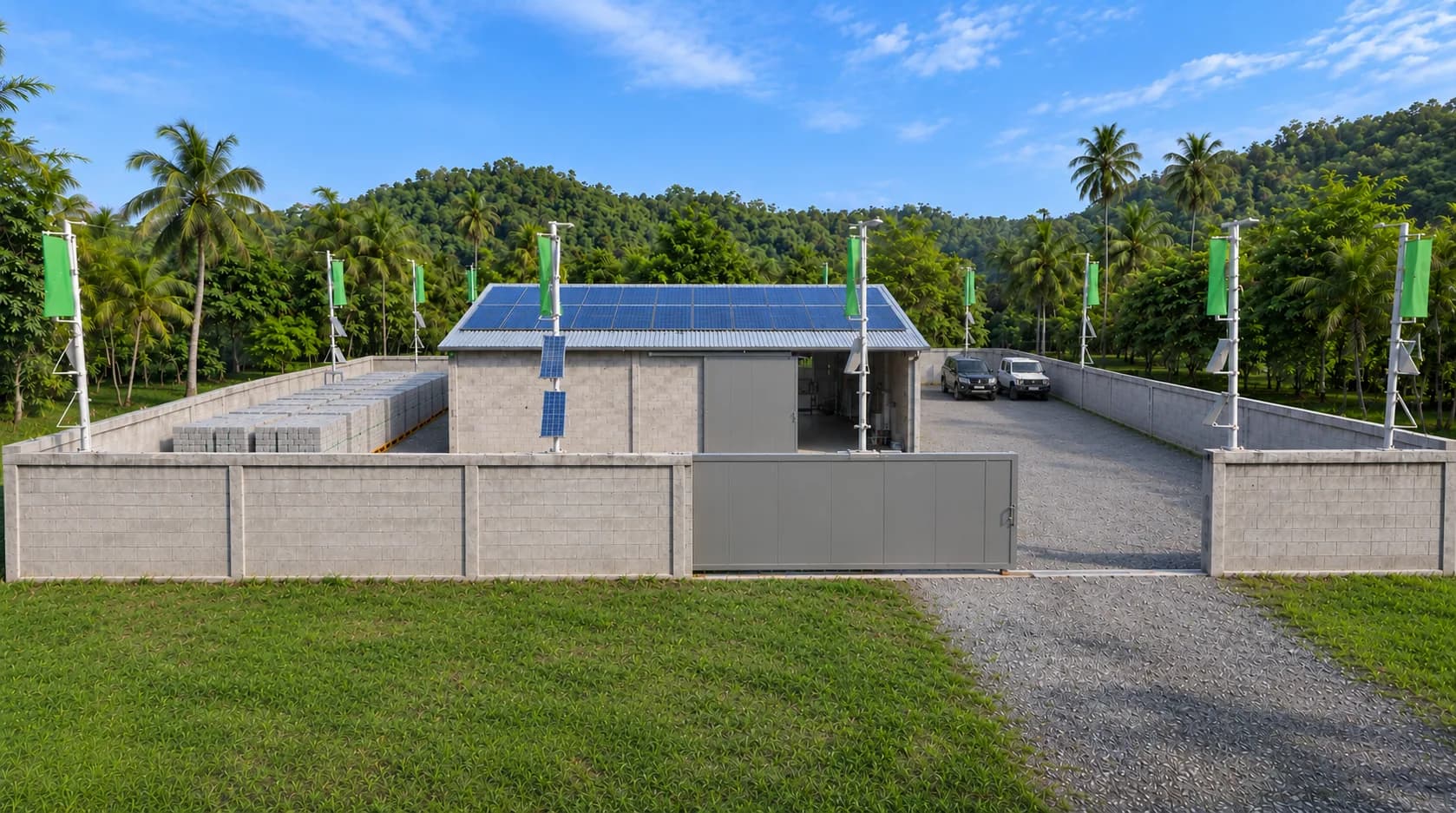
One complete plant in a walled yard, on wind, sun and the grid.
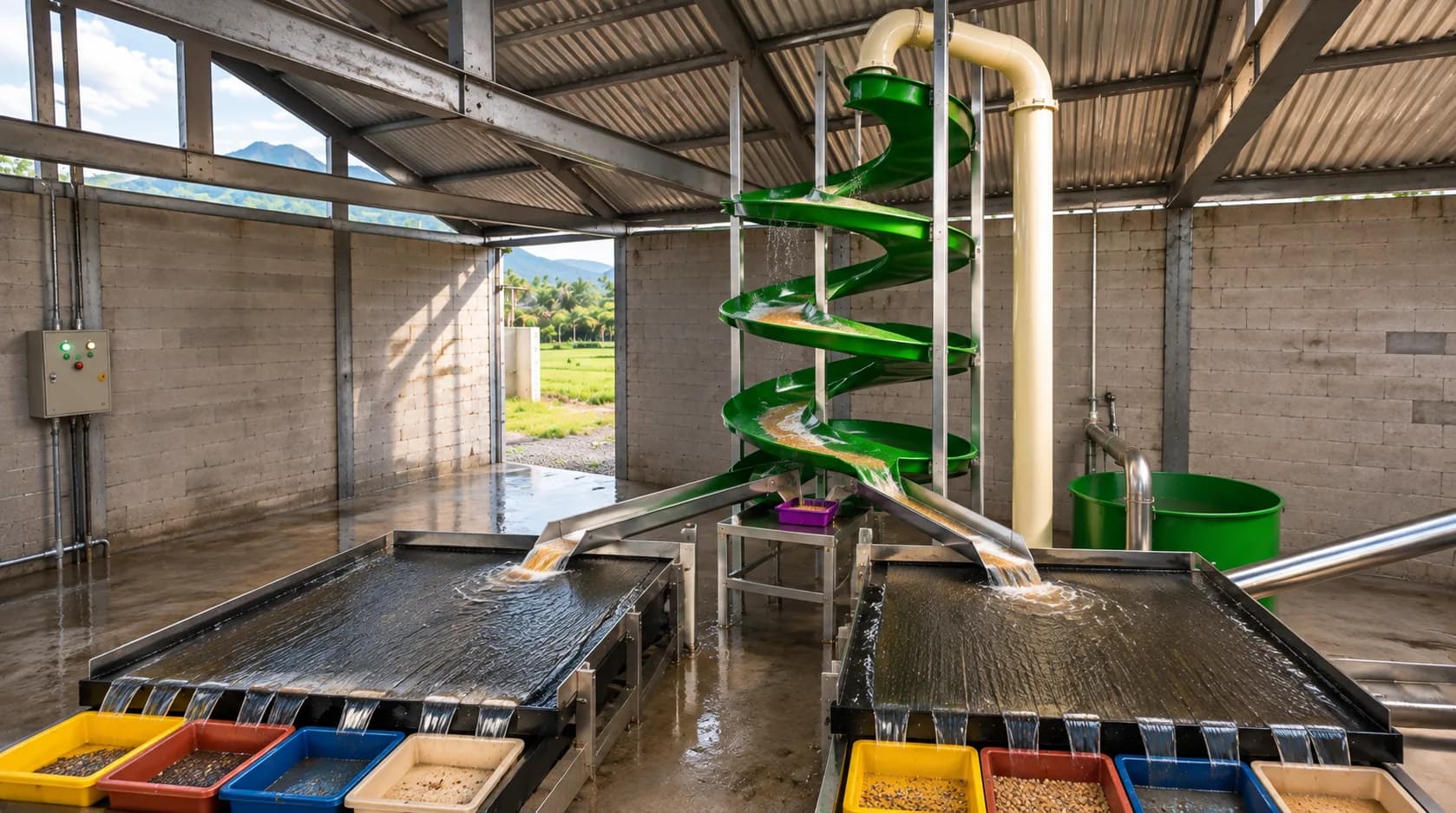
The 10-tonner will clean mine waste on site (planned 2027) without mercury or cyanide. It will treat ten tonnes an hour in two shifts.
1.7M USD
per complete unit, including set-up
ESMI programme model, key figures, Nov 2026
10t/h
throughput per unit
ESMI machine specification
49,640t/yr
mine waste cleaned per unit per year
ESMI programme model, key figures, Nov 2026
26
permanent jobs per unit, at least 80% from nearby villages
ESMI programme model, key figures, Nov 2026
How a unit is paid
Paid per verified tonne, not per promise.
The unit is paid from the clean-up itself. Funders such as development banks, governments and climate funds pay a fixed fee for every tonne that is cleaned and independently verified.
Funders pay per verified tonne
A fixed clean-up fee per verified tonne, set open-book on a cost-plus basis: on average USD 39.20 per tonne over ten years.
ESMI owns and runs the unit
The machines are owned and operated by ESMI and financed over five years. ESMI organises the work, the crews and the reporting.
The investor finances the unit
The investor provides the financing for one or more complete units. The terms are set in a contract, never on this page.
Money only on results
Payments run through a ring-fenced account and are released per verified tonne and milestone.
| Figure | Value | Source |
|---|---|---|
| Price per complete unit | USD 1,700,000 | ESMI programme model, key figures, Nov 2026 |
| Average clean-up fee | USD 39.20 per verified tonne, over ten years | ESMI programme model, key figures, Nov 2026 |
| Throughput | 49,640 t per unit per year | ESMI programme model, key figures, Nov 2026 |
| Financing period of the machines | Five years | ESMI programme plan |
The fee covers all costs, including staff, site set-up, training and reporting, and is reviewed every year. Figures are programme estimates, not forecasts of any investor result.
Investor app · Full transparency
Your machine, live: every tonne, every gram.
Every ESMI 10-tonner will have sensors linked to the ESMI app. As an investor you see at any moment how much is processed, at what grade, what comes out after refining and what you earn.
 ENIDIN
Grade through the process
This month
ENIDINFeed grade, last 24 h (g/t)
Batches
Sensors on this machine
Site
What you see, per machine
- Grade at every moment: g/t (= ppm) of the feed, live from the belt.
- ppm through the process: concentrate, tailings and the bar after refining.
- Tonnes and gold: per hour, day and month.
- Mercury captured and water quality.
- Your share and payouts, with a monthly statement.
- Where your machine is, and how clean the heap is.
How we keep it honest
- Sensors are calibrated; the XRF is checked every morning with a reference sample.
- ESMI labs on site do the daily analyses. Unisma (Malang), an accredited lab, checks about 10 % of the samples and grows our microbes. Everything is done in Indonesia.
- The gold room works with a two-person rule and a camera; bar weights match the bullion bank.
- Every reading is time-stamped and stored, and cannot be edited afterwards.
Monthly statement · example at 2 g/t
- 1 · Feedbelt scale + XRFt/h · g/t
- 2 · Grindpower + throughputt/h
- 3 · Shaking tableconcentrate scale + XRFppm concentrate
- 4 · ESMI microbespH, ORP, flow, Hg vapourppm tailings
- 5 · Gold roomscale, XRF bar check, camera‰ after refining
Example screens (design) of the ESMI investor app. Figures on the screens are illustrative, at our 2 g/t lower bound.
Where it works
Where every dollar avoids the most damage.
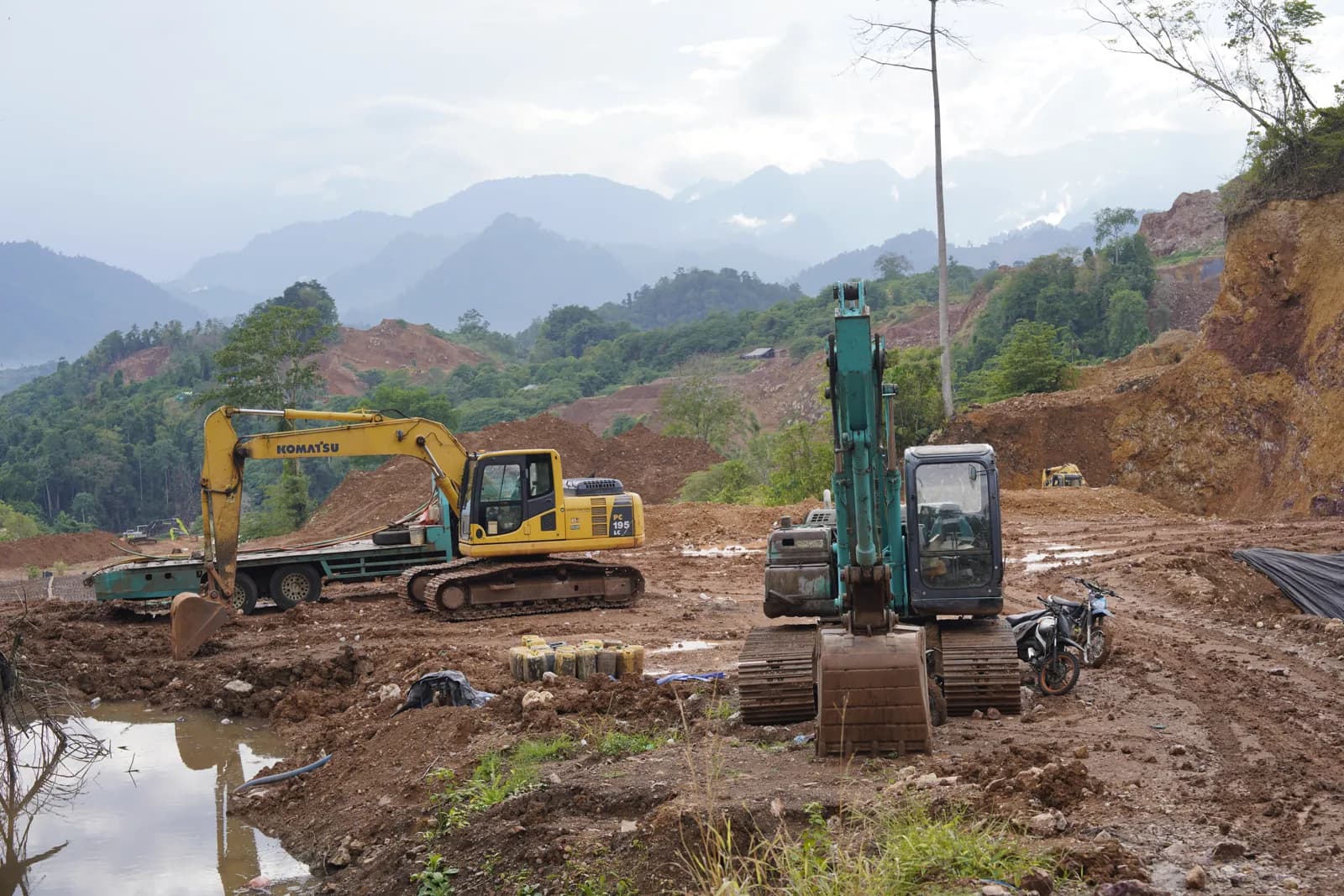
Units go first to the regions where damage avoided per dollar is highest and where roads, power and water are already in place. In the top ten regencies, every dollar of clean-up avoids about USD 5.1 of damage to health, water and land.
- Top provinces in the model: Central Kalimantan, West Kalimantan, Jambi and Riau.
- Sites with road access, power and water first.
- Only where the government has designated the site and the village has given consent.
Source: This is a societal benefit-cost ratio (8% discount rate, 20 years, conservative), not a return for investors. ESMI program model, Nov 2026.
Risk factors
Read these before any conversation. The information pack covers each in detail.
Funding timing
Fee payments depend on funders committing on time. Delays in funding delay the work.
Technology proven in the pilot first
The method is being proven in the Bolmong pilot. If a test fails, the method changes before any scale-up.
Site permits and consent
A unit works only on a designated site with permits and village consent. Both can take longer than planned.
Regional costs
Transport, fuel, labour and logistics differ per region and can raise the cost per tonne.
Market for bricks
Bricks and paving from cleaned sand need local buyers. Demand can be lower than expected.
Safeguards for investors
Built in from the start, for funders and investors alike.
Ring-fenced account
Money for each unit and site is kept apart and released only against verified results.
Independent verification
Every tonne is verified independently before it is paid.
External audit
An external auditor checks costs and revenue every year.
Insurance
Machines and operations are insured.
The process
Five steps to a signed term sheet.
Intro call
A first conversation about your aims and the programme.
NDA
A mutual non-disclosure agreement.
Investor information pack
Model, contracts, risks, safeguards and site data.
Site visit to the pilot
See the pilot in Bolmong, North Sulawesi, with the team.
Term sheet
Terms for one or more units, after due diligence.
Request the investor information pack.
Tell us who you are and how many units you are considering. We reply with a date for an intro call.
Not an offer of securities and not investment advice. Read our claims and disclaimers