Skip to content
ESMIEco Sustainable
Mining Initiative
Language
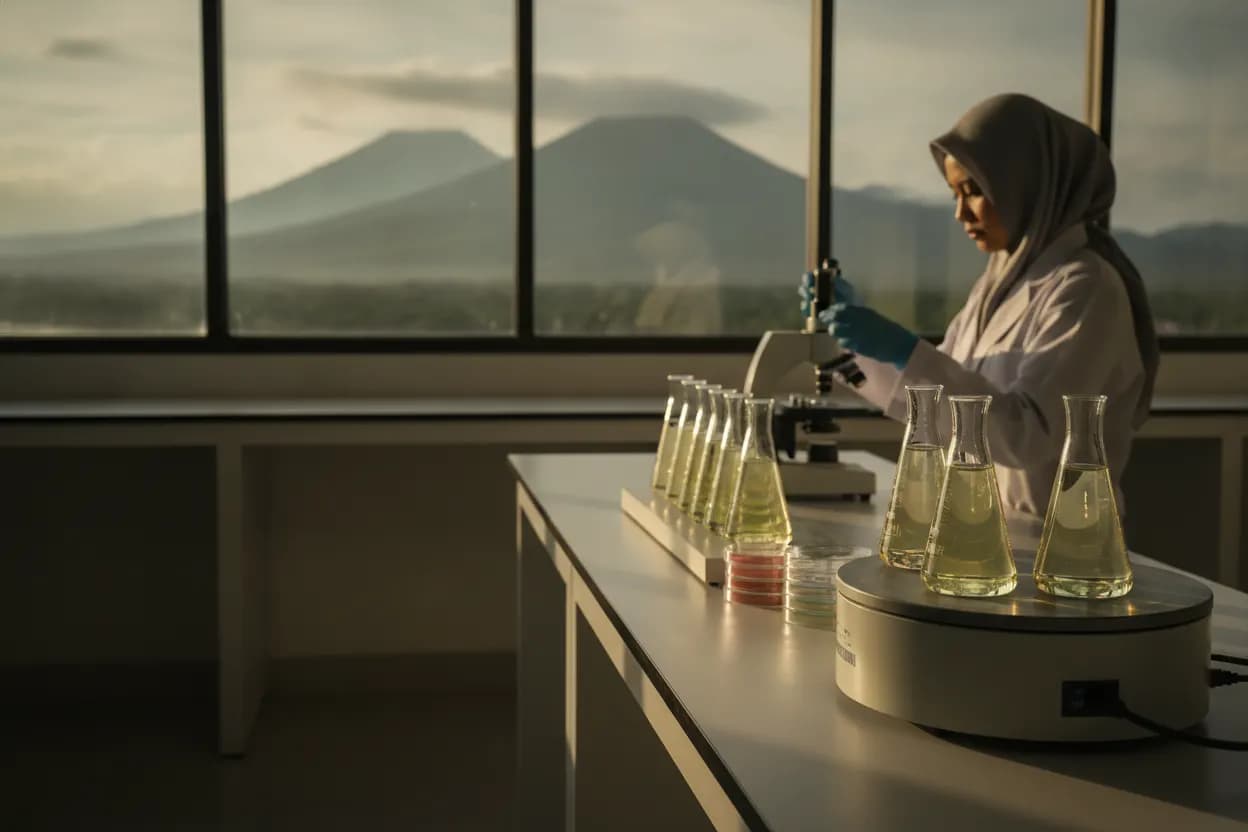
An Indonesian laboratory with microbe cultures in flasks on a shaker

ESMI microbes

ESMI microbes turn harmful liquid mercury into a solid that can be removed, and break cyanide down.

ESMI selects and cultures microbes for two tasks in mine waste: making mercury solid so it can be separated and stored safely, and breaking cyanide down into harmless compounds.

ESMI microbes

What are microbes?

Microbes are single-celled organisms such as bacteria and fungi, too small to see with the naked eye. They live everywhere in soil and water. Some break down or bind toxic substances. Nature does this, but slowly. ESMI speeds it up in a controlled process.

What ESMI microbes do

Each task has its own mix. The microbes are described here by function; their composition is ESMI’s property.

Mercury: from liquid to solid

Mercury made solid and removed

Mercury vapour and liquid or dissolved mercury become a solid, heavy compound. It no longer evaporates or dissolves, so it does not reach air, water, rice or fish. The shaking table then separates it from the light sand, and it is packed for safe storage under the Minamata Convention.

Cyanide: broken down

Break down cyanide

Cyanide left by leaching is broken down into harmless compounds such as ammonium and carbon dioxide. The target in the pilot is WAD cyanide (cyanide that can still dissolve) below 0.5 mg/L.

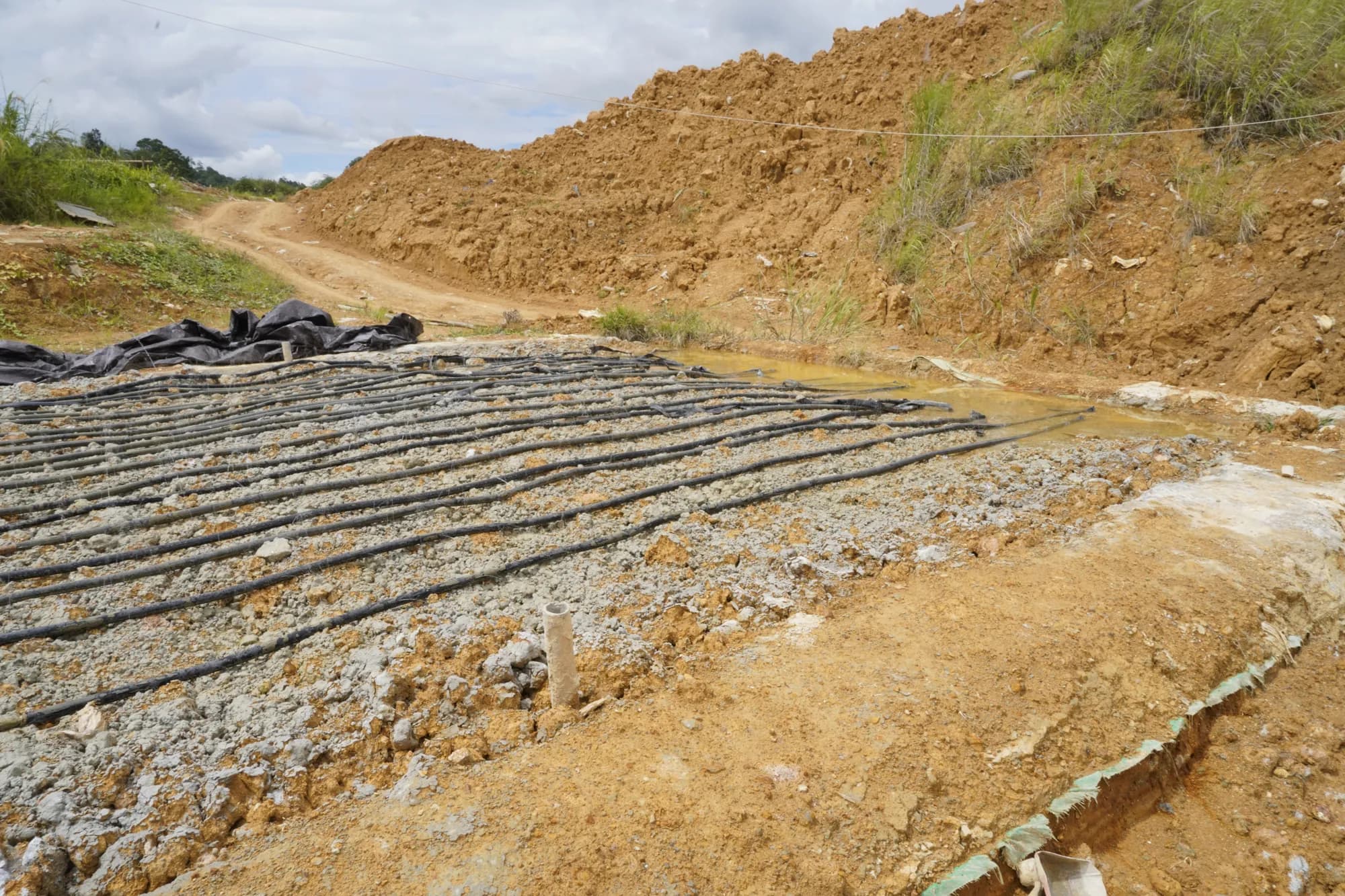
A leach pad with drip lines on plastic sheeting, polluted mining area in North Sulawesi
This is where the cyanide comes from: rock on plastic, dripped with cyanide solution. Polluted mining area in North Sulawesi, 2026; not an ESMI site.
What ESMI microbes do with mercury and cyanideTwo panels. Mercury: mercury vapour and liquid or dissolved mercury are made solid by ESMI microbes, a heavy compound. The grains settle and no longer evaporate or dissolve. The shaking table separates them from the light sand, and they are packed and taken to safe storage. Cyanide: ESMI microbes break cyanide down into harmless compounds such as ammonium and carbon dioxide.MercurysolidMercuryvapour + liquid ordissolved mercuryESMI microbesmake the mercurysolidSolid, heavycompoundgrains settle; nolonger evaporates ordissolvesShaking tableseparates it fromthe light sandSafe storagepacked in sealedcontainersCyanidebroken downCyanide (CN⁻)in process water andsandESMI microbesbreak the cyanidedownAmmonium (NH₄⁺)+ CO₂harmless compoundsHarmlessthe water stays in the closed circuitMercury cannot be broken down: it is captured and stored safely.What ESMI microbes do with mercury and cyanideTwo panels. Mercury: mercury vapour and liquid or dissolved mercury are made solid by ESMI microbes, a heavy compound. The grains settle and no longer evaporate or dissolve. The shaking table separates them from the light sand, and they are packed and taken to safe storage. Cyanide: ESMI microbes break cyanide down into harmless compounds such as ammonium and carbon dioxide.MercurysolidMercuryvapour + liquid or dissolved mercuryESMI microbesmake the mercury solidSolid, heavy compoundgrains settle; no longer evaporatesor dissolvesShaking tableseparates it from the light sandSafe storagepacked in sealed containersCyanidebroken downCyanide (CN⁻)in process water and sandESMI microbesbreak the cyanide downAmmonium (NH₄⁺) + CO₂harmless compoundsHarmlessthe water stays in the closedcircuitMercury cannot be broken down: itis captured and stored safely.
Mercury is an element: it cannot be broken down, so ESMI captures it and stores it safely. Cyanide is broken down into harmless compounds.
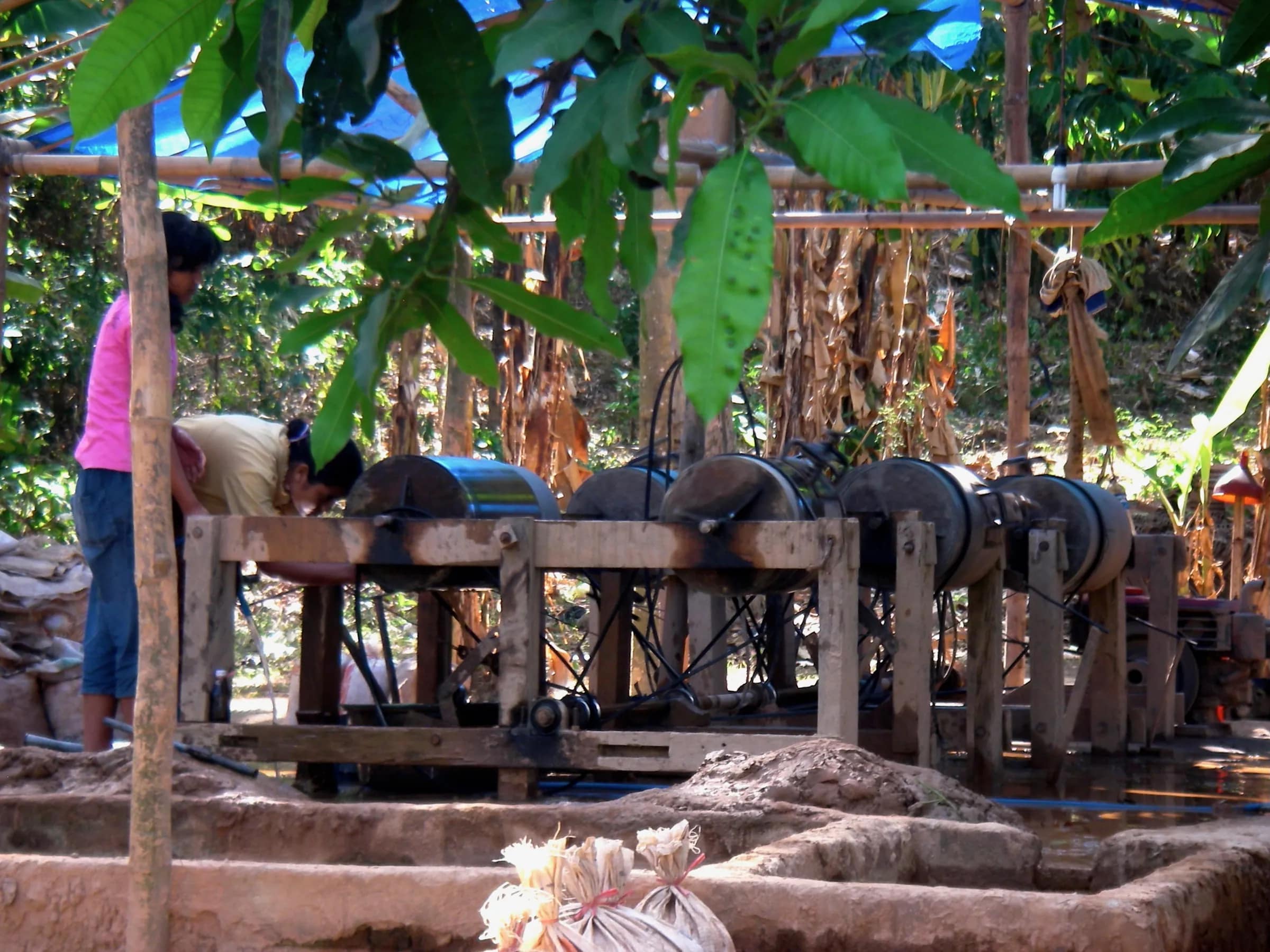
Tromol mills in Sekotong, Lombok: ore and mercury turn together for hours. This residue is what ESMI's microbes and shaking tables deal with.

Science partner · Universitas Islam Malang

The science is led by Unisma, an Indonesian university

Universitas Islam Malang (Unisma) in East Java is ESMI’s science partner under a memorandum of understanding. Unisma cultures the ESMI microbes for the national programme, checks the results independently, runs the accredited lab work and brings students into the field.

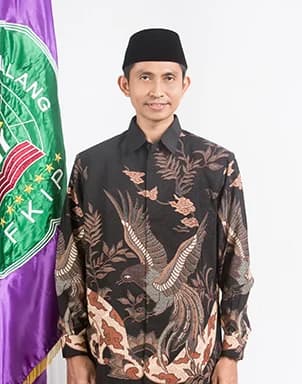
Portrait of Dr. Imam Wahyudi Karimullah of Universitas Islam Malang
Dr. Imam Wahyudi Karimullah, S.S., M.A.Universitas Islam Malang. Leads Unisma’s partnership with ESMI.

Culture under licence

Unisma grows the ESMI microbes for the whole country under ESMI licence, with strain quality control, a biosafety permit and a cryobank.

Independent review

Unisma checks the science: baseline measurements, double-blind tests and the mercury mass balance.

Students on site

Students work in crews, labs and management on the sites, and graduate with field experience.

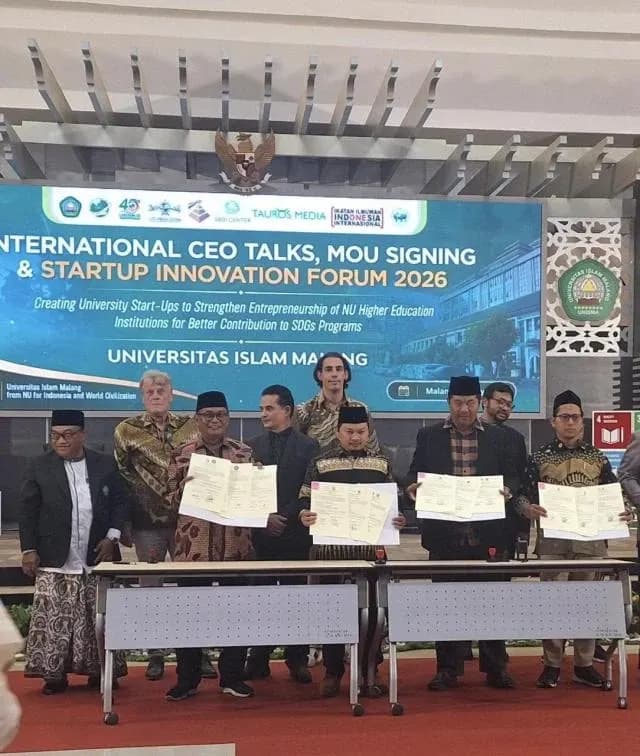
Signing of the memorandum of understanding between ESMI and Unisma on stage
MoU with Unisma: lab analyses and student research.
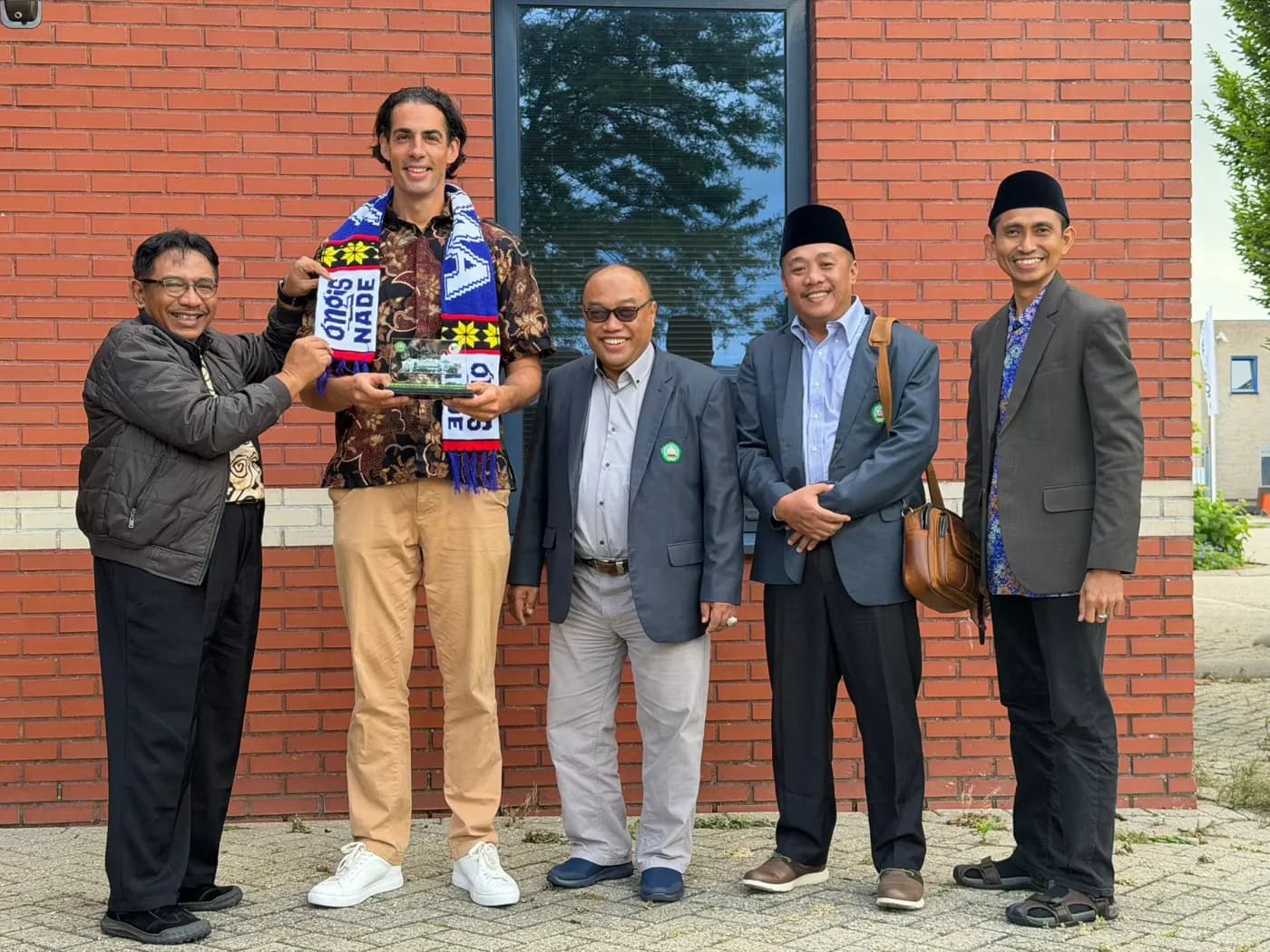
ESMI with university leaders holding a gift in front of a brick building
Research partnership with Universitas Islam Malang (Unisma).
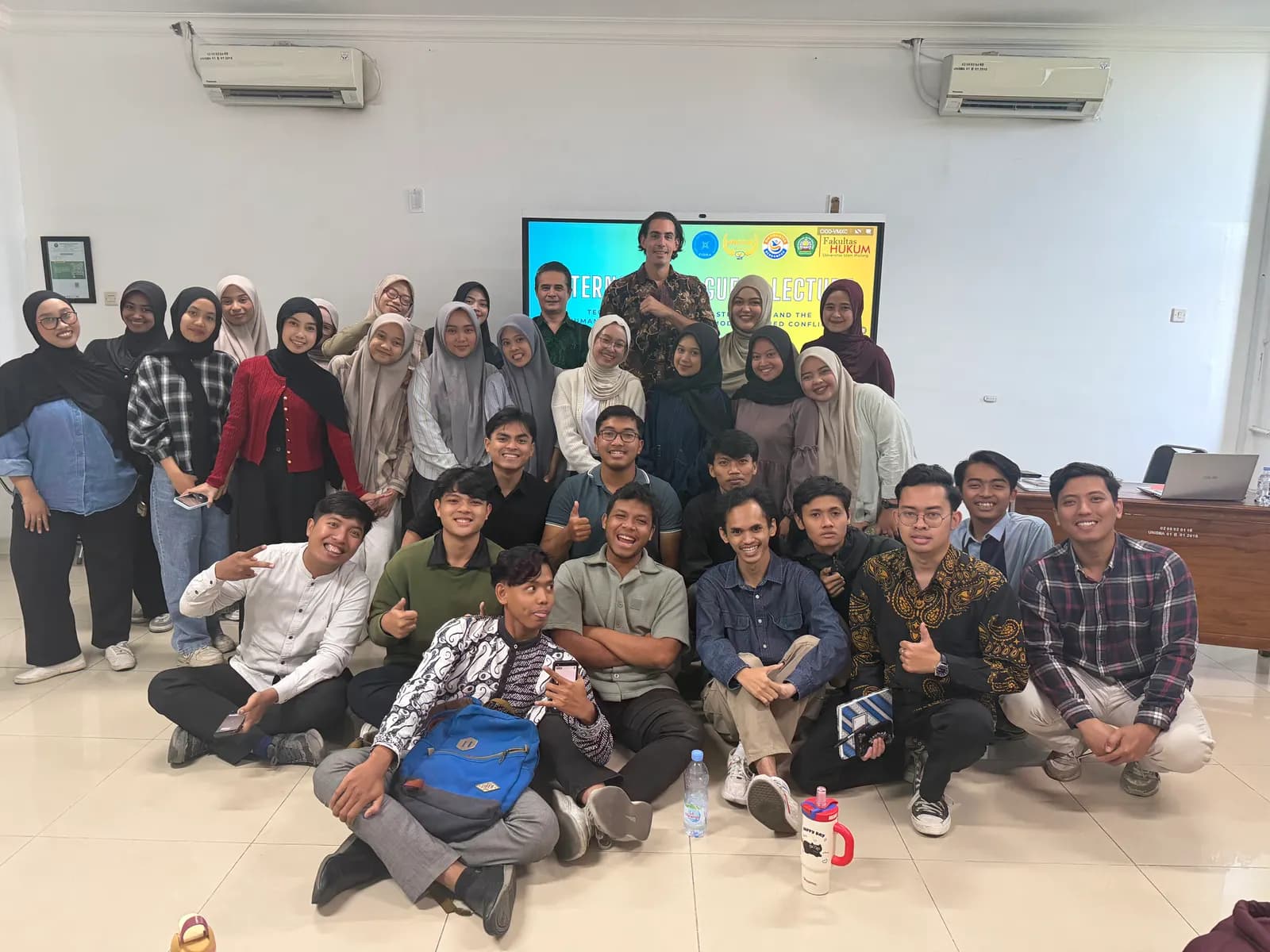
A large group of Unisma students and the ESMI team in a lecture room
Unisma students who will work on the sites in crews, labs and management.

Cultured in Indonesia

About 0.2 litre per tonne

The crew sprays the microbes with POCO on each mined cell and doses them into the process water of the 10-tonner. The water runs in a closed circuit.

A cold chain to the sites

Activation tanks at the regional hubs keep the cultures active on their way to the machines.

Measured, not claimed

WhatHow it is measuredTarget
Mercury made solid and removedMass balance of Hg in feed, concentrate, residue, water and air±15%; residue below the Indonesian limit in the standard leaching test (TCLP-B)
Cyanide broken downFree, WAD and total cyanideWAD < 0.5 mg/L
Microbes workDouble-blind: treated against untreated, microbe counts, Hg and CNSignificantly more microbes, less Hg and CN
MethylmercuryIn water and sludge, treated against untreatedHypothesis, not in the claims

Research with Unisma

  1. from 2028

    ESMI microbes in the field: mercury made solid and removed, cyanide broken down

  2. from 2028

    POCO in process water: quality and reuse

  3. from 2027

    Mercury in fish, rice and people around gold-mine waste

Results are published together with Unisma after review of confidential data and intellectual property.

Source: Business plan § 2.1 and § 2.2; masterplan Nov 2026; Akcil 2003 (biological cyanide degradation in mining).

Gotong royong

The pilot is under way. The next step is scale.

The pilot in Bolmong has started. ESMI is now raising large-scale funding to clean up Indonesia’s mine waste. Investors can start with one 10-tonner (USD 1.7 million).

ESMI also works as a hired partner. Mining companies and cooperatives can bring in ESMI to upgrade an existing plant with its microbes and methods, so it recovers more and can move away from mercury and cyanide.