
Funders
World Bank, ADB, GEF agencies and climate funds, as a loan or grant to the government or via BPDLH. Banks, Islamic banks and DFIs finance the machines.
Financing
±92% of the gold waste land lies outside any permit. There is no liable party to pay. Without international finance, this waste will not be cleaned up. The programme combines grants, a national fund and private finance.
Every month of delay costs Indonesia about USD 46 million in damage. USD 548 mln a year ÷ 12 · ESMI national report on Indonesia’s mine waste § 13.5
USD 40.7 mln
phase 1, 2027–2028
USD 12.1 bn
full programme 2027–2036 in current prices, incl. 10% contingency, VAT, verification and price increases; base in 2026 prices USD 8.16 bn
World Bank, ADB, or GEF through UNDP, UNEP or UNIDO. Government is the recipient; ESMI is the implementing partner under the funder’s procurement rules.
BPDLH manages domestic and international environmental funds and pays on verified results.
IFC, FMO, green and sharia banks finance the machines and factories on ESMI’s balance sheet.
Payment per verified tonne and milestone, through a ring-fenced account. Every site has a 20% buffer.
Results per dollar
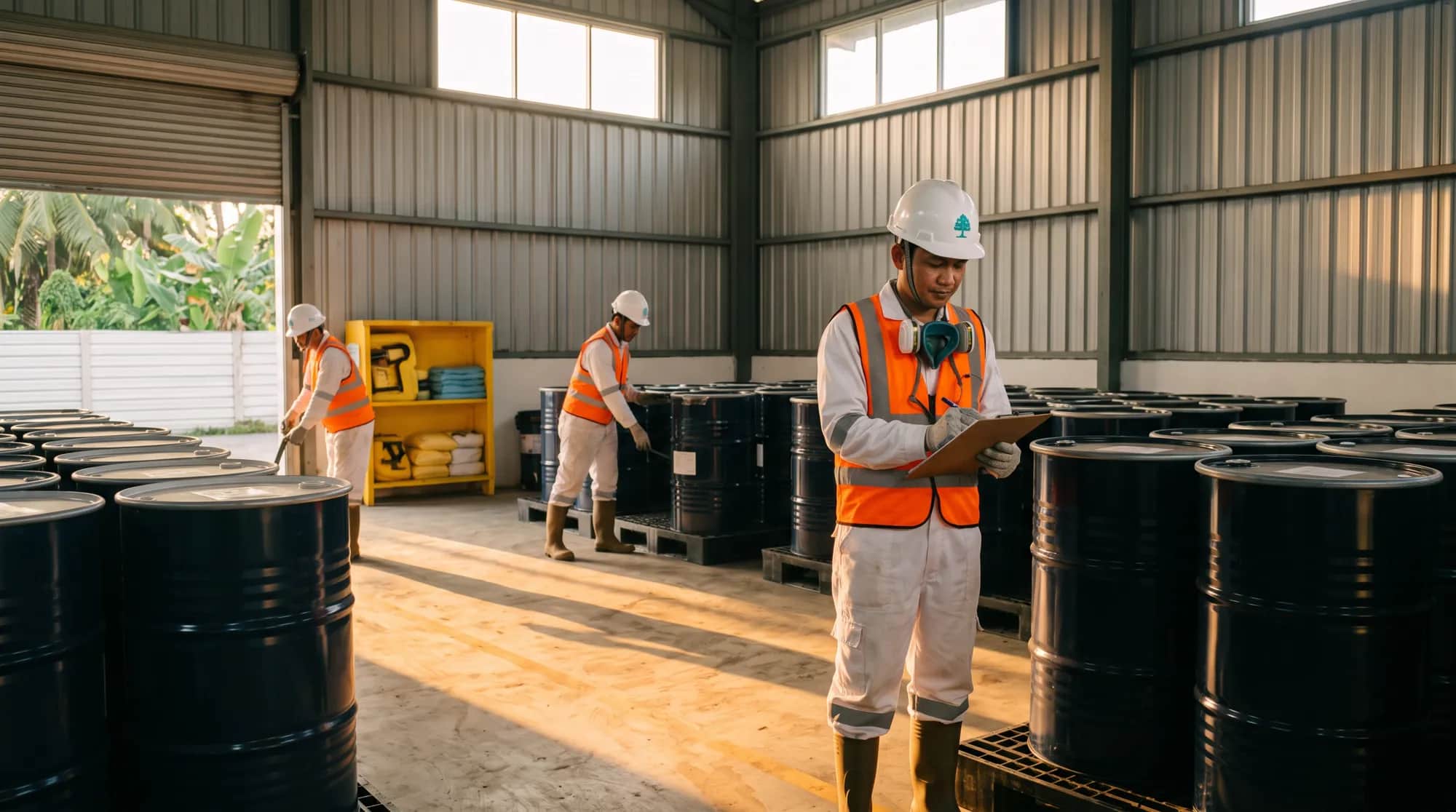
22,100t
mine waste processed, mercury made solid and removed
Estimate · Business plan § 1.3
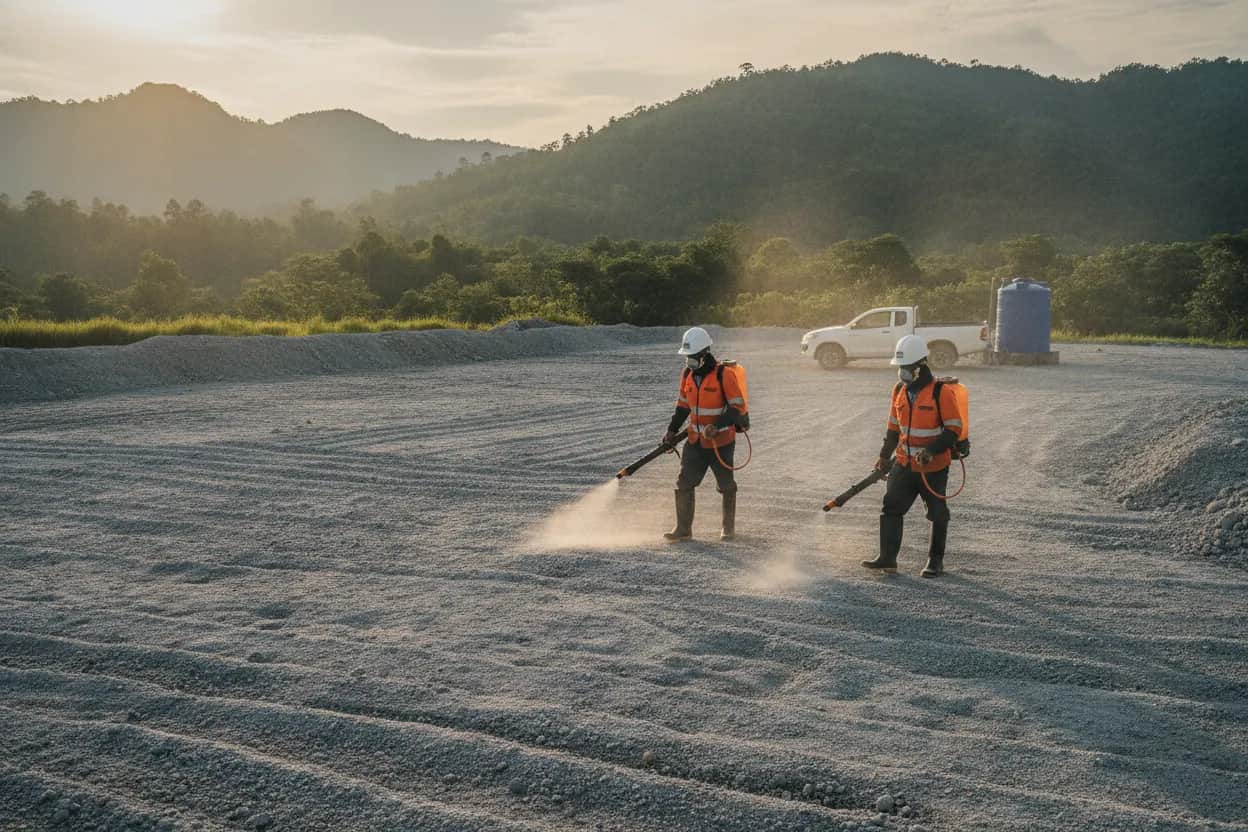
12ha
land cleaned and returned to the village
Estimate · Business plan § 1.3
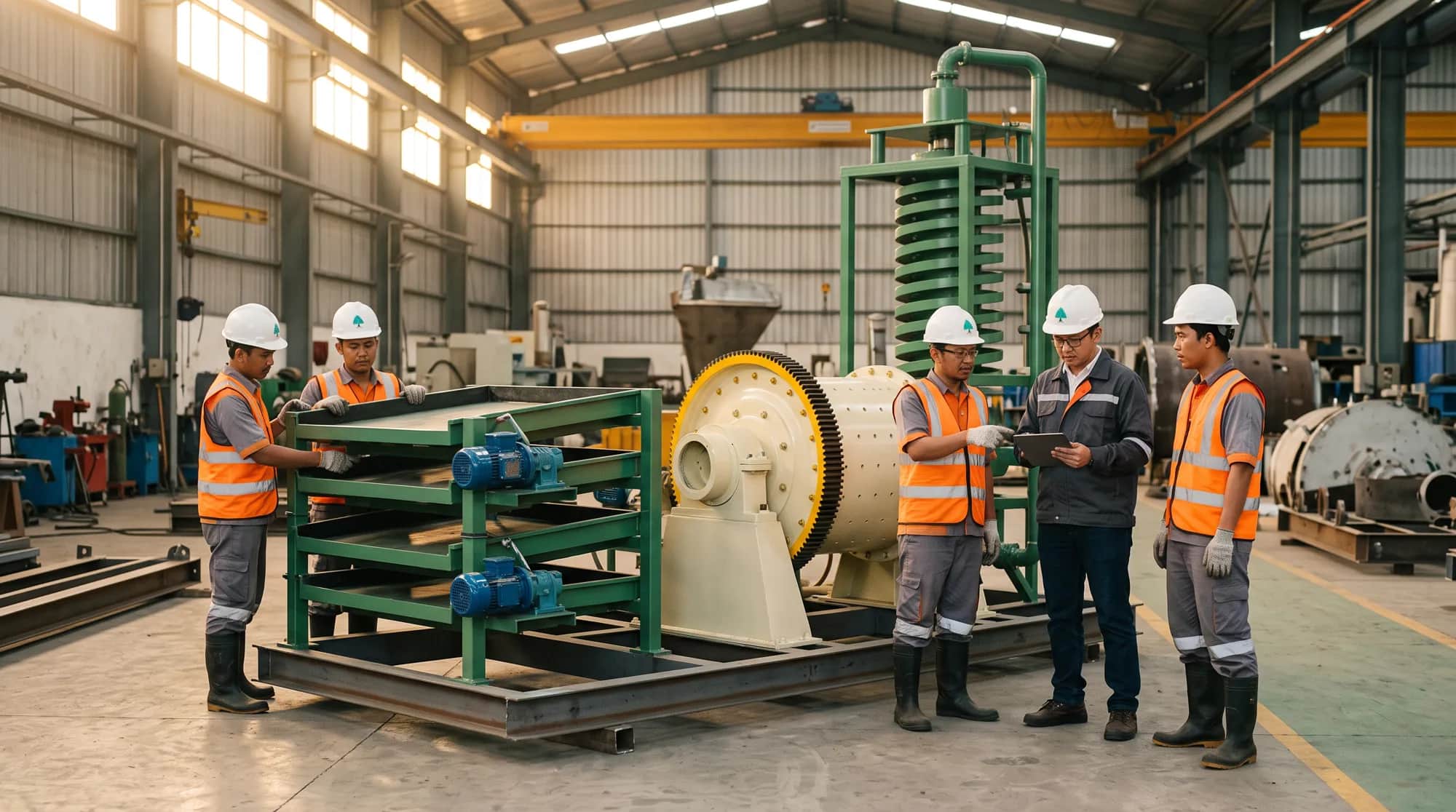
2.5
permanent jobs, former miners first
Estimate · Business plan § 1.3
2.7–4.7×
damage avoided per dollar, mercury heaps first: health and environment only, up to forest, carbon and nature included
Estimate · Business plan § 1.2
Step by step
Go/no-go between phases: throughput, cost per tonne, mercury balance, brick tests, village consent and an independently confirmed baseline.
How the money flows
Every dollar follows the same path, and every step is checked. Nothing is paid before an independent verifier has confirmed the work.
Grants, loans, funds and investors commit to a phase or a site.
One separate account per funder; money cannot be used elsewhere.
Tonnes processed, mercury made solid and removed, bricks made, hectares restored.
An accredited verifier checks tonnes, hectares and milestones; Unisma checks the science.
A fixed, open-book fee per verified tonne (on average USD 39.20 over ten years).
External audit every year; results per site published.
A share goes to the cooperative, landowners and the province, agreed per site and reported publicly every year. The programme does not depend on it.
Business plan §§ 4.1–4.4 and 5.1.
Priorities
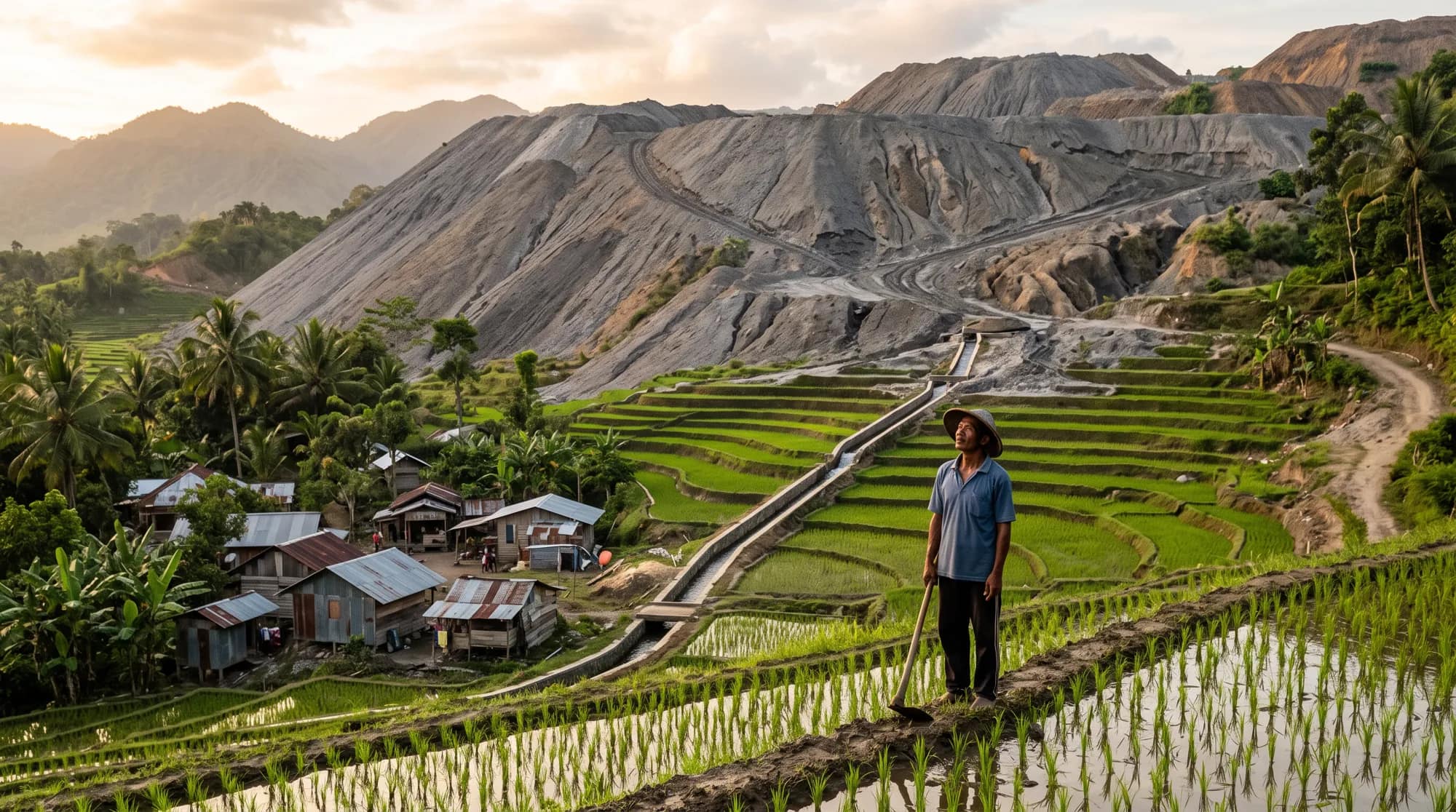
The programme starts where mercury, people and accidents converge and where roads and power are already in place. There, clean-up avoids far more damage per dollar than the national average.
±5.1×
damage avoided per dollar in the ten worst-affected regencies
EstimateConservative method: 8%, 20 years
±3.7×
in the twenty worst-affected regencies
EstimateConservative method: 8%, 20 years
USD 58 mln
damage avoided per year in the top ten, for about USD 168 mln in clean-up
EstimateBusiness plan, regional analysis
Most damage avoided per dollar in Central Kalimantan, West Kalimantan, Jambi and Riau. Estimates; the scan in Java, Sulawesi and Bali-Nusa Tenggara is checked in the field first. The full list per regency is available on request.
The funders
ESMI organises the work and brings the finance together. Government designates sites, grants permits and access, and can act as recipient of international funds; how costs are shared is agreed per site.
Have a legal duty and a guarantee fund. ESMI implements; the fund pays.
Clean up their own concessions first, including illegal mining on them, and buy bricks.
Reforestation and restored nature on cleaned land help pay for management.
World Bank, ADB, GEF, climate funds and blended finance (public money that reduces the risk for private investors) cover the gap for land without a liable party.
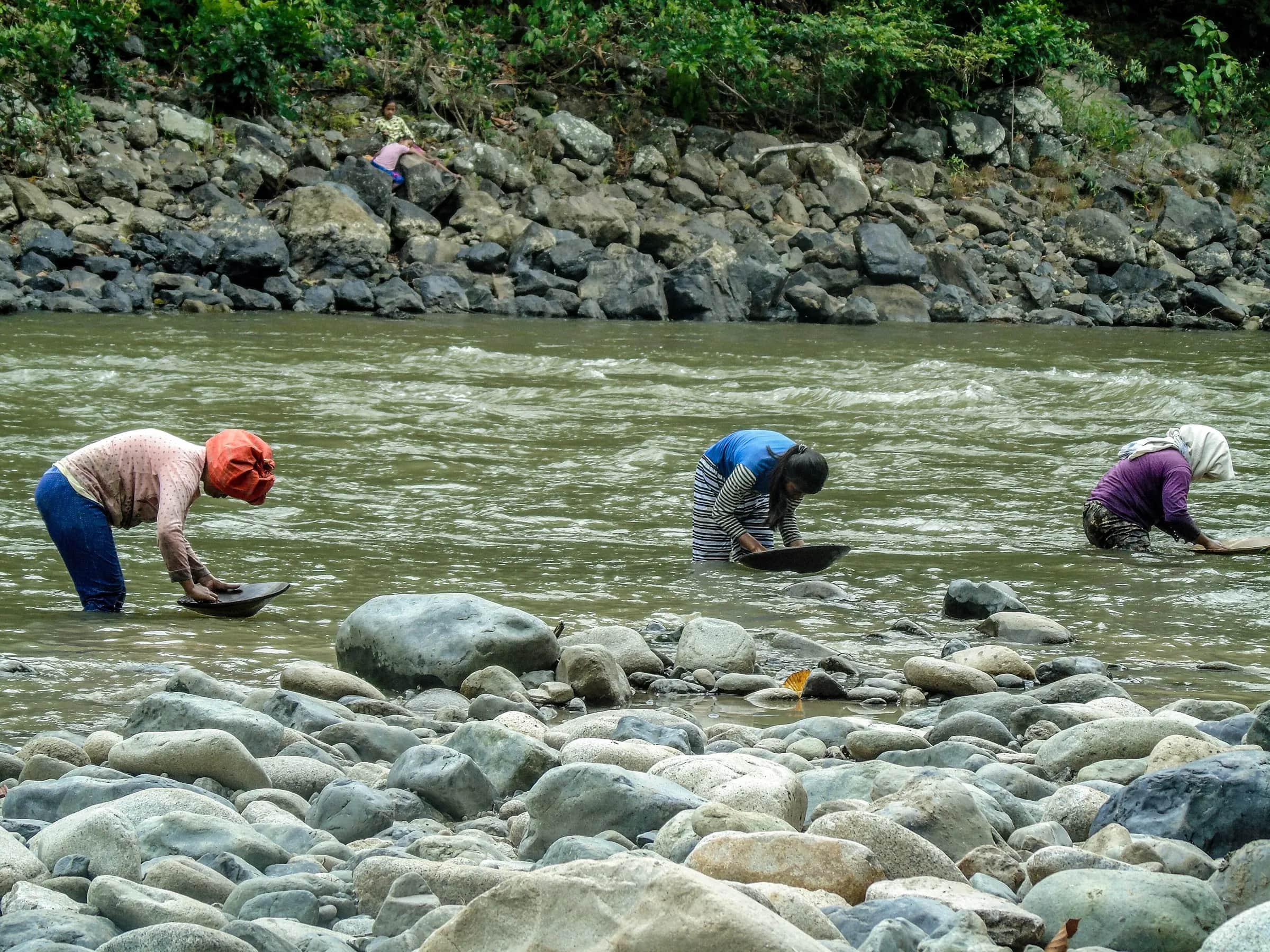
Doing nothing is the most expensive option.
The comparison
| Value | |
|---|---|
| Damage if nothing is done | USD 548 mln per year |
| Damage avoided by cleaning up | USD 273 mln per year |
| Damage avoided per dollar, mercury heaps first: conservative | ±2.7× |
| Damage avoided per dollar, mercury heaps first: full | ±4.7× |
| Damage avoided per dollar, zero waste: conservative | ±0.5× |
| Damage avoided per dollar, zero waste: full | ±0.9× |
Source: Business plan §§ 1.2, 4.1–4.6. Conservative: avoided health and environmental damage only, 20 years, discounted at 8%. Full: 30 years at 3.5%, plus half of the lost forest services, carbon and biodiversity on restored land. Costs are the same in both. Bricks and jobs come on top.
Legal structure
Each party has one role and its own contract. Donor money is held in a separate project account and released only after independent verification. Machines and factory sit in separate companies, so they can serve as collateral.
1Money and mandate
World Bank, ADB, GEF agencies and climate funds, as a loan or grant to the government or via BPDLH. Banks, Islamic banks and DFIs finance the machines.
The executing agency (KLH or ESDM) designates sites, grants permits and access, and signs the framework contract with ESMI under the funder’s procurement rules.
The money sits in a separate account. An independent verifier checks tonnes, hectares and milestones; only then is payment released.
2Programme and assets
Indonesian company with foreign capital (PT PMA). Contract party, programme management and technology: POCO, ESMI microbes and the ESMI app.
The 10-tonners sit in a separate company per financing tranche, the factory in its own company. That way they serve as collateral for the funder.
University with its own contract: baseline, independent review, accredited lab and culture of the ESMI microbes under licence.
3Work on the ground
Indonesian companies (PT PMDN) with the staff and the mining-services licence (IUJP). They sign the contracts with cooperatives and permit holders.
Holds the permit and land rights for each site and sells recovered metal to an Indonesian bullion bank (a bank that buys and stores gold). Royalties go to the state.
Give consent in advance. The site contract covers jobs, grievances, the sharing of metal proceeds and the hand-back of the restored land.
Board with independent members and an audit committee, IFRS accounts with an external auditor, beneficial-owner reporting, an anti-corruption policy with a whistle-blower line, and a grievance mechanism on every site.
Proposal · to be agreed Source: Business plan § 3.3. Proposed structure, to be reviewed by an Indonesian lawyer and tax adviser; UU 3/2020, PP 96/2021, PP 22/2021, Perpres 10/2021, Kepmen ESDM 365/2026, World Bank Procurement Regulations (2023).
Cost per tonne
One 10-tonner is designed to treat 49,640 tonnes a year. Every dollar of the cost per tonne is accounted for, from the machine lease to the microbes. The programme’s fee is cost-based and paid only per verified tonne.
USD 36.80
total cost per tonne treated
27.77 operating costs + 9.03 machine lease, written off in five years
Energy assumes 20 kWh per tonne until the pilot measures.
| Cost line | Group | USD/t | % |
|---|---|---|---|
| Lease (USD 1.7 mln machine, 5 years) | Machine and lease | 9.03 | 24.5 |
| Regional surcharge (location, roads, wages) | Site, hub and logistics | 4.04 | 11.0 |
| Staff of the 10-tonner (16 FTE + roster reserve) | People and safety | 2.76 | 7.5 |
| Plant power (wind, sun and grid) | Energy | 1.40 | 3.8 |
| Site set-up; moving the equipment to the next site | Site, hub and logistics | 2.58 | 7.0 |
| Fixed site costs, camp and security | Site, hub and logistics | 2.42 | 6.6 |
| Unit maintenance | Machine and lease | 2.05 | 5.6 |
| Hub, head office and government relations | Site, hub and logistics | 1.72 | 4.7 |
| Re-treating batches that fail the test (B3 handling) | Process, environment and community | 1.61 | 4.4 |
| Camp, food and administration | People and safety | 1.55 | 4.2 |
| Lab and QA (fire assay, TCLP, strength, ABA/NAG acid tests, mercury/HCN) | Process, environment and community | 1.20 | 3.3 |
| Diesel for digging and feeding | Energy | 1.07 | 2.9 |
| Transport from heap to unit | Site, hub and logistics | 1.00 | 2.7 |
| Safety and training (PPE, medical, K3, academy) | People and safety | 0.95 | 2.6 |
| Grinding media and wear parts | Machine and lease | 0.78 | 2.1 |
| Mercury capture, B3 disposal and safe storage | Process, environment and community | 0.60 | 1.6 |
| Other reagents | Process, environment and community | 0.50 | 1.4 |
| Import duties on parts and IT licences | Machine and lease | 0.44 | 1.2 |
| Insurance | Site, hub and logistics | 0.34 | 0.9 |
| Excavator and crusher maintenance | Machine and lease | 0.25 | 0.7 |
| POCO (process water) | Process, environment and community | 0.20 | 0.5 |
| Community, FPIC and grievance mechanism | Process, environment and community | 0.15 | 0.4 |
| Restoration per released cell (POCO, planting) | Process, environment and community | 0.10 | 0.3 |
| ESMI microbes (cultured by Unisma, cold chain) | Process, environment and community | 0.06 | 0.2 |
Model estimate, to be measured Source: Business plan, annex A; calculation model scenario C (key figures, 18 Nov 2026); price sources 6 Nov 2026 (UMP, PLN I-3, diesel, TCLP PNBP); infrastructure analysis v3 (991 gold sites) for the regional surcharge.
For development banks, UN agencies, national funds and governments. We reply within two working days and share the full programme proposal on request.