

Sustainable Development Goals
Seventeen goals. One programme. Measured goal by goal.
Cleaning up mine waste touches health, water, work, housing, nature and climate at once. For each of the 17 UN goals: what the programme does, which UN target it serves and how progress is measured.
All 17 goals, each with its own measure
Sustainable Development Goals
The programme works on all 17 goals. For each goal it names what it does, the UN target it serves and the indicator that shows progress. Results are checked independently before they are reported.
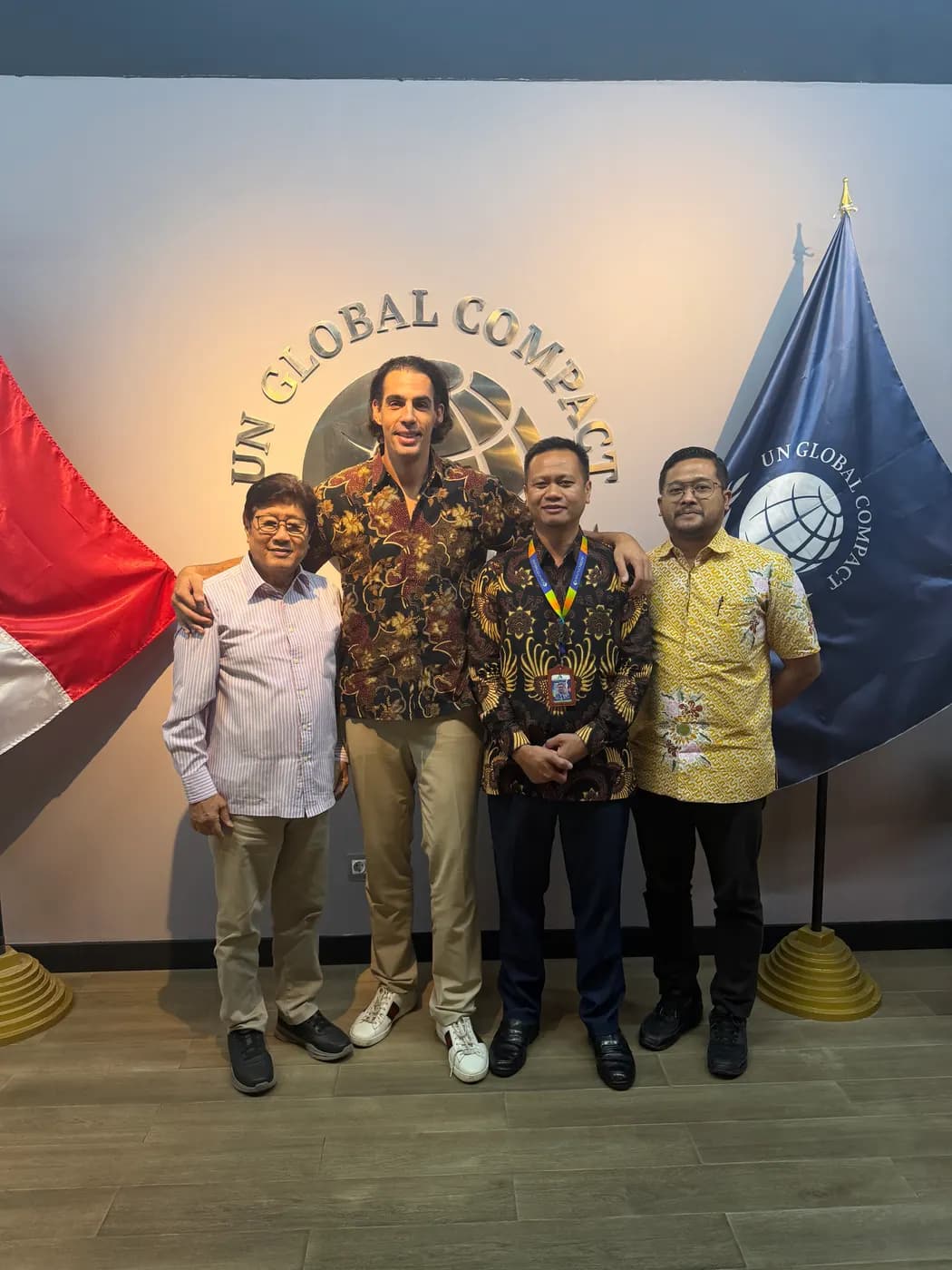
Founding partner · UN Global Compact
SBDI Foundation: bound to the UN Global Compact’s Ten Principles
ESMI was launched in 2025 by PT Eko Vitaris International and SBDI Foundation. SBDI stands for Sustainable Business Development & Innovation. Its mission is to improve education, entrepreneurship and the social ecosystem, and to support sustainable start-ups in the developing world.
SBDI Foundation was founded by an adviser in sustainable business development. Since 8 March 2021 it has been a participant in the UN Global Compact, the UN initiative for responsible business: it commits to the Ten Principles on human rights, labour, environment and anti-corruption, and to reporting on its progress every year.
SBDI Foundation is responsible for ESMI’s sustainability policy, so that ESMI is run as a business that is as sustainable as it can be. Food security is one of its largest fields: SBDI develops cassava products such as modified cassava flour (mocaf) and supplies production plants in Indonesia and Africa.
On behalf of Bank Indonesia, Prof. Jeroen Rijnenberg of SBDI is responsible for helping strong local food producers grow internationally, among them producers of herbs and spices, fruit and coffee. ESMI, landowners and cooperatives work with these producers, among other things to raise production.
Its fields of work are close to ESMI’s step 6: restoring degraded land, agroforestry, regenerative agriculture, cassava value chains, bio-stimulants and renewable energy.
- Name
- Sustainable Business Development & Innovation (SBDI) Foundation
- Founder
- Prof. Jeroen Rijnenberg
- UN Global Compact
- Participant since 8 March 2021 · civil society organisation · Indonesia
- Active in
- Indonesia, Ghana, Nigeria, Rwanda, Zambia and Suriname (as stated by SBDI)
- Focus
- Education, entrepreneurship, land restoration, agroforestry, cassava, renewable energy
Participation in the UN Global Compact is a commitment by SBDI Foundation; it does not mean that the United Nations endorses ESMI or this programme.
SDG 1 · No poverty
UN target: 1.4 Equal rights to economic resources
What the programme does
- Former illegal miners get priority for permanent, legal jobs that pay at least what mining paid.
- Where metal is recovered, a share goes to the cooperative, landowners and the province, agreed per site and reported every year.
- Shares and wages are paid digitally to the person, under open books and an external audit.
How it is measured: Household income before and after one and three years (Unisma social baseline).
SDG 2 · Zero hunger
UN target: 2.4 Sustainable food production
What the programme does
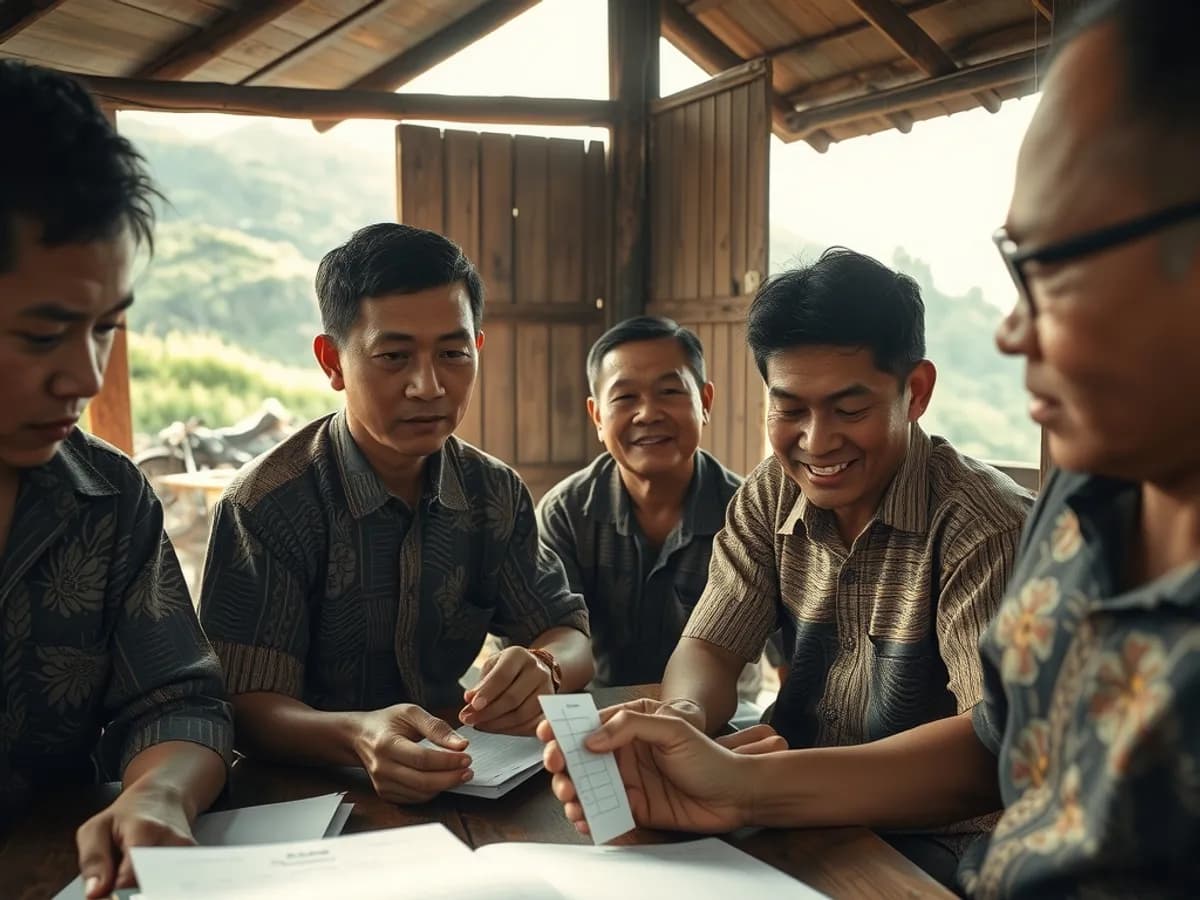
- Restored land returns as cassava fields, fruit gardens and agroforestry where the village chooses so.
- Less mercury reaching rice fields and fish ponds downstream.
How it is measured: Hectares returned for food production; mercury in rice and fish around sites (Unisma impact research).
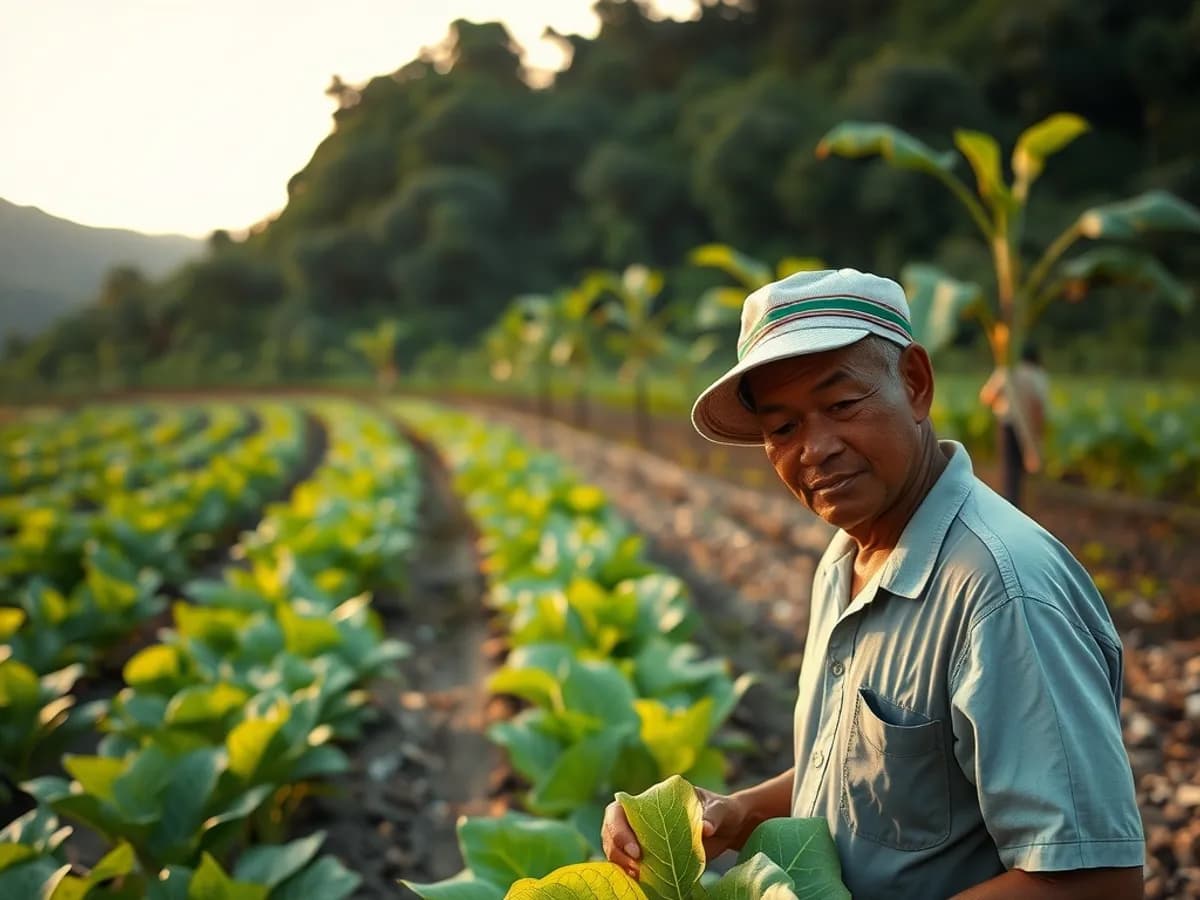
SDG 3 · Good health and well-being
UN target: 3.9 Fewer deaths and illnesses from hazardous chemicals
What the programme does
- Mercury-bearing waste is removed near 3.0–3.6 million people who live within 2 km.
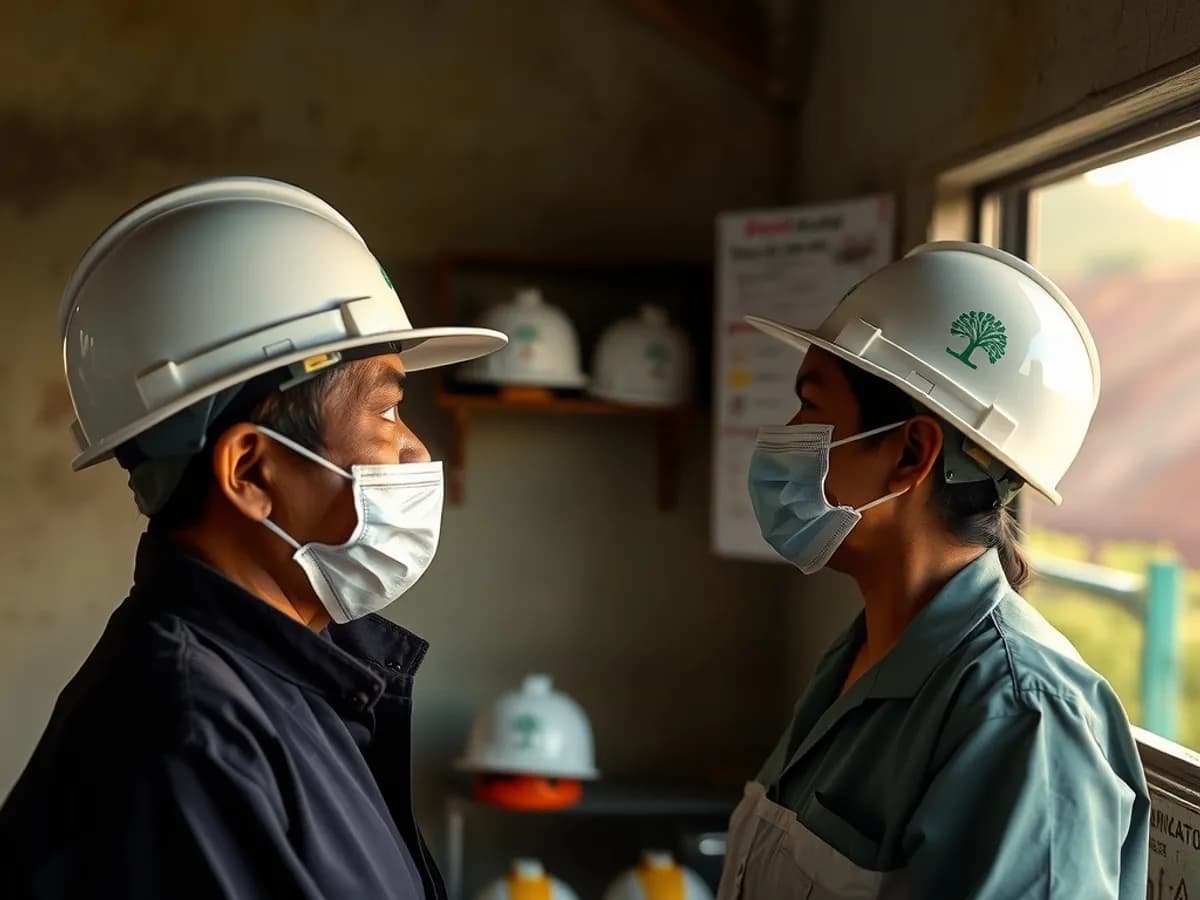
- Microbes make the mercury solid so it can be removed and stored safely; workers get protective equipment and yearly medical checks.
How it is measured: Tonnes of mercury-bearing residue processed (6.4 Mt over ten years); mercury mass balance per site; medical checks.
SDG 4 · Quality education
UN target: 4.4 Skills for decent work
What the programme does
- About 16,000 students trained on site in technology, lab work and management.
- Every crew trains three months at the ESMI academy before it starts.
How it is measured: Students and trainees per year; certified site leaders.
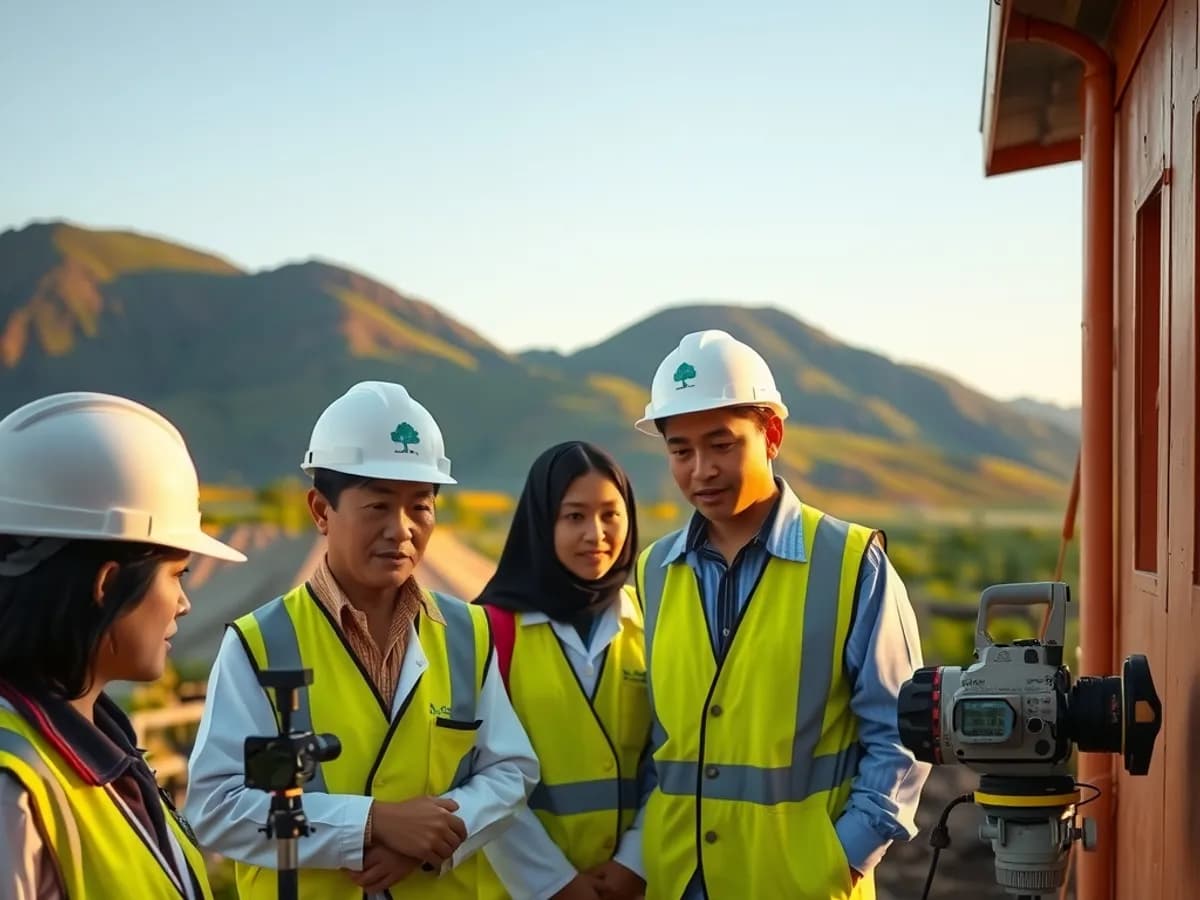
SDG 5 · Gender equality
UN target: 5.5 Women’s full participation
What the programme does
- Target of at least 30% women in jobs, training and every site committee.
- A code of conduct against sexual exploitation and harassment for all crews, with a confidential reporting line.
How it is measured: Share of women per site; complaints handled within 30 days.
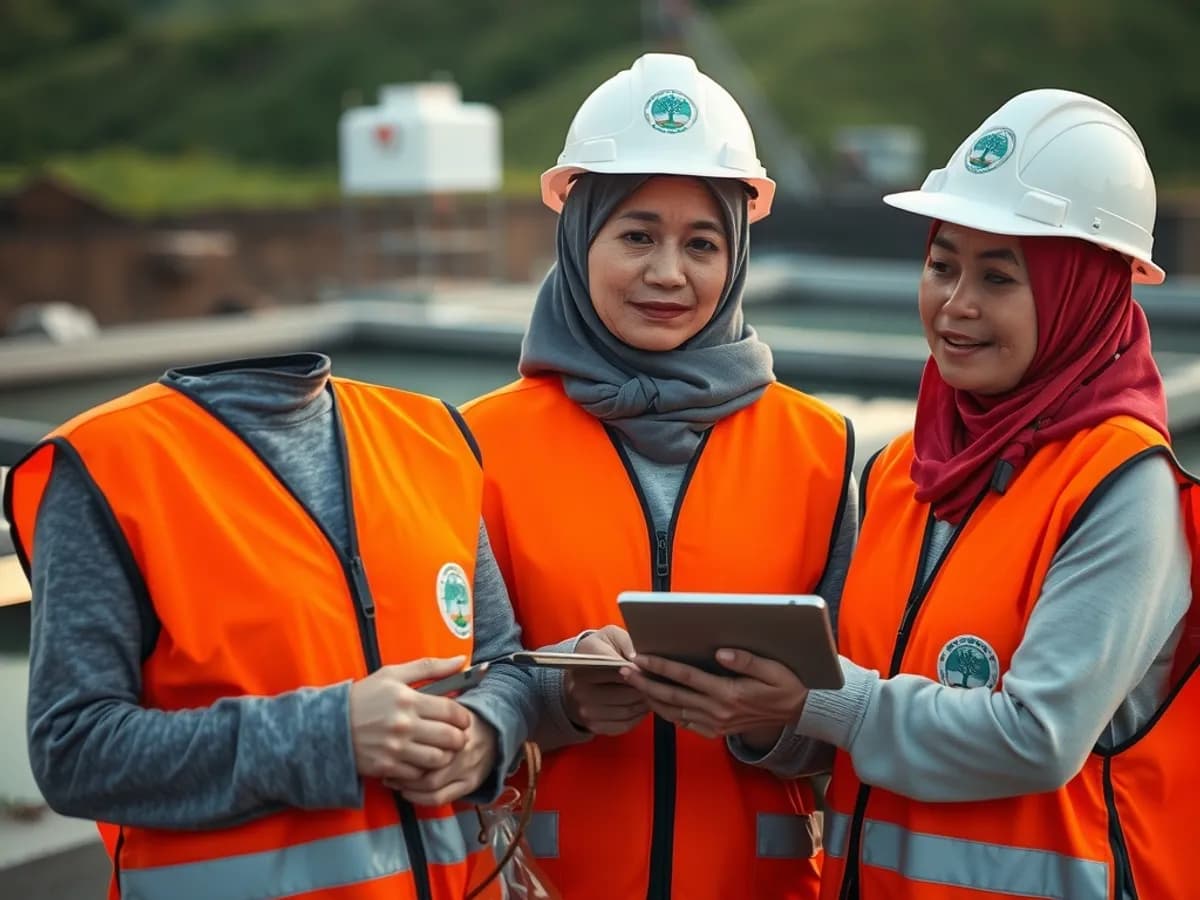
SDG 6 · Clean water and sanitation
UN target: 6.3 Better water quality
What the programme does
- Less mercury and silt in rivers and drinking water.
- A closed water circuit on every machine; water quality is measured continuously.
How it is measured: pH, ORP and mercury in process and river water; WAD cyanide < 0.5 mg/L.
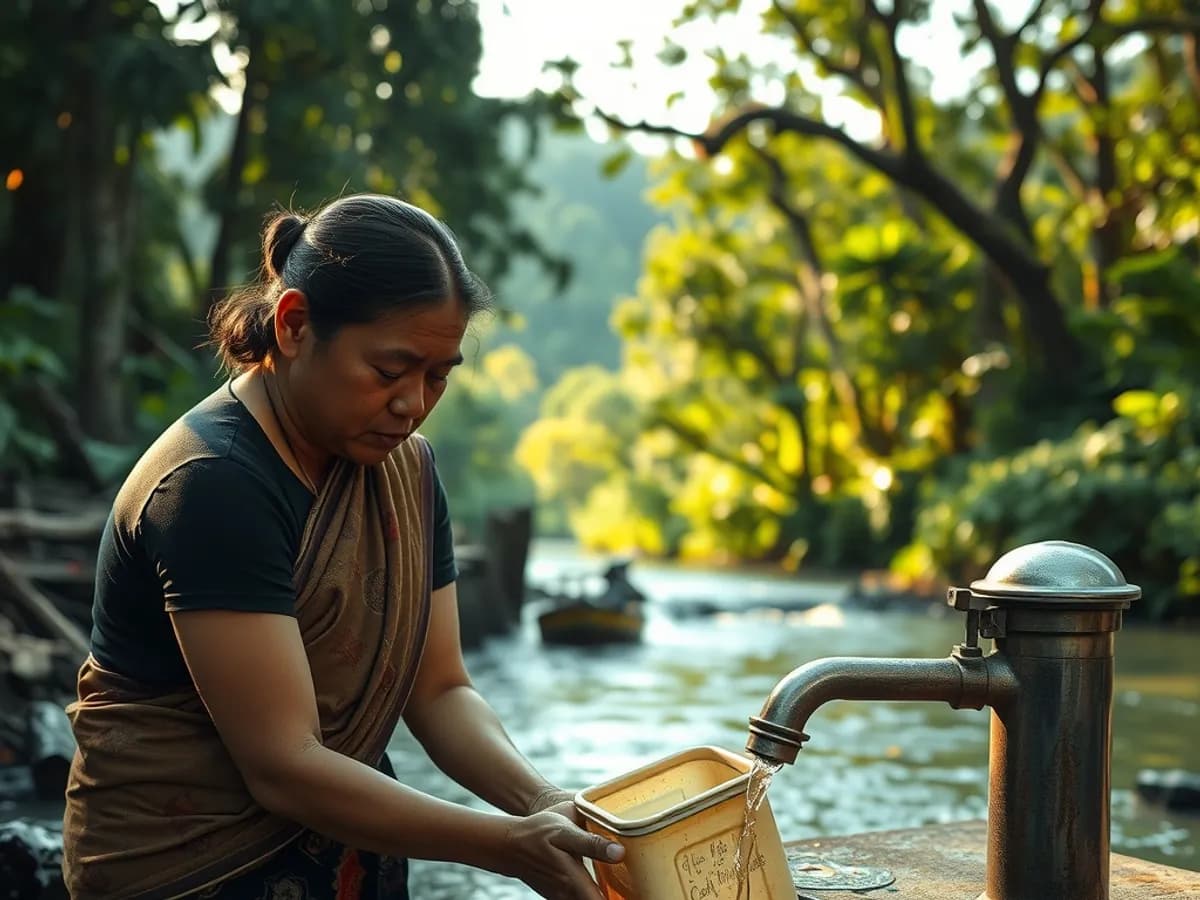
SDG 7 · Affordable and clean energy
UN target: 7.2 More renewable energy
What the programme does
- PLN grid plus wind and sun on site.
- Electric or Stage V excavators and loaders where available.
How it is measured: Share of grid/solar power per site; NOx per tonne processed.
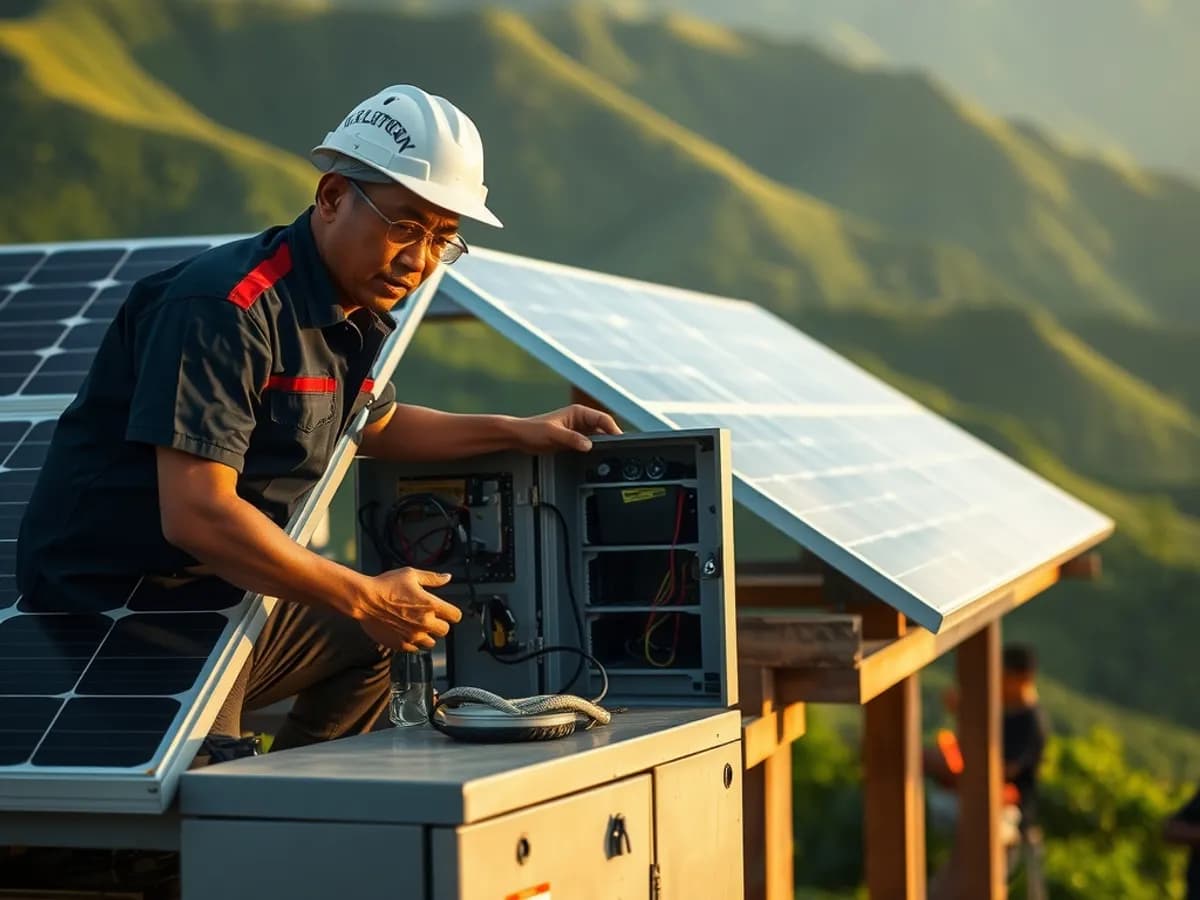
SDG 8 · Decent work and economic growth
UN target: 8.8 Safe and secure working environments
What the programme does
- 20,800 permanent jobs at the peak, 26 per machine, at least 80% from nearby villages.
- A 40-hour week, safety training, protective equipment and a certified site leader.
How it is measured: Local jobs per site; serious accidents (target 0).
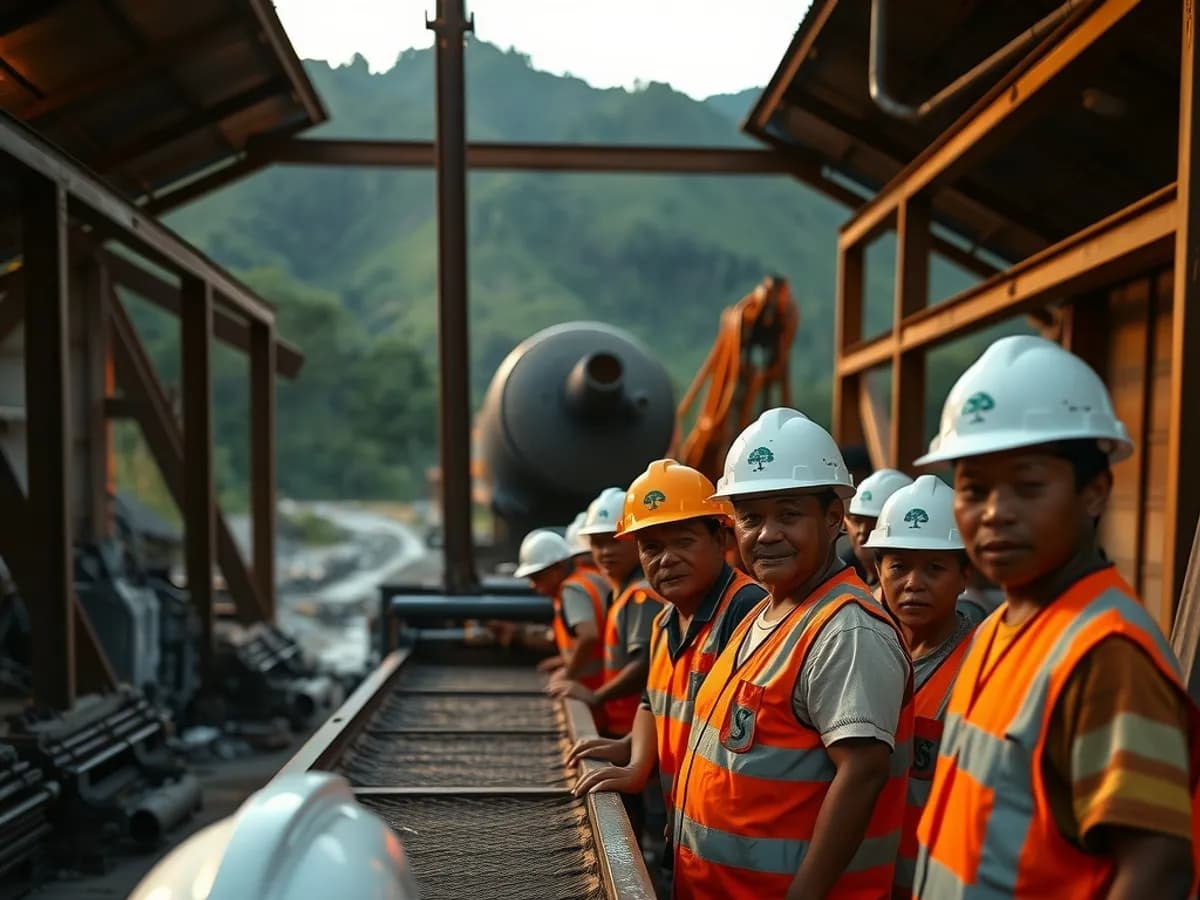
SDG 9 · Industry, innovation and infrastructure
UN target: 9.4 Clean and resource-efficient industry
What the programme does
- Two Indonesian factories build the 10-tonners from 2029.
- Sensors on every machine feed the ESMI app; the national scan maps every mine-waste site.
How it is measured: Machines built in Indonesia; tonnes processed per unit.
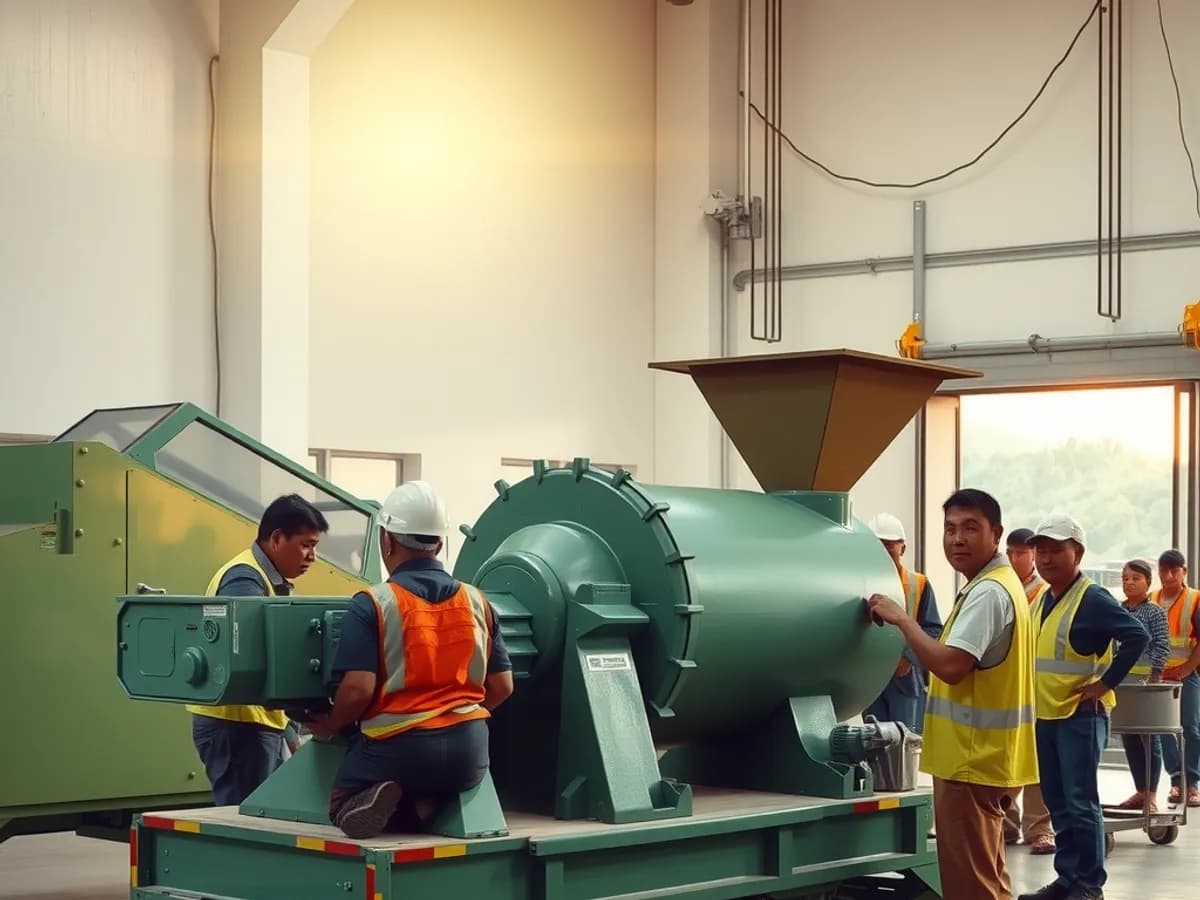
SDG 10 · Reduced inequalities
UN target: 10.2 Inclusion of all
What the programme does
- Priority for former miners and young people from the surrounding villages.
- Free, prior and informed consent in the village assembly, with adat leaders and women.
How it is measured: Share of local and former-miner staff; consent documented per site.
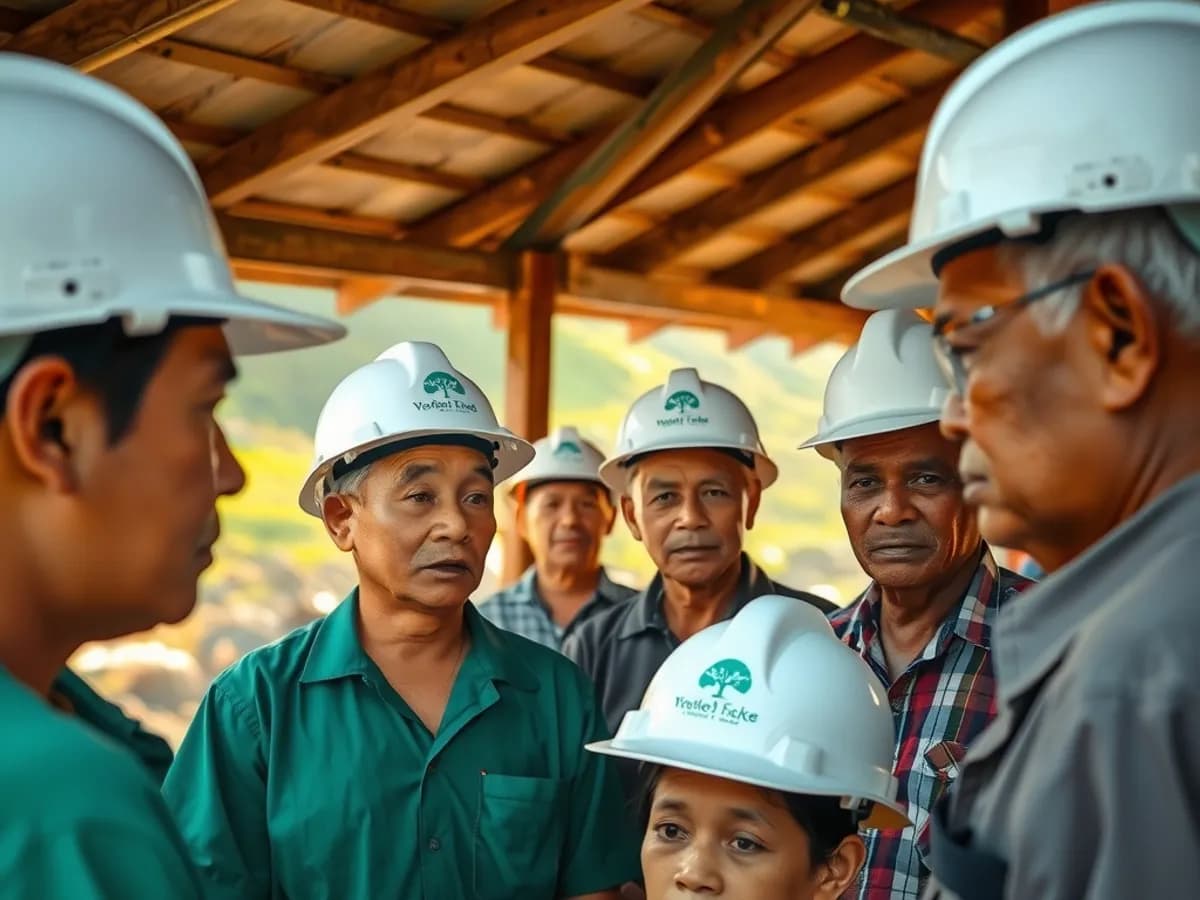
SDG 11 · Sustainable cities and communities
UN target: 11.1 Affordable housing
What the programme does
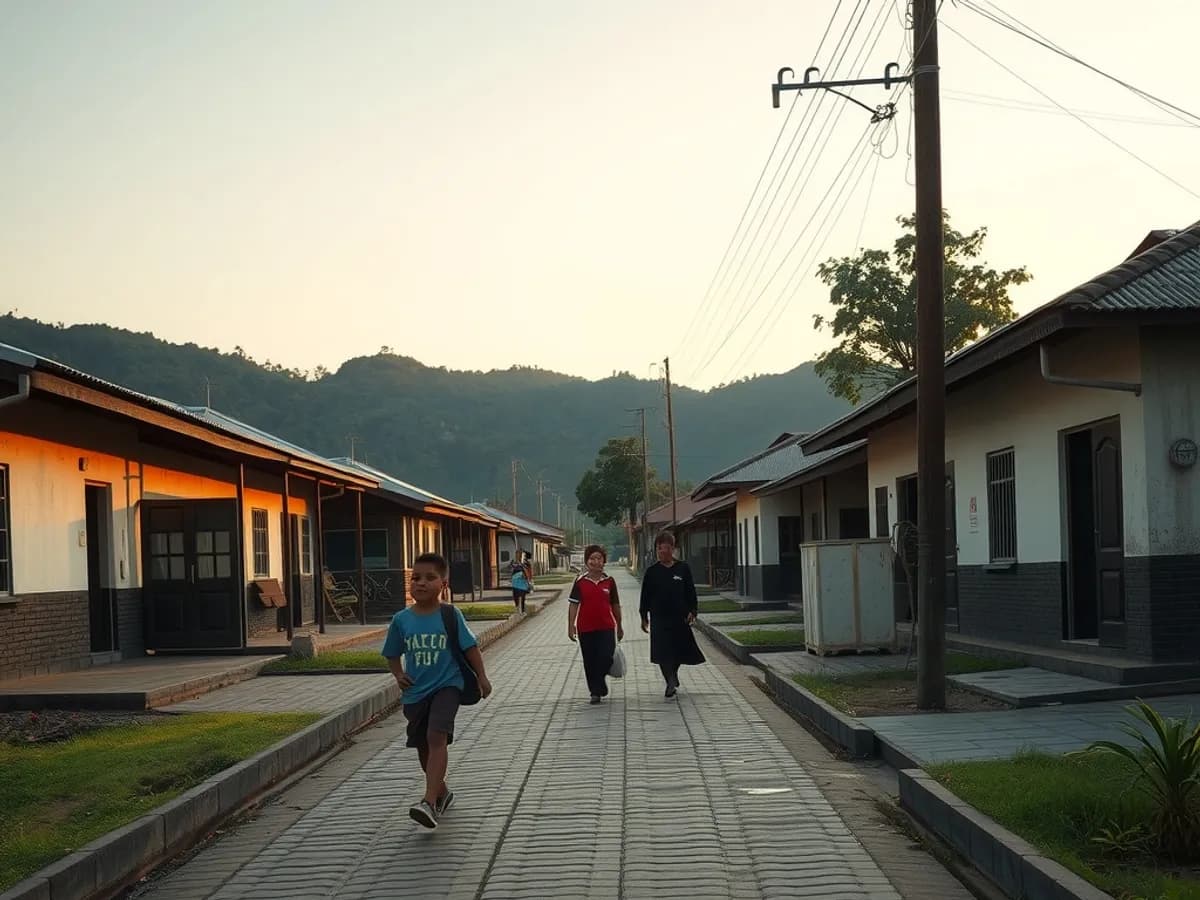
- 34.2 Mt of cleaned residual sand becomes paving and wall bricks for roads, schools and social housing.
- Every batch tested for leaching and strength before it leaves the site.
How it is measured: Bricks produced and sold per region; batches passing TCLP and ≥ 10 MPa (target 100%).
SDG 12 · Responsible consumption and production
UN target: 12.4 Safe management of chemicals and waste
What the programme does
- Mercury made solid, removed and stored safely under the Minamata Convention.
- All residual sand, bound with cement, becomes bricks; nothing goes to landfill.
How it is measured: Mercury mass balance (±15%); share of residual sand reused.
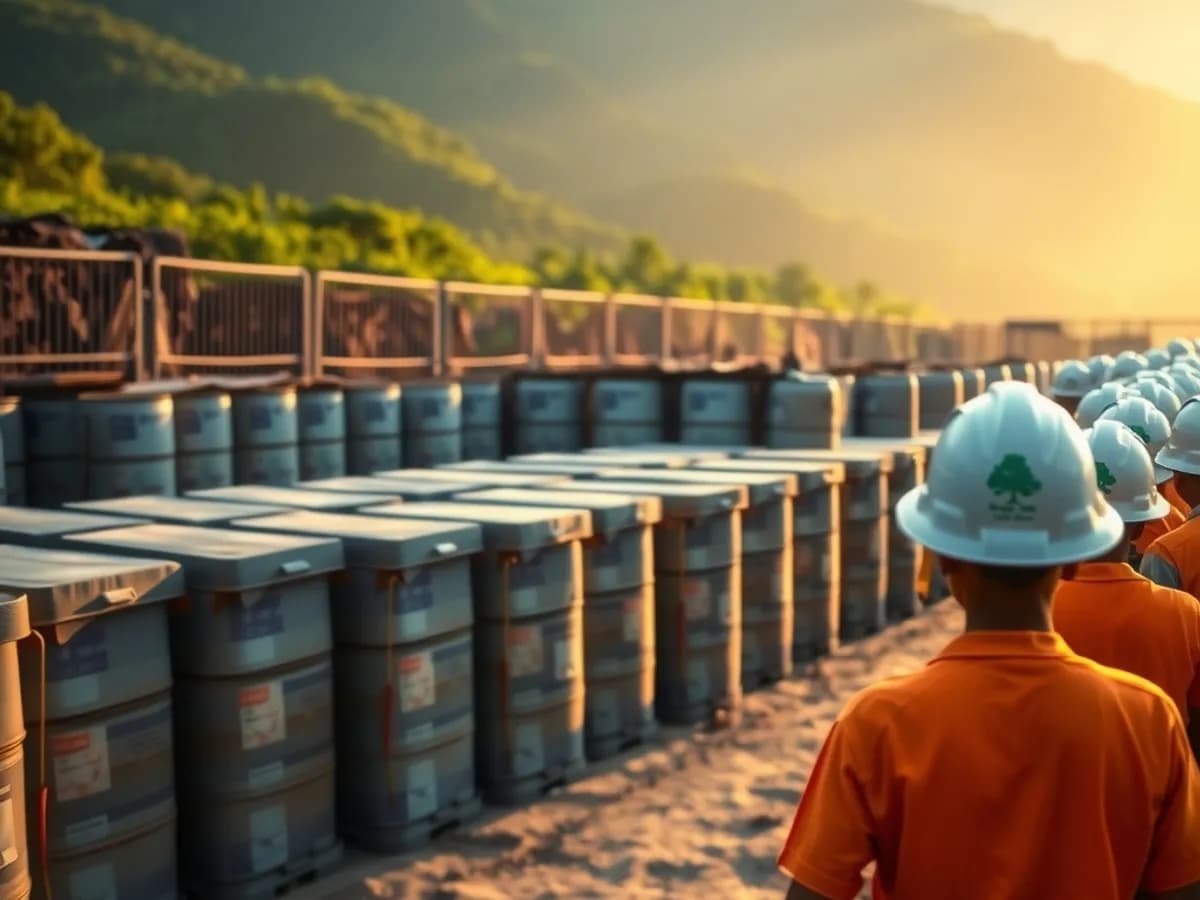
SDG 13 · Climate action
UN target: 13 Climate action
What the programme does
- Restored land stores carbon in forest and agroforestry.
- Grid, wind and solar power instead of diesel at the sites.
How it is measured: Hectares reforested (satellite); diesel avoided per year.
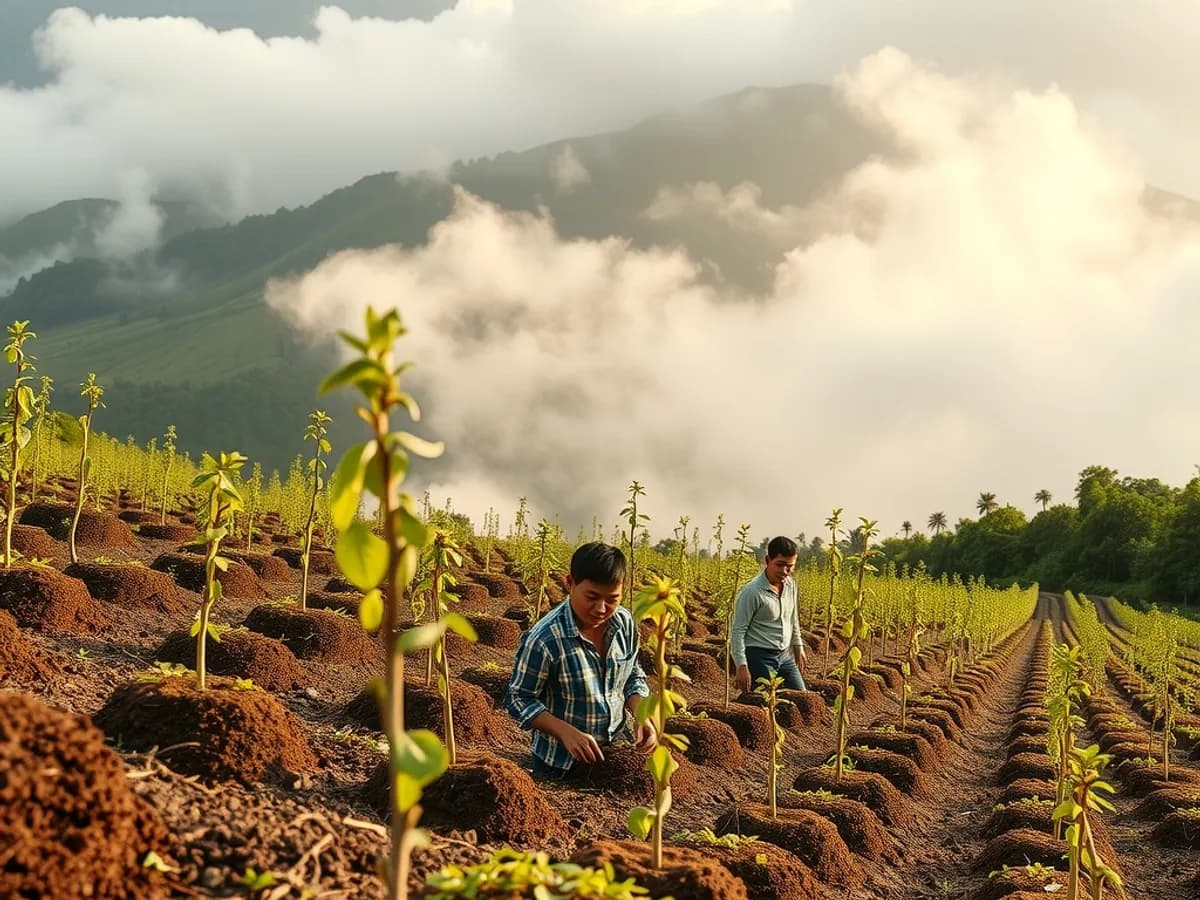
SDG 14 · Life below water
UN target: 14.1 Less marine pollution
What the programme does
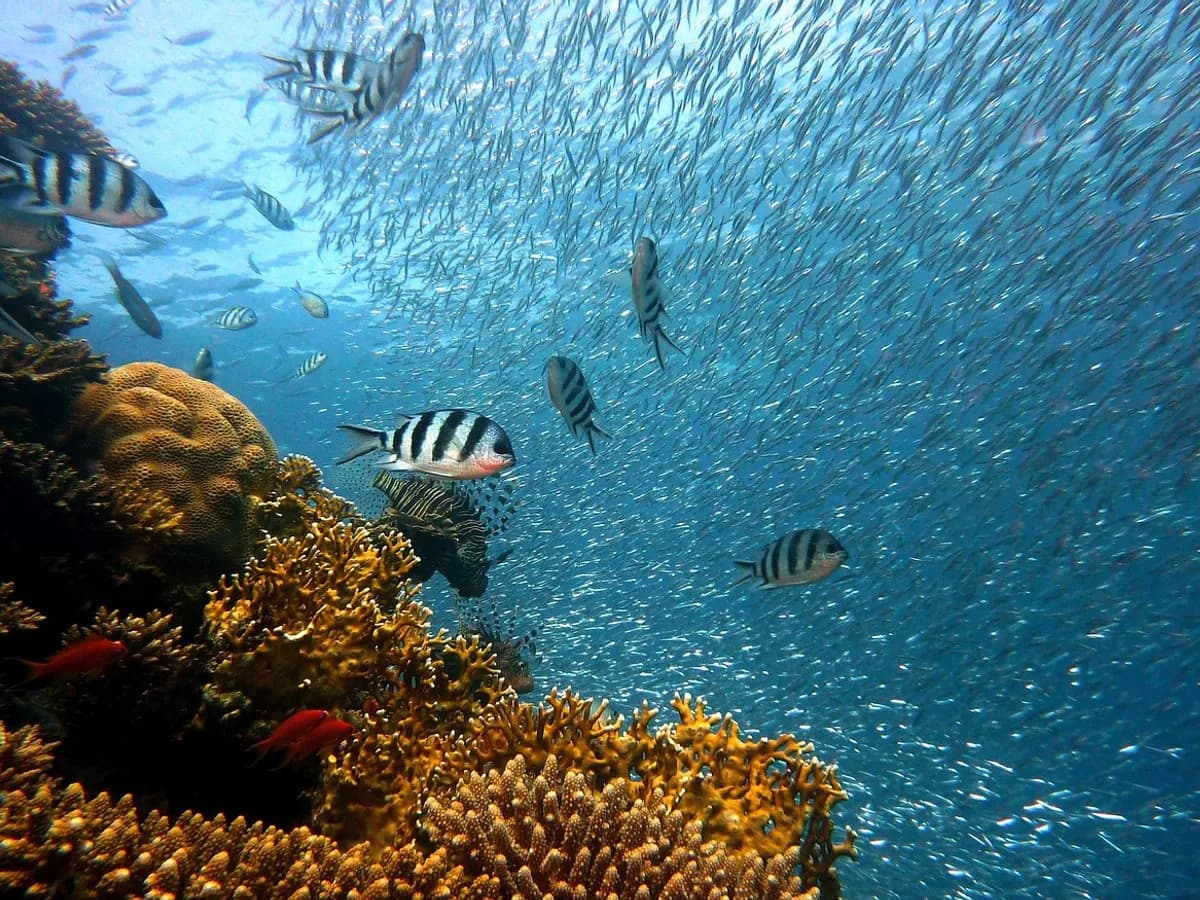
- Less mercury flowing to the Coral Triangle and the seas Indonesia shares with its neighbours.
How it is measured: Mercury in river water downstream of sites; mercury in fish (Unisma impact research).
SDG 15 · Life on land
UN target: 15.3 Restore degraded land
What the programme does
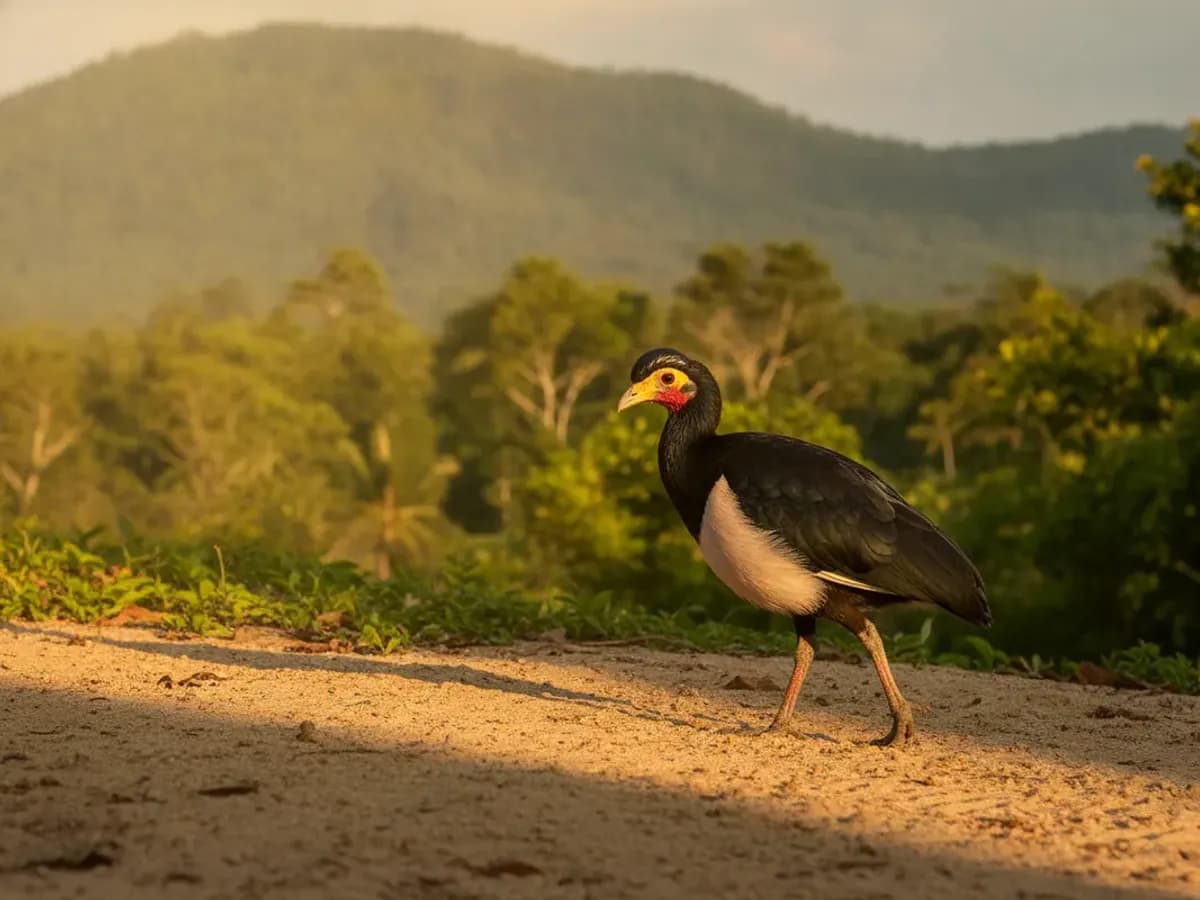
- About 95,000 ha cleaned and replanted in ten years, with native species.
- Satellite monitoring continues after restoration.
How it is measured: Hectares restored and checked by satellite every quarter.
SDG 16 · Peace, justice and strong institutions
UN target: 16.5 / 16.6 Less corruption; accountable institutions
What the programme does
- A ring-fenced account per funder, payment only on verified results, open books and an external audit.
- Legal small-scale mining areas (WPR/IPR) as an alternative to illegal mining; a grievance mechanism that also works anonymously.
How it is measured: Independent verification before every payment; complaints resolved within 30 days.
SDG 17 · Partnerships for the goals
UN target: 17.17 Public-private partnerships
What the programme does
- Government, ESMI, Unisma, cooperatives, development banks and UN organisations in one programme.
- The method is built to travel: an open atlas and a licensed standard for the more than 70 countries with small-scale gold mining.
How it is measured: Co-financing per source; partnership agreements per province.
SDG 1, 10 and 16 together
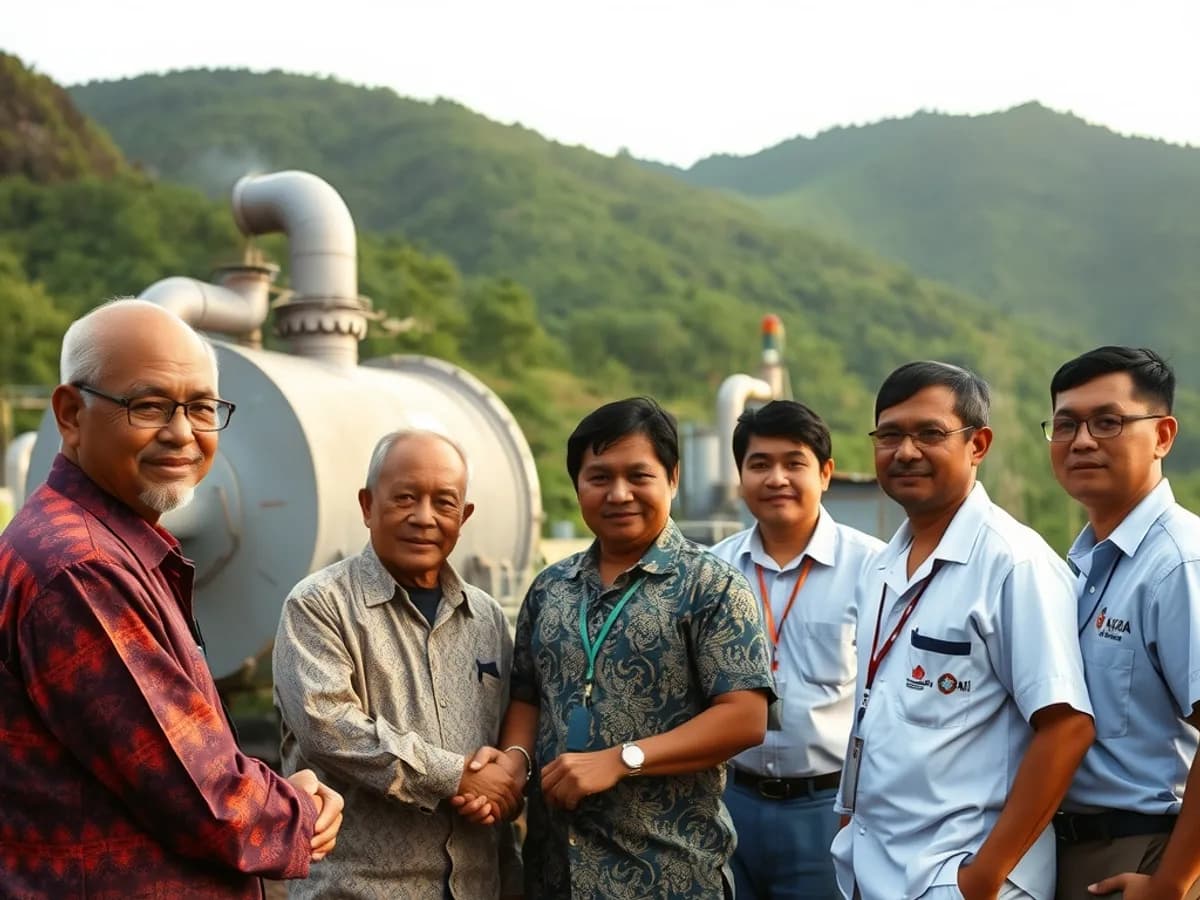
Clean land is not enough. The value has to reach the people who live there.
Ending extreme poverty costs less each year than the value of the gold mined in a single year (see Why ESMI exists). ESMI cannot pay for that alone, and does not claim to. What it builds is the route: a fixed, public share of recovered metal for the people who live on the land, wages that beat the pit, and open books that make corruption harder and less rewarding.
Measured and verified
Every goal has an indicator in the results framework. Unisma verifies the baseline and research independently, with the right to publish negative results; an independent verifier checks tonnes, hectares and milestones before every payment. Government and funders can follow progress on the SDGs and the Minamata Convention directly.
Source: Business plan § 1.5 and §§ 3–5; UN Agenda 2030 targets.
SDG icons: United Nations. The content of this website has not been approved by the United Nations and does not reflect the views of the United Nations or its officials or Member States.
Gotong royong
The pilot is under way. The next step is scale.
The pilot in Bolmong has started. ESMI is now raising large-scale funding to clean up Indonesia’s mine waste. Investors can start with one 10-tonner (USD 1.7 million).
ESMI also works as a hired partner. Mining companies and cooperatives can bring in ESMI to upgrade an existing plant with its microbes and methods, so it recovers more and can move away from mercury and cyanide.