
Measure · ESMI XRF and the mobile lab
Know what is in the heap. And how sure we are.
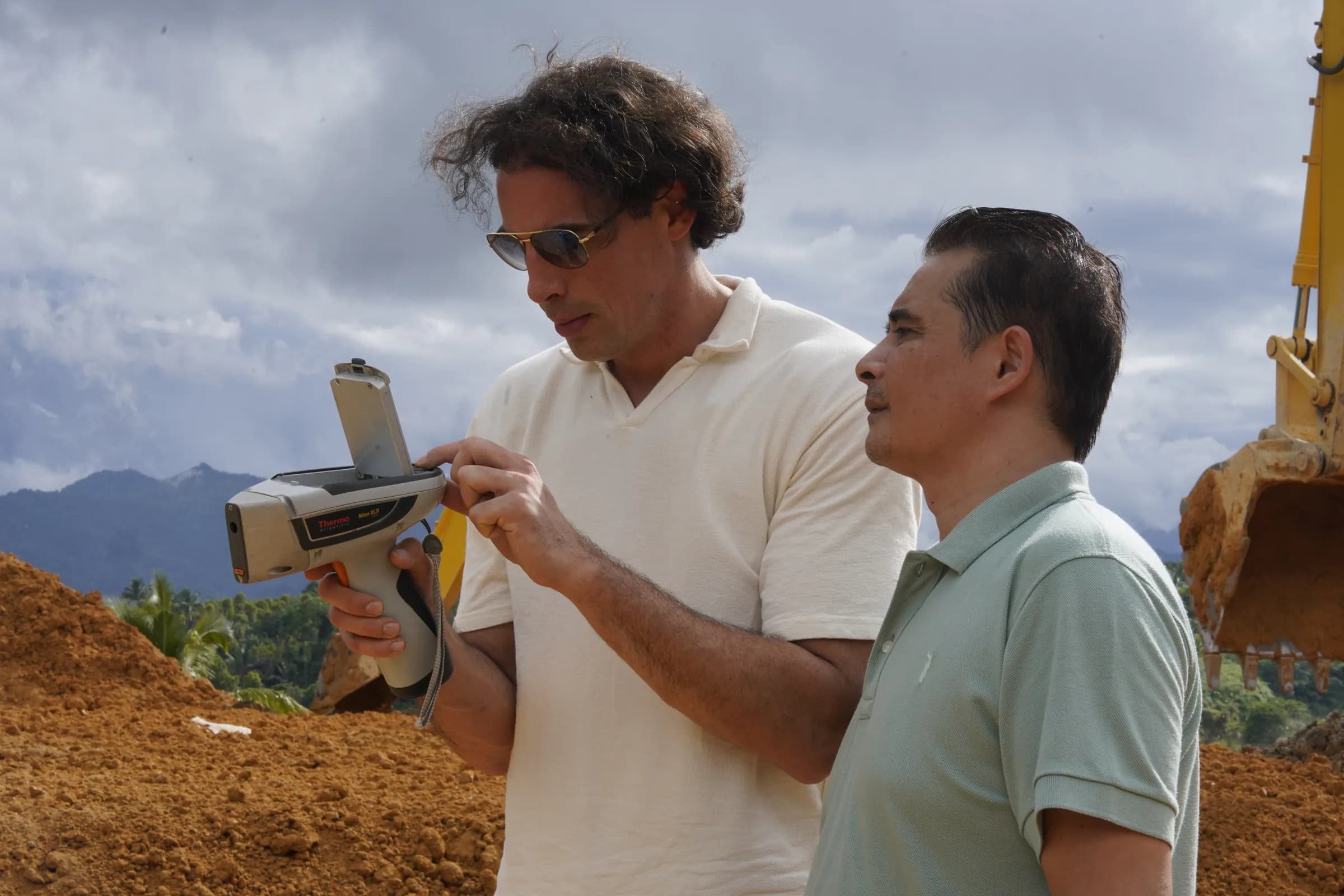
Every clean-up starts with measuring. The ESMI mobile lab brings the XRF field kit, a microscope and site testing to the waste heap, and sends samples to an accredited lab for confirmation. XRF screens; the lab measures.
ESMI XRF
Step 1 of every site
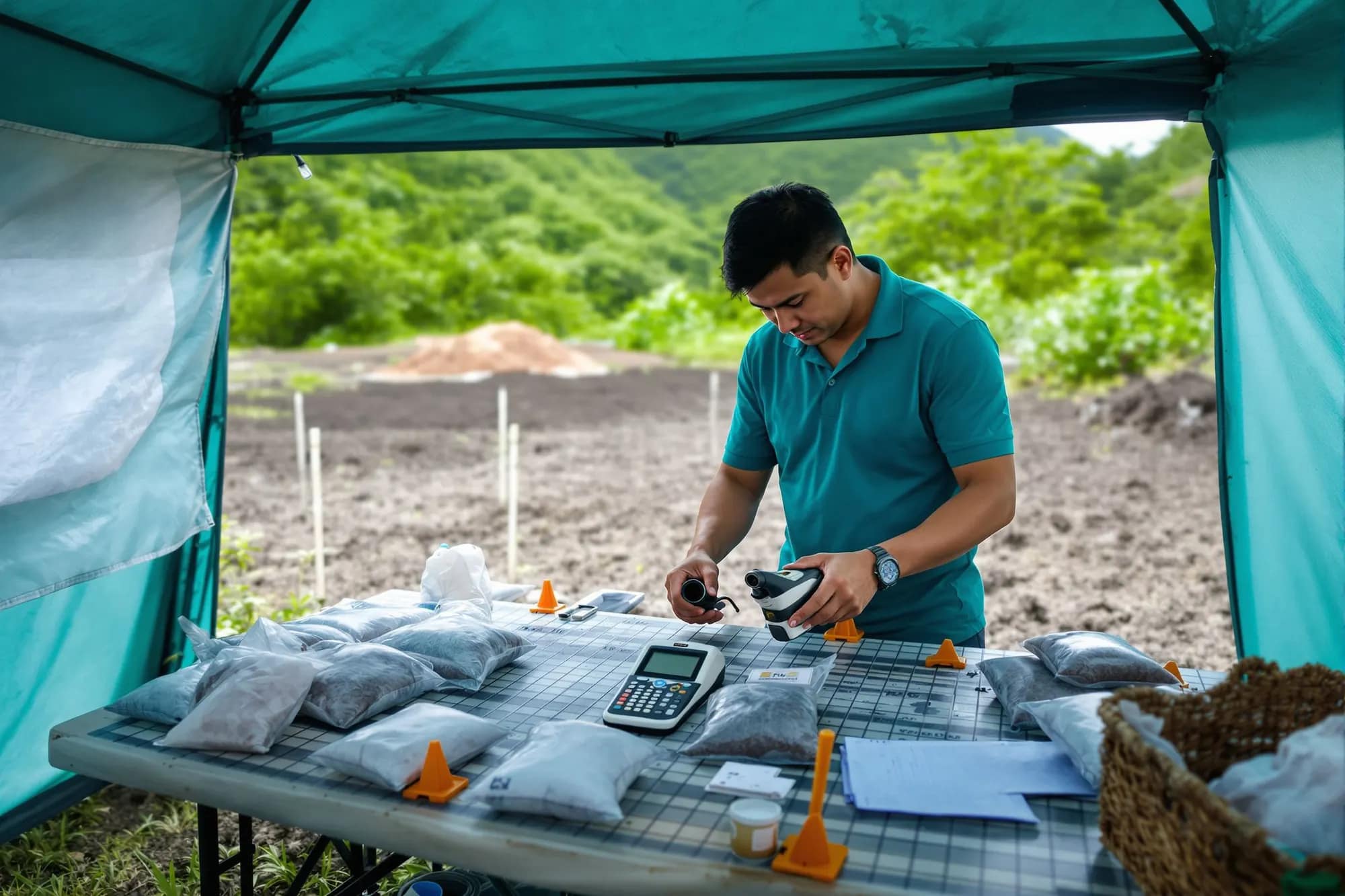
Before a machine arrives, the team maps the heaps, takes samples and screens them on site with ESMI XRF. The shaking table and the lab then measure. The same kit follows the work: incoming material, residual sand before it becomes bricks, and soil before land is returned.
The box
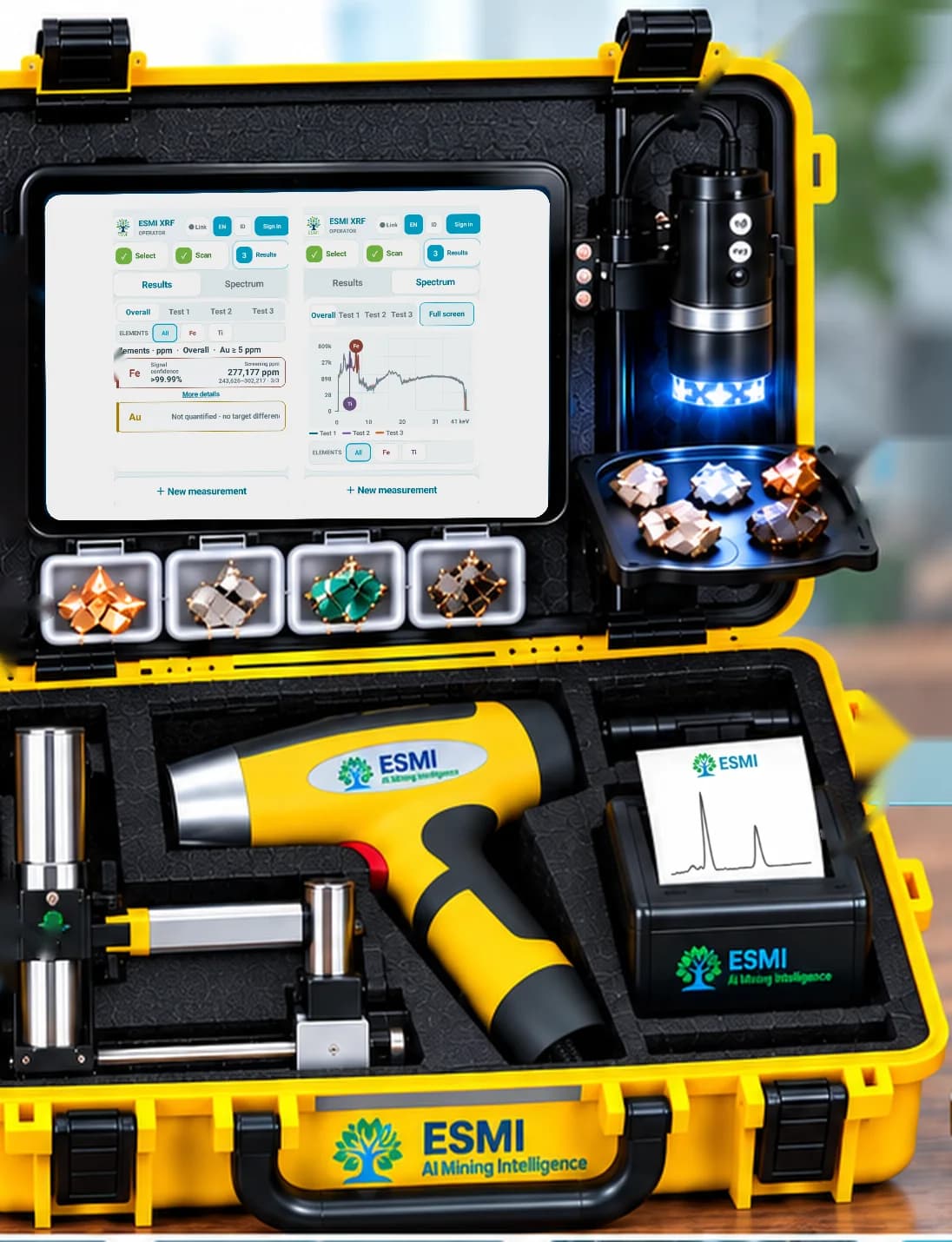
The ESMI XRF field kit: everything in one case
One party, one contract, one support channel. Hardware, software and data are made to work together.
- 01XRF analyser
The handheld scanner that finds out which elements are in a sample.
- 02Scanner tablet
Connected to the analyser; the only device that controls the X-ray source.
- 03Field tablet
Choose what to measure, take photos and read the results on a bigger screen.
- 04USB microscope
Close-up pictures of grains and texture, saved next to each measurement.
- 05Adjustable holder
Keeps the scanner steady at a fixed distance from the sample.
- 06Sample boxes
Keep samples tidy, labelled and traceable on the way to the lab.
- 07Wireless printer
Prints the measurement report on site.
ESMI XRF software
Our own software turns a reading into a result you can check
The analyser counts X-rays. ESMI XRF, our own Android app on the field tablet, does the rest: it reads the full raw spectrum, checks it, ties photos and labels to the sample, and says in plain language what the reading means and what it does not. It works without internet.
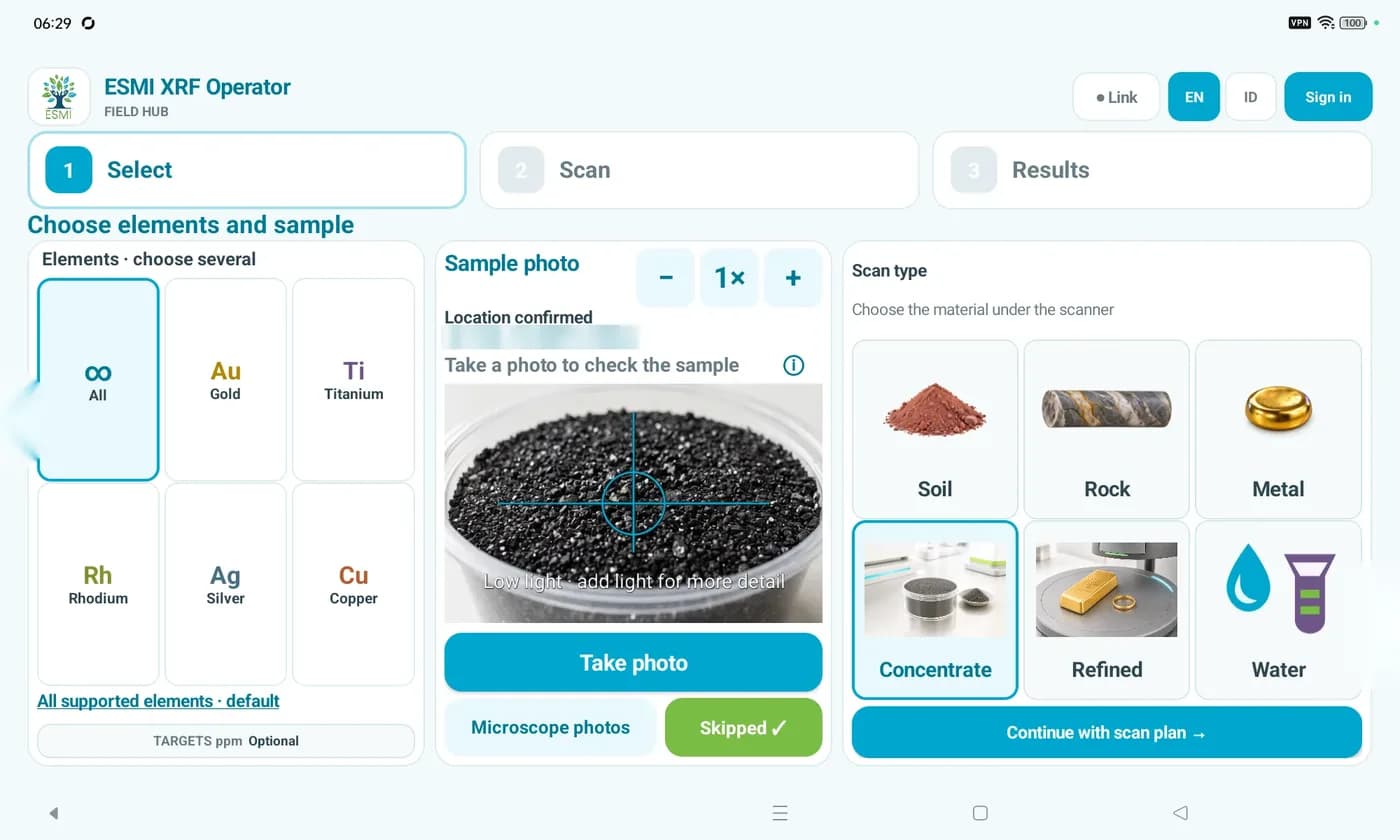
Choose the sample, not the settings
Pick soil, rock, sand, concentrate or waste-dump residue from photo tiles. The app sets the measurement conditions that fit.
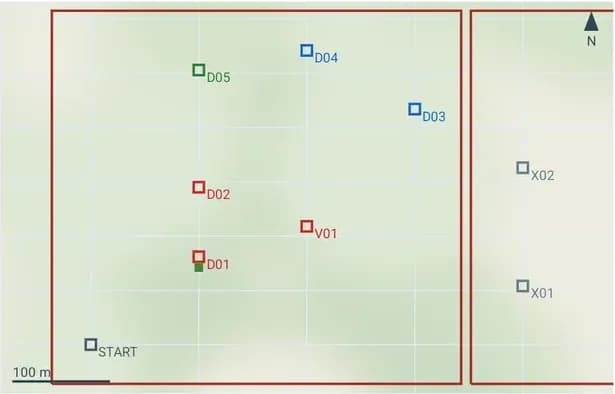
Fieldwork on an offline map
Each heap and sampling point is on a map that works without internet, with a plan for the day, an end-of-day check and a debrief. Every sample keeps its photos and labels.
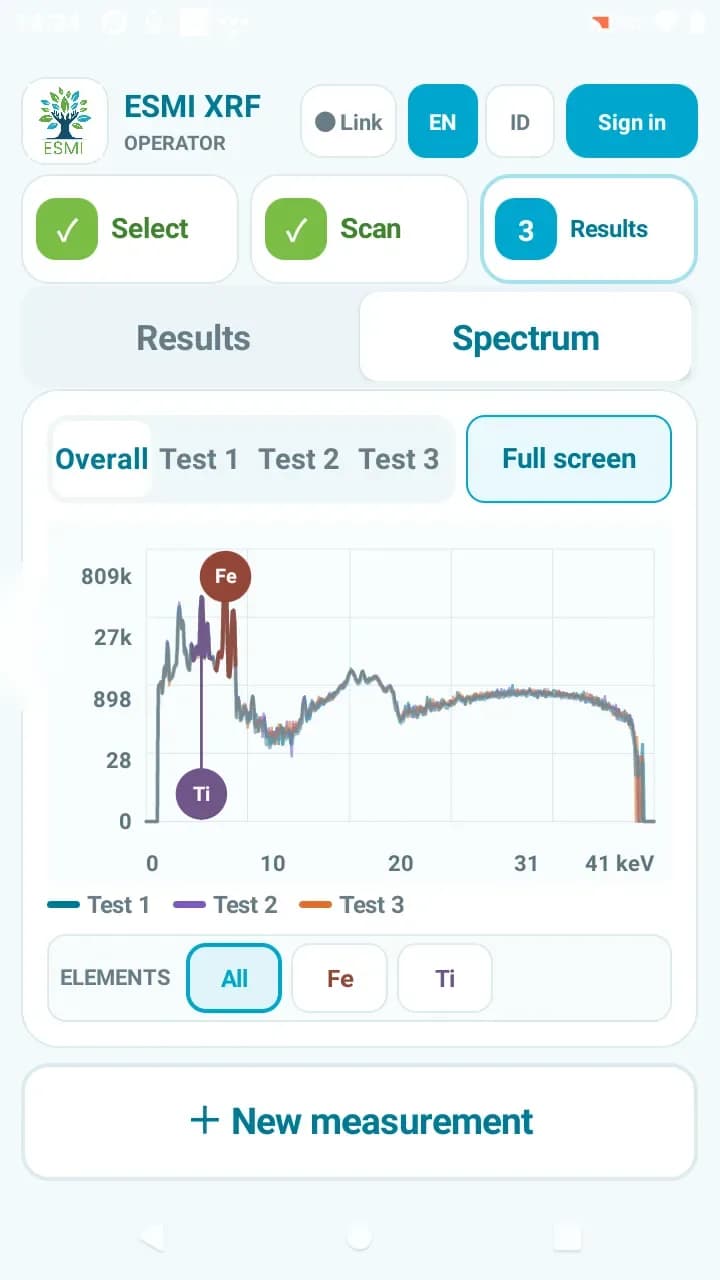
The graph behind the number
All 4,096 channels are analysed in the app, per position. The full signal is kept, so a result can be checked again later.
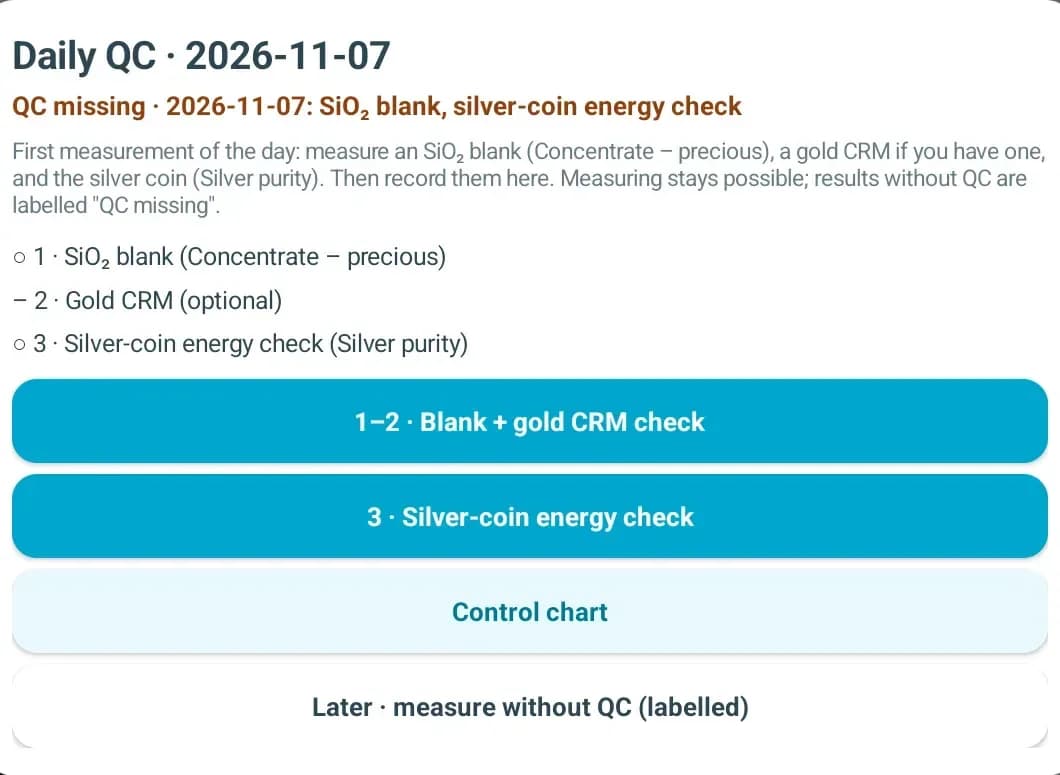
Daily quality check
A blank and an energy check start each day. Results measured without the check are labelled as such.
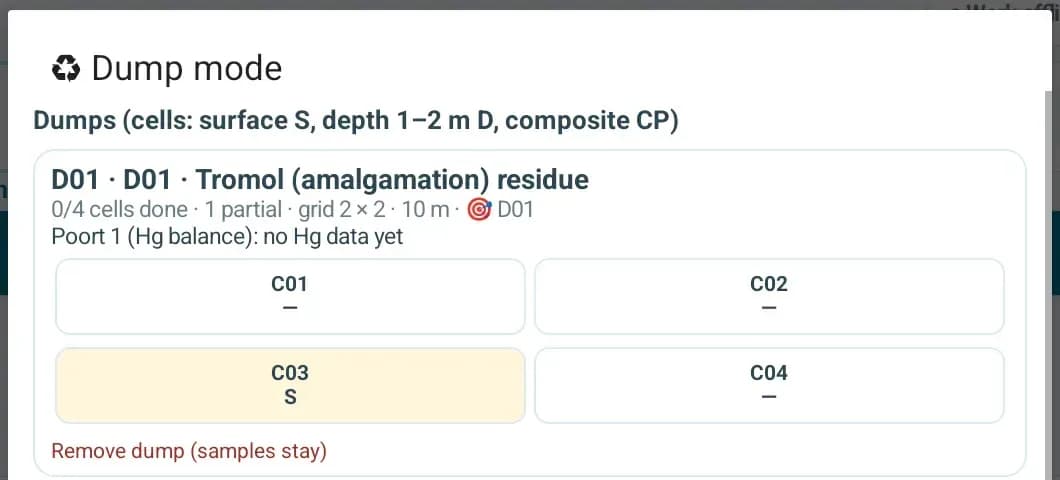
Built for mine waste
Dump mode samples a waste heap in a grid of cells, at the surface and at depth, with a composite sample per heap.
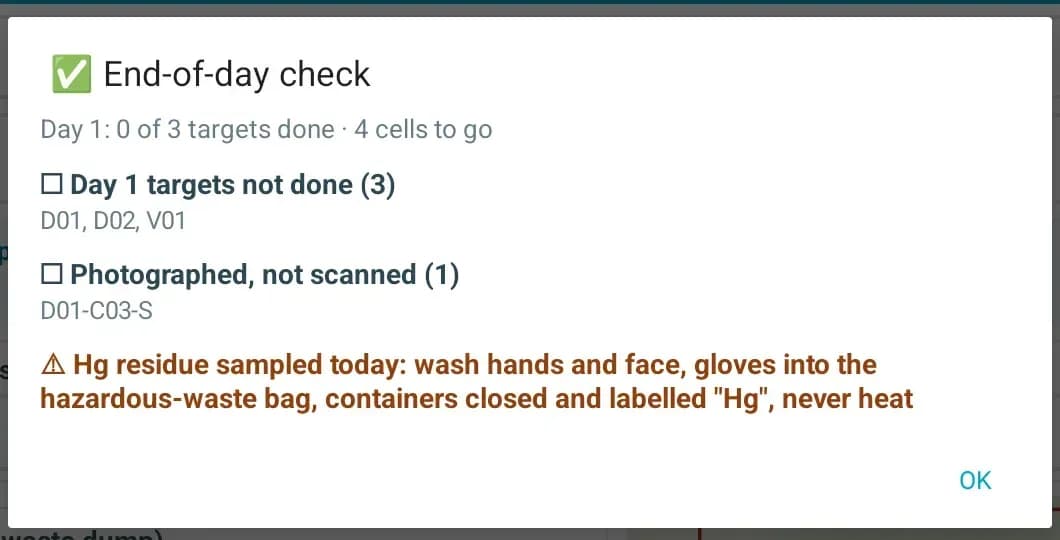
Mercury safety on screen
When mercury-bearing residue was sampled, the end-of-day check reminds the team: wash, gloves into the hazardous-waste bag, containers labelled, never heat.
Real screens from the ESMI XRF app, version 0.6.6, November 2026. Location data is blurred.
ESMI XRF
See the kit at work
From sample to label in about a minute and a half: the kit, a photo and the microscope, three scan positions, the spectrum, a result in plain language and a printed label. Without internet.
Comparison
ESMI XRF next to a standard handheld XRF workflow
The middle column describes a typical handheld analyser used with its maker's software. Products differ, and some offer more. The right column is ESMI XRF on the same class of hardware.
| Aspect | Standard handheld XRF workflow | ESMI XRF |
|---|---|---|
| Analysis | Built-in engine; the result is shown, the calculation is not open | Open analysis of all 4,096 channels with a full trace; recalculation without a new measurement |
| Choosing the calibration | The operator selects a mode or database | The spectrum and its measurement conditions select it; the material type is identified first |
| When a value is not reliable | Values follow from the selected calibration | Per element: released, screening or withheld with a reason; never 0 ppm, no extrapolation |
| Low concentrations | One reading at the set time | Three positions, extra rounds and a live forecast of the detection limit |
| Reading the result | Element values in instrument units | A plain-language summary with limits and one next step |
| Quality control | Depends on the operator's own procedure | Daily blank and energy check, control charts, a quality mark on every result |
| Photos | A separate camera and notes | One overview and two microscope photos, bound to the sample ID |
| IDs and labels | Typed names; labels made separately | IDs with a check character, two printed labels, a lab slip and a dispatch list |
| Fieldwork | Not part of the measuring software | Guided field days, sampling plans, offline maps and a debrief |
| Hazards | The instrument's own radiation safety | The same, plus software safety gates and mercury and cyanide safety cards |
| Without internet | Measures offline | Measures, analyses, labels and maps offline |
Standard column: typical maker software; products differ. ESMI XRF can also import a scan made in the maker's software, recalculate it and show both results side by side. We do not claim higher accuracy than the maker's software. ESMI XRF is not certified or independently validated; the accredited lab confirms.
More than XRF: the mobile lab
The field kit is one part of the ESMI site lab. Together they cover what a clean-up needs to know, every day.
Screening on site
XRF and microscope on every sample: which elements, how sure, with photo, time and place.
Process control
Sensors on the 10-tonner: tonnes, water quality (pH, ORP), mercury vapour and power, linked to the ESMI app.
Safe sand and soil
Every brick batch and every restored cell is sampled for leaching and strength before release.
Accredited confirmation
One in ten samples goes to the accredited Unisma lab. Everything stays in Indonesia.
How a measurement works
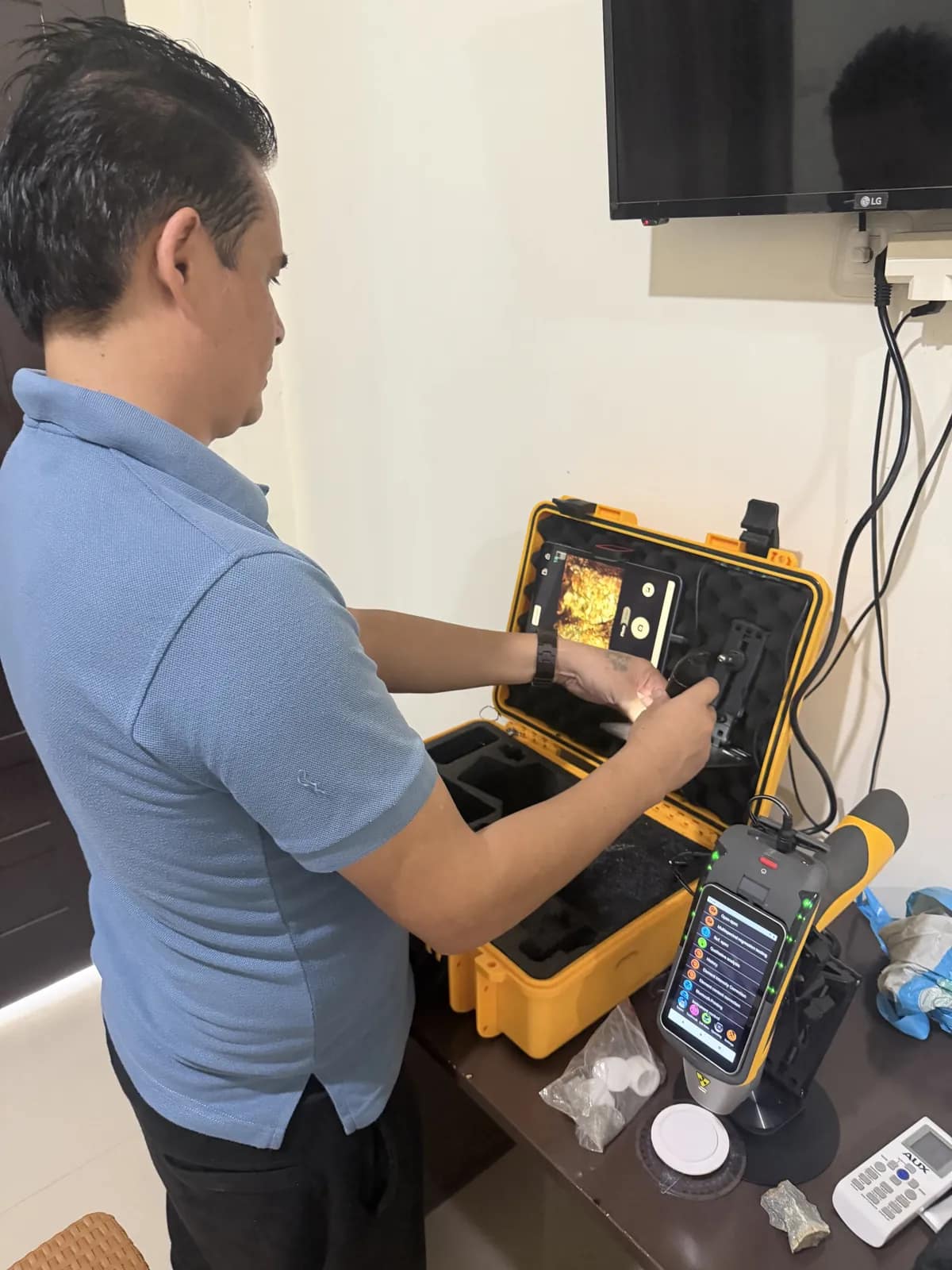
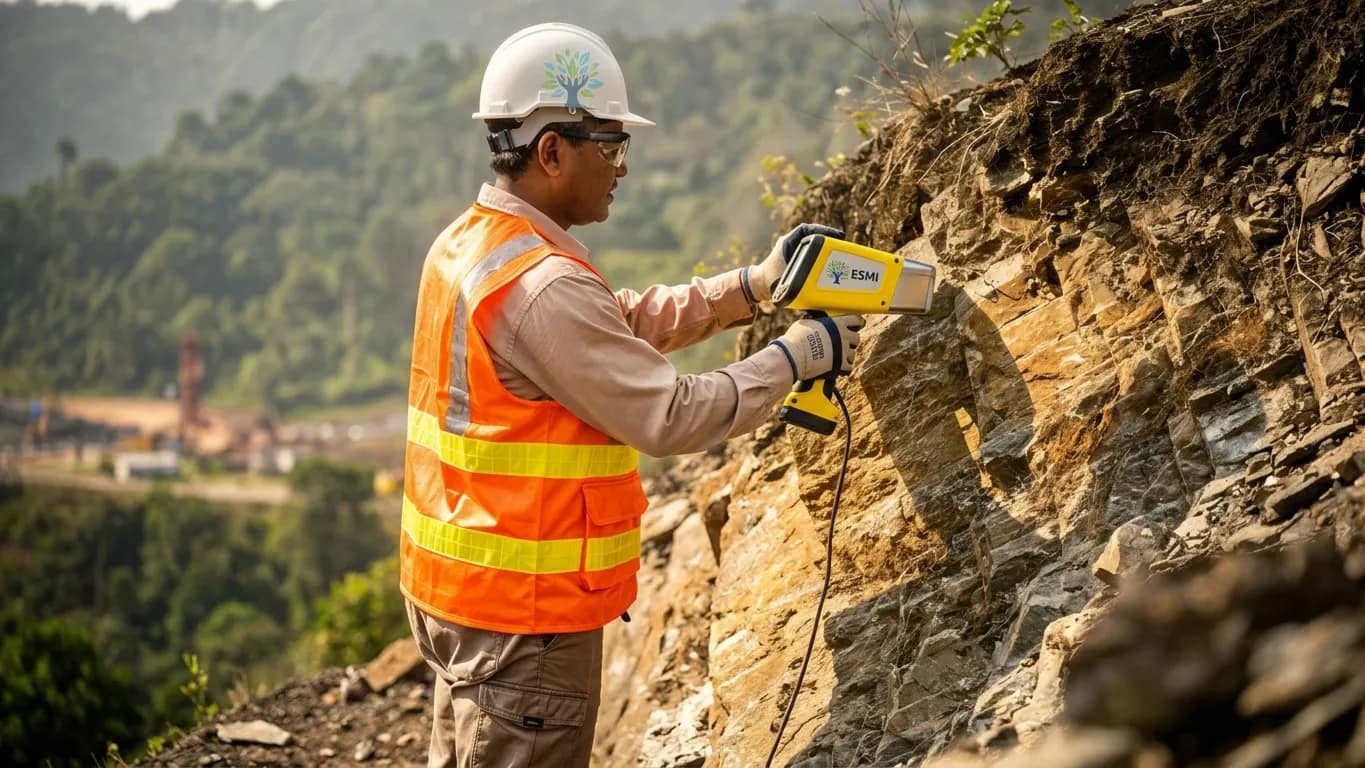
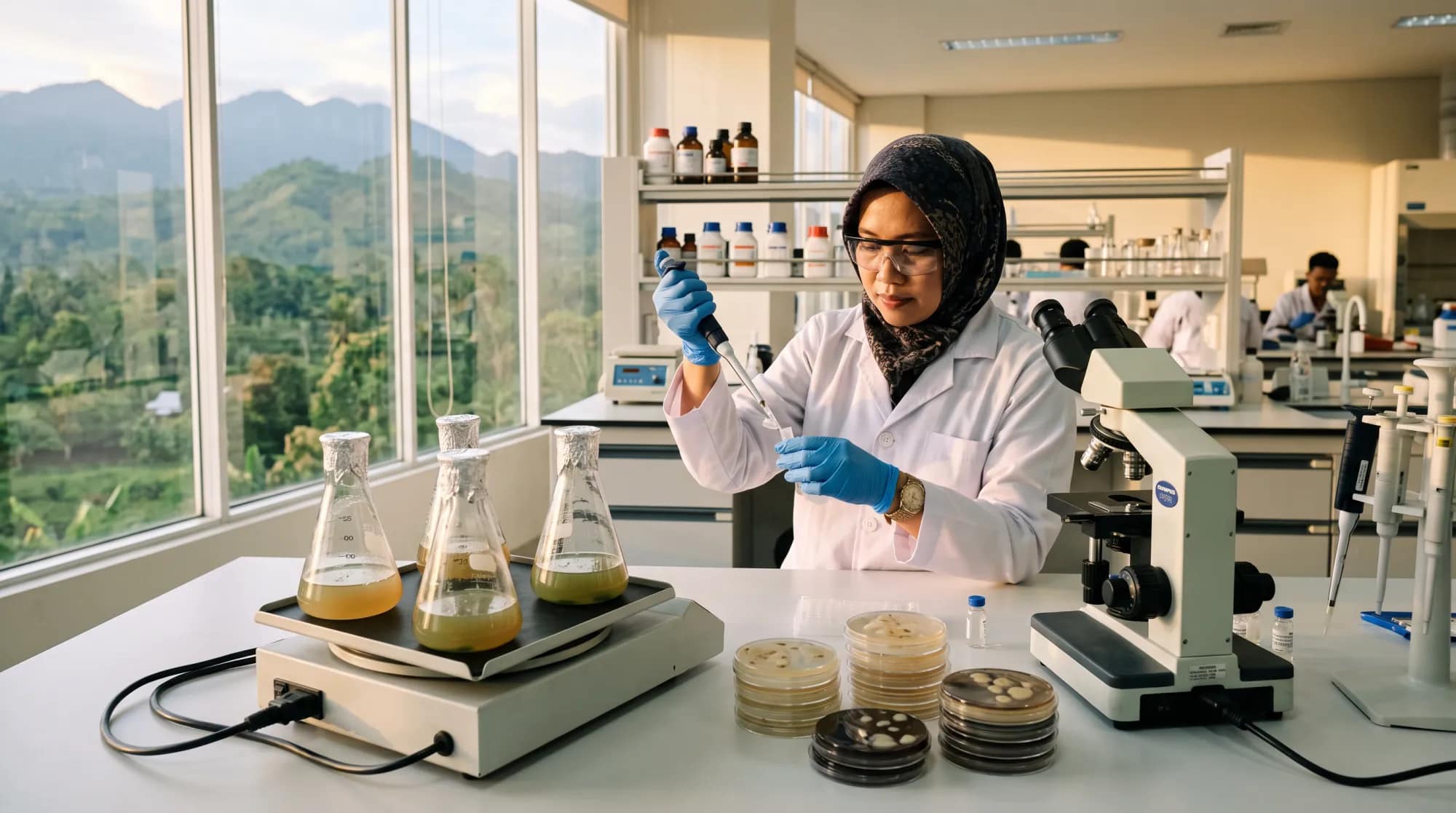
1 · At the heap
The scanner is held against the sample. No lab, no waiting, no internet.
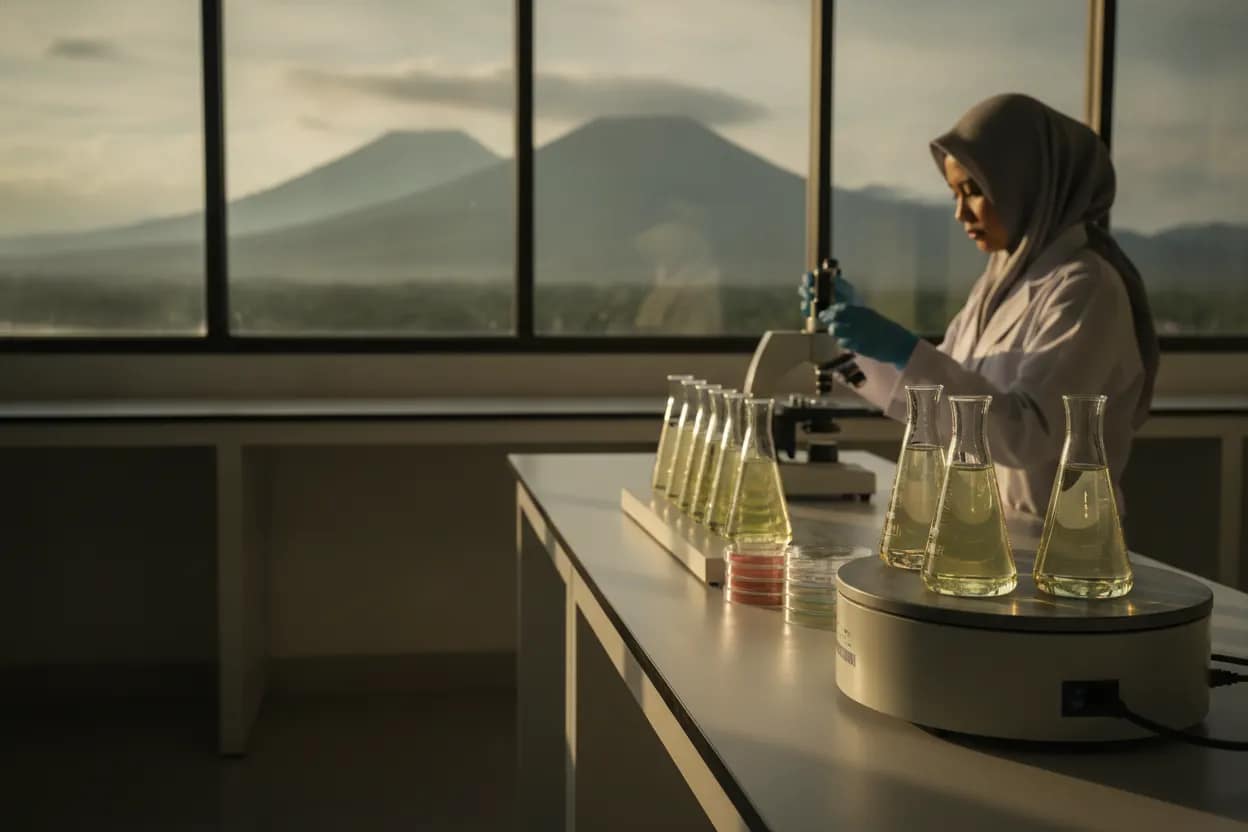
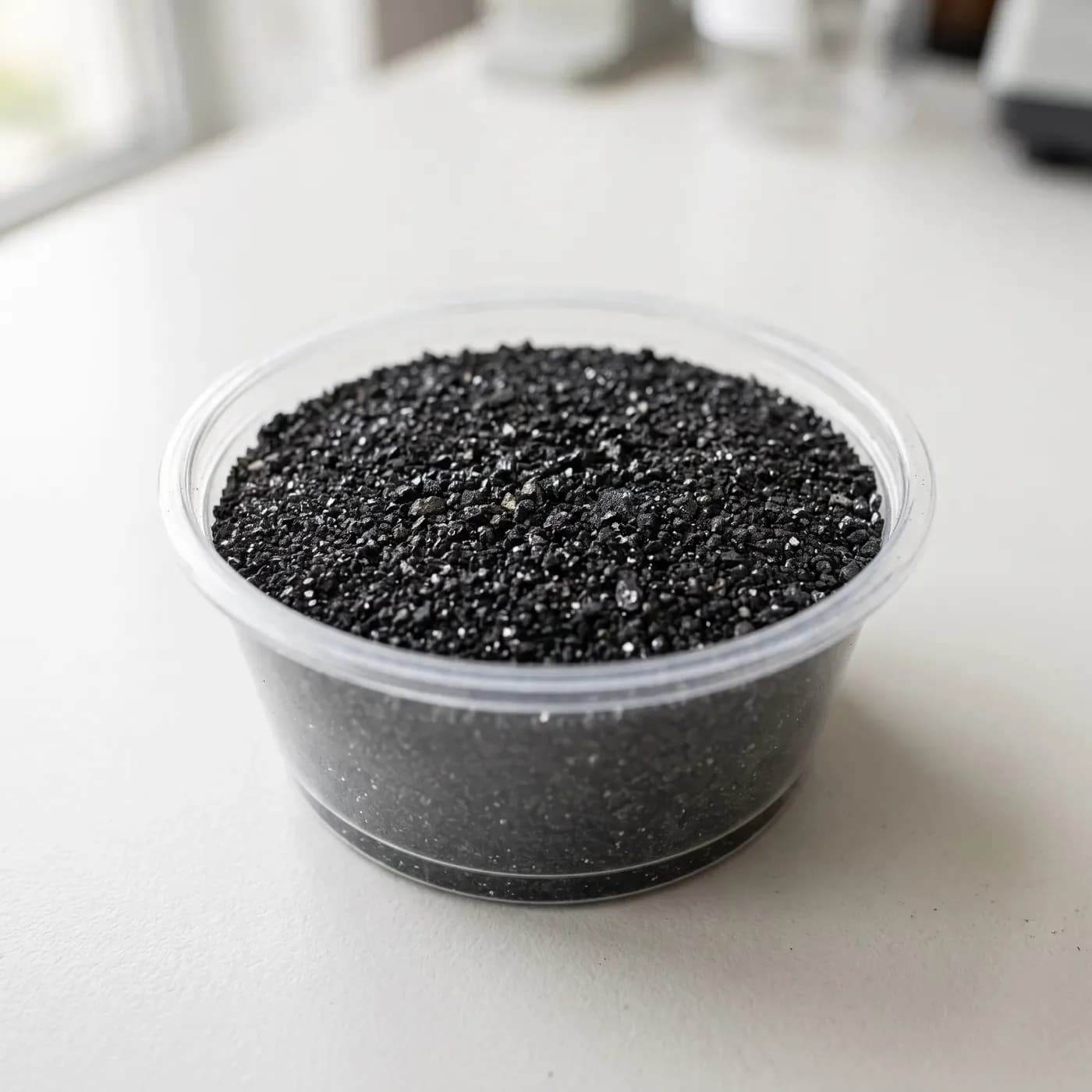
2 · Photo and microscope
A photo through the window and a close-up of the grains are saved as evidence.
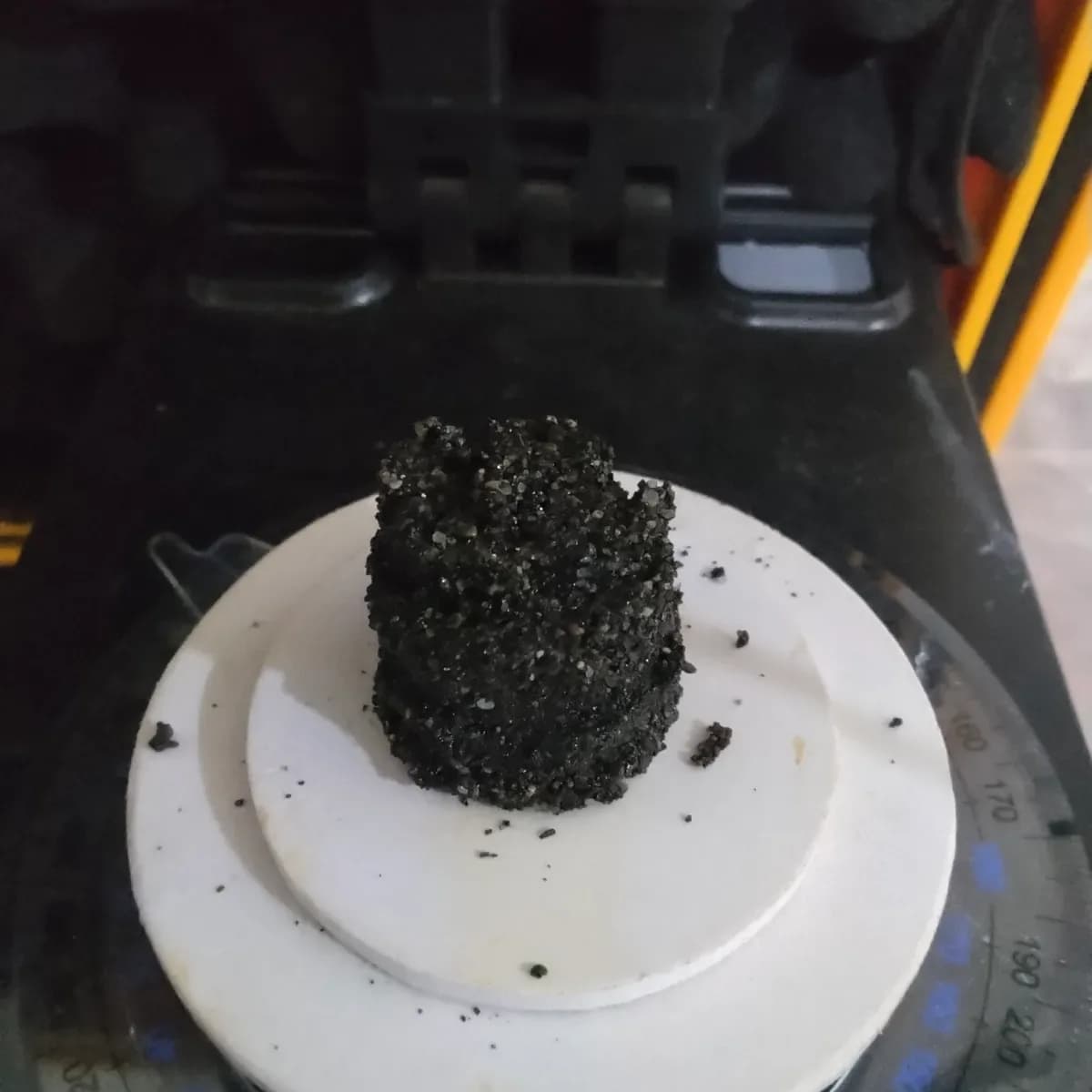
3 · The scan
X-ray flashes become peaks; every element has its own fingerprint.
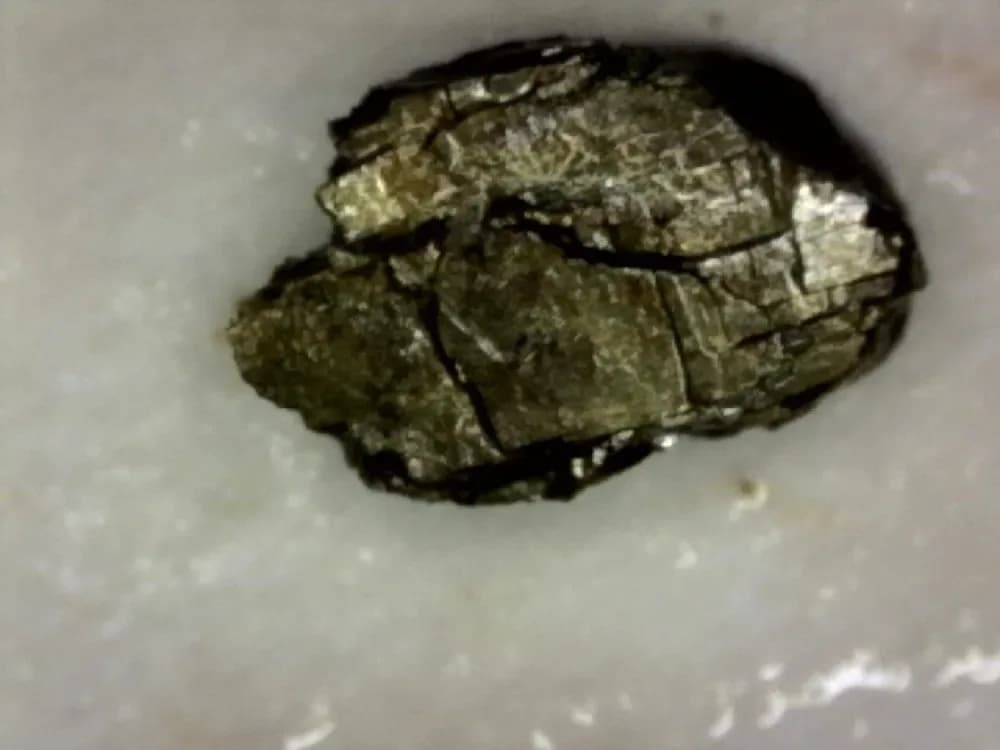
4 · A clear answer
Each result says what kind it is and how sure. Uncertain values are held back.
Honest results
Every number has a label
Estimate, lab-confirmed or held back. A missing value is never shown as zero.
Re-checkable
Every measurement is saved in full, so anyone can check it again later.
Works offline
Built for remote sites; results upload when the signal returns.
One record everyone can read
Cooperatives and miners
Know what is in the material, on the spot, and show it to buyers.
Government
Every measurement saved with photo, time and place: traceable oversight.
Funders and verifiers
Clear which values are estimates and which are lab-confirmed.
Safety, in plain words. The X-ray beam only runs while the sample is in place and a trained person has confirmed. It stops by itself if something goes wrong or the connection drops.
For official or trade figures a certified lab measures; ESMI keeps the lab result next to the field result, so everyone sees both.
xrfscanner.com
ESMI XRF has its own website
Specifications, the full feature list, how the measurement works, sample preparation, safety and the field tour: all on xrfscanner.com, in English and Bahasa Indonesia.
Gotong royong
The pilot is under way. The next step is scale.
The pilot in Bolmong has started. ESMI is now raising large-scale funding to clean up Indonesia’s mine waste. Investors can start with one 10-tonner (USD 1.7 million).
ESMI also works as a hired partner. Mining companies and cooperatives can bring in ESMI to upgrade an existing plant with its microbes and methods, so it recovers more and can move away from mercury and cyanide.