
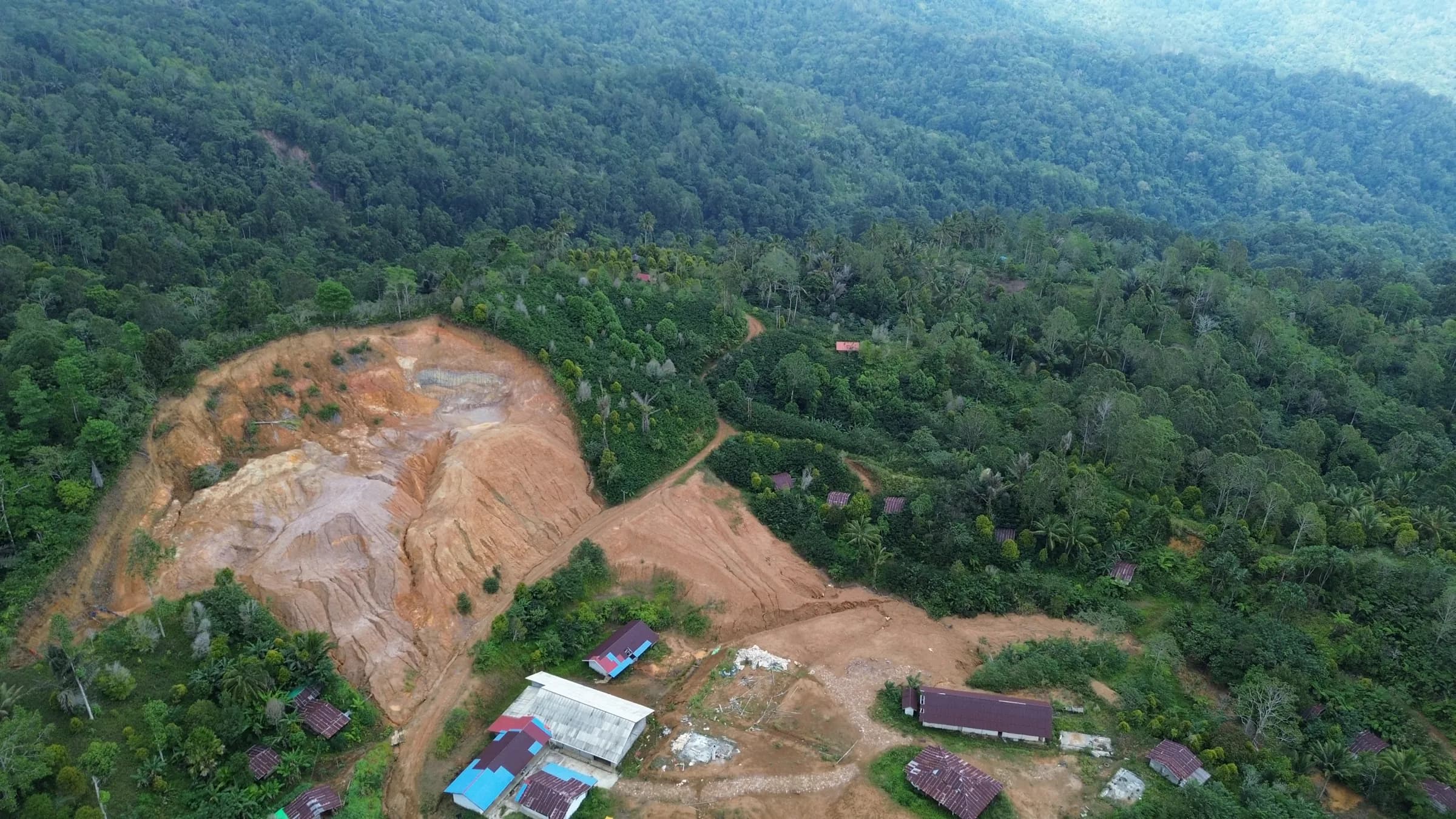
Mercury travels from the pit to the plate
Small-scale gold mining is the largest single source of man-made mercury to air. In 2015 it released about 838 tonnes, 37.7% of roughly 2,220 tonnes worldwide (UNEP). In Indonesia the mercury is used where the ore is processed: in villages and backyards. Rain then carries silt and mercury into streams, rice fields, fish ponds and the coast.
What does that do to people? Several studies have looked.
What doctors found in people
In 2010 doctors examined 281 people in two gold-mining areas: Talawaan in North Sulawesi and Galangan in Central Kalimantan. Chronic mercury intoxication was diagnosed in 55% of the amalgam smelters in Sulawesi and 62% in Kalimantan. Neighbours were affected too.
A later case report looked at Cisitu, a gold-mining village whose rice fields are irrigated with mercury-polluted water. All 18 people examined had raised mercury in their hair. Fifteen were classified as intoxicated. The authors point to polluted rice as a likely route. It is a preliminary study of a few people, and it should be read as a warning, not as a national rate.
What river samples found
Researchers sampled water, river sediment and fish at 12 sites along the three main rivers of the Talawaan watershed in North Sulawesi. Mercury in the rivers rose over time and spread downstream of the mining. The authors asked for solutions before a health and ecological disaster.
The route to the plate is known. In water, mercury becomes methylmercury and builds up in the food chain, up to the tuna on other countries' plates. A review of a former gold mine near Buyat Bay found that tailings spread up to 3.5 km from the pipe, reached coral reefs, and that methylmercury from the tailings entered the local food chain.
What is estimated, not measured
The satellite cannot see most of the mercury outside the mines. ESMI's national model gives orders of magnitude, not counts:
- about 28,200 ha of irrigated rice fields downstream (range 10,600 to 73,300 ha), rice that can take up mercury;
- about 17,900 km of river carrying mine silt (8,100 to 39,700 km);
- about 120 tonnes of mercury a year into soil and water outside the mine (60 to 180), with about 1,900 tonnes accumulated so far (880 to 3,500).
The same model puts the yearly health damage from mercury through fish and rice at about USD 207 million (174 to 253 million). Together with harm to miners, it is the largest item in an estimated USD 548 million a year if the gold waste stays.
The gap the measurements leave
The studies above cover a few areas. They do not give a national picture of mercury in rice, fish and people. ESMI and Universitas Islam Malang (Unisma) plan to measure mercury in fish, rice and people around gold-mine waste from 2027, so that the model can be checked against samples.
Stopping mercury before it reaches the plate
Liquid or dissolved mercury in old waste can keep moving. ESMI microbes turn harmful liquid mercury into a solid, heavy compound that can be removed. It no longer evaporates or dissolves, so it does not reach air, water, rice or fish. A shaking table separates it from the sand, and it is packed for safe storage under the Minamata Convention.
The first ESMI 10-tonner is planned for 2027. Each step has a test agreed in advance, and results are published together with Unisma.
Read more about the harm on the problem page, how the microbes work on ESMI microbes, and the national numbers in Indonesia in data.